Oregon Yard to Food Forest: 5 Expert Permaculture Steps
By Upworthy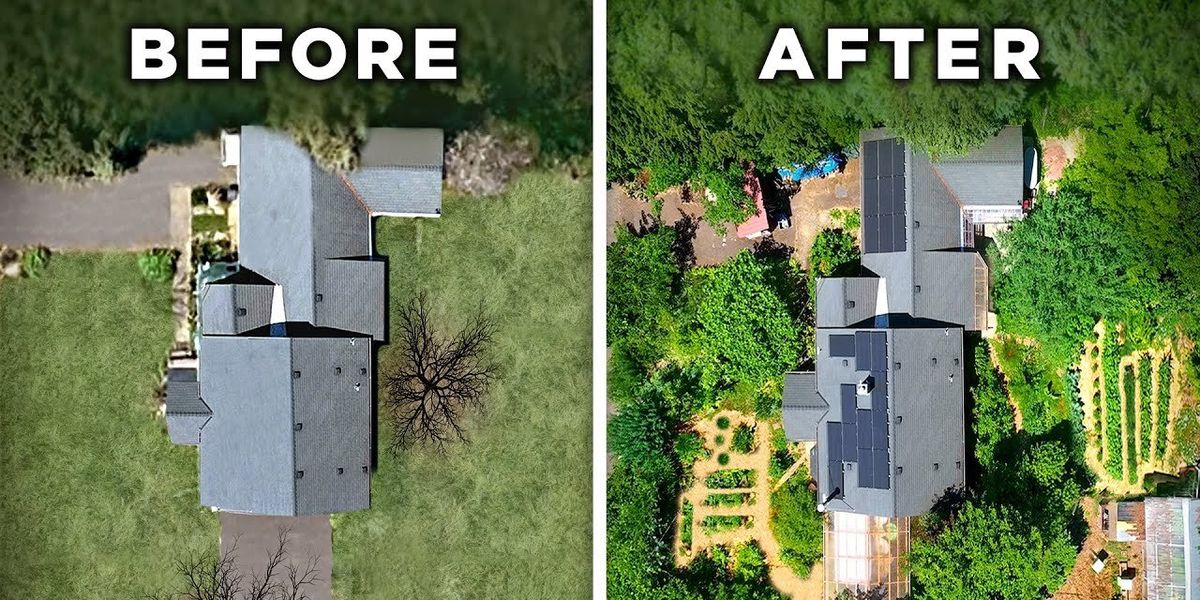
PermaNews Brief
Key Takeaways
A permaculture expert transformed a standard Oregon yard into a productive food forest using five key design strategies.
- Strategic plant placement maximizes space and yield.
- Grafting increases fruit diversity and production.
- Utilize all available yard areas for food.
- Create multi-layered food forests emulating ecosystems.
- Enhance soil, water, and biodiversity naturally.
Why It Matters
Implementing these permaculture principles can turn typical yards into abundant, self-sustaining food systems, boosting local food security and ecosystem health.
What to Do Next
Identify an underutilized section of your yard and sketch a multi-layered planting plan focusing on diverse edible plants.
Recommended for: Gardeners, homesteaders, and permaculture enthusiasts looking for practical strategies to create productive and sustainable edible landscapes in urban or suburban settings.
This article presents a detailed case study of how a permaculture expert transformed a typical yard in Oregon into a thriving food forest, termed a 'food paradise.' The transformation involved applying five key strategies for edible landscape design, demonstrating practical permaculture techniques. These include strategic plant placement to maximize space and productivity, grafting multiple fruit varieties onto single trees to increase diversity and yield, and utilizing every available area of the yard for food production. The expert emphasizes creating a multi-layered food forest that mimics natural ecosystems, incorporating canopy trees, understory trees, shrubs, herbs, ground covers, and root crops. The approach not only enhances food production but also improves soil health, water retention, and biodiversity. The article serves as an inspiring example for gardeners and homesteaders interested in sustainable, regenerative food systems, showing how even average yards can be transformed into abundant, self-sustaining food landscapes through thoughtful design and permaculture principles.
Source: upworthy.com
Related Analysis
- Food Forest Courses Shift From Theory to Build-Ready Skills — Several food forest courses now open with site assessment and guild-building rather than design theory, suggesting a dev…
- Practitioners Build Silvopasture Playbook Before Researchers Catch Up — A small but consistent set of signals from the Northeast U.S. shows farmers actively piloting silvopasture while formal …
Related on PermaNews
- Ernst Götsch's Cacao Syntropy: Master Agroforestry Now (How-To Guide)
- Finnish Off-Grid: Rocket Mass Heater Performance in Greenhouse (Case Study)
- Berlins schwimmende Gärten: Permakultur auf dem Wasser (Case Study)
- Rodale Report 2025: Thermal Mass Boost in Solar Greenhouses (Case Study)
- AUTarcaMatricultura La Palma: Permakultur & Energieautarkie (How-To Guide)
- Earthaven Ecovillage: 30 Years Off-Grid with Hydro & Solar (Video)
Explore more in Food Systems & Growing — the full hub for this knowledge area.