Large-Scale Compost Extract Application Guide
By The Permaculture Consultant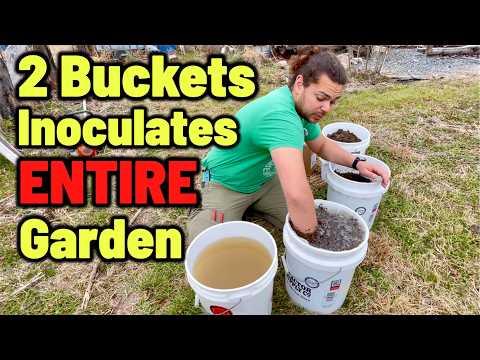
TL;DR: Compost extract offers a fast, efficient way to deliver beneficial microbes and nutrients to soil, especially in large-scale farming.
- Compost extract quickly rinses microbes from compost into water.
- It’s different from compost tea, which multiplies microbes.
- Microorganisms improve nutrient cycles and suppress diseases.
- High-quality, mature compost is essential for extraction.
- Use non-chlorinated water for best microbial preservation.
- Apply extract soon after preparation for maximum benefit.
Why it matters: Implementing compost extract can significantly enhance soil health and plant vitality in agricultural systems, reducing the need for synthetic inputs.
Do this next: Watch the full video to learn about specific large-scale application setups.
Recommended for: Farmers and agricultural managers seeking efficient, large-scale soil microbiome enhancement.
Compost extract, a liquid solution derived from compost, offers a method for delivering beneficial microorganisms and soluble nutrients to plants and soil, particularly useful in large-scale agricultural settings. Unlike compost tea, which involves aerating compost in water for an extended period to multiply microbial populations, compost extract is a simpler, quicker process focused on rinsing microbes and nutrients from the compost into water. This distinction is crucial for understanding its application and benefits.
The primary purpose of compost extract is to introduce a diverse community of microorganisms, including bacteria, fungi, protozoa, and nematodes, into the soil or onto plant surfaces. These microorganisms play vital roles in nutrient cycling, disease suppression, and improving soil structure. The soluble nutrients present in the extract can also provide an immediate boost to plant health.
To prepare compost extract, high-quality, mature compost is essential. The compost should be rich in microbial life and free from pathogens or undesirable materials. The process typically involves placing compost in a porous bag or container and submerging it in water. The water should be non-chlorinated, such as rainwater or well water, or chlorinated water that has been left to sit for a day to allow the chlorine to dissipate. The compost is then agitated or "rinsed" in the water for a relatively short period, usually a few minutes to an hour, to dislodge the microorganisms and dissolve nutrients. The resulting liquid is the compost extract.
For large-scale application, specialized equipment is often employed. This can range from simple setups involving large barrels and pumps to more sophisticated systems like dedicated extractors. The key is to ensure efficient extraction and subsequent application. Once prepared, the extract should be used relatively quickly, ideally within a few hours, as the microbial populations are not actively multiplying as they would in an aerated compost tea.
Application methods vary depending on the target. For soil application, the extract can be sprayed directly onto the soil surface, incorporated into irrigation systems, or used as a drench around plant bases. This helps to inoculate the soil with beneficial microbes, enhancing soil health and nutrient availability. When applied as a foliar spray, the extract can coat plant leaves with beneficial microorganisms, potentially offering protection against foliar diseases and improving nutrient uptake through the leaves. It's important to use nozzles that do not clog easily and to ensure even coverage.
The benefits of using compost extract on a large scale are numerous. It can contribute to reduced reliance on synthetic fertilizers and pesticides by promoting natural nutrient cycling and disease suppression. Improved soil structure, increased water retention, and enhanced plant vigor are also commonly observed. Furthermore, the application of compost extract can help to build soil organic matter over time, contributing to long-term soil health and resilience. While not a complete replacement for solid compost applications, it serves as a valuable tool for delivering a microbial and nutrient boost in a liquid form, making it a practical option for extensive agricultural operations seeking to implement permaculture principles.