DIY Off-Grid Greywater: Murray's Tiny House Micro-Wetland
PermaNews Brief
Key Takeaways
This guide details building a DIY micro-wetland system to treat greywater for garden irrigation, reducing water usage and building soil fertility.
- Build a DIY greywater treatment system for under $200.
- Mimic natural wetlands using gravel and plants for filtration.
- Treats non-toilet wastewater for safe reuse in gardens.
- Reduces household water demand by 40-60%.
- Achieve clear, odor-free water for irrigating edibles.
Why It Matters
Greywater reuse is crucial for water conservation and sustainable living, especially in off-grid or drought-prone environments. This system provides a practical method for converting a waste product into a valuable resource.
What to Do Next
Research local regulations for greywater use and discharge before planning your system.
Recommended for: Ideal for off-grid dwellers, tiny house owners, and permaculture enthusiasts seeking sustainable water management and food production.
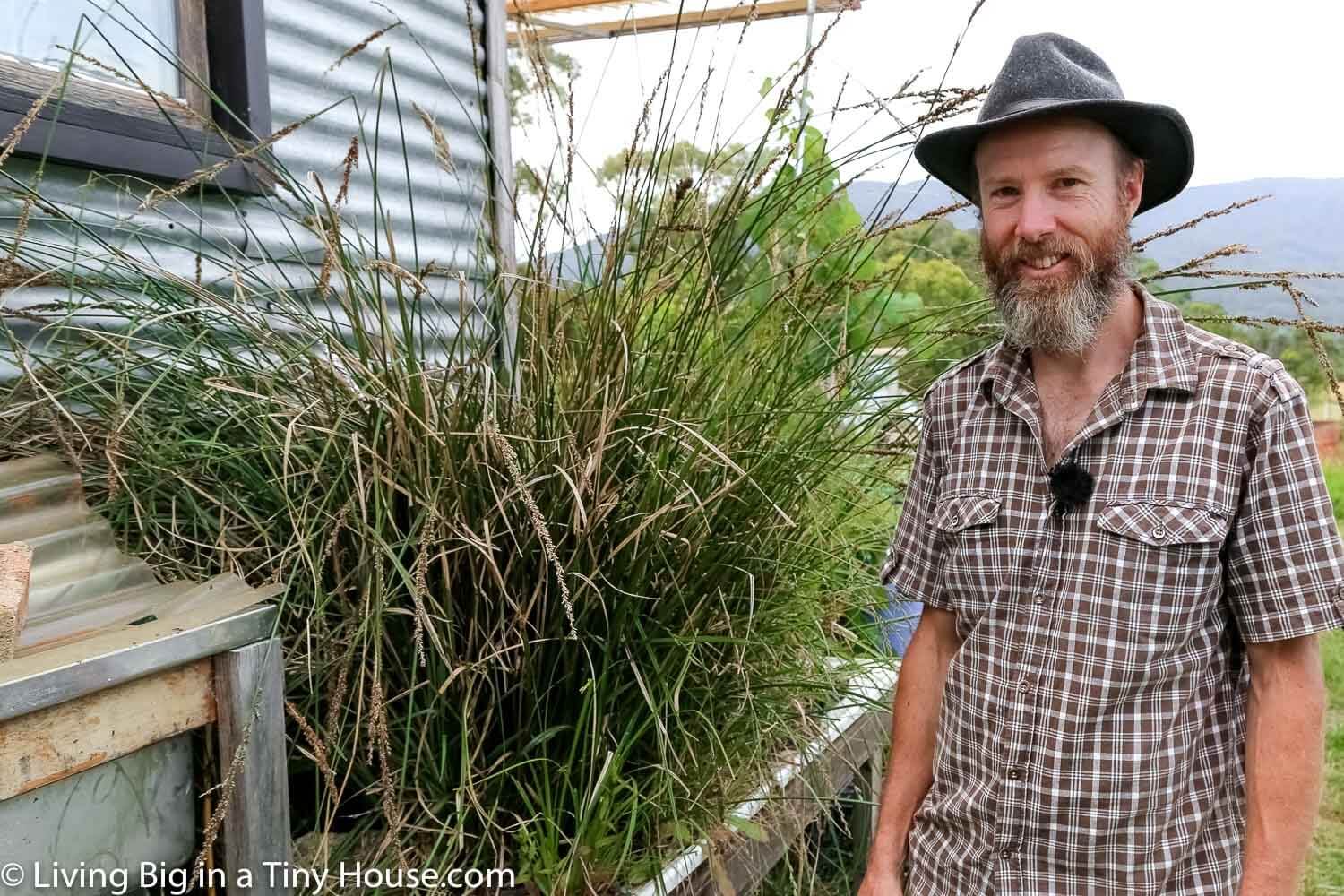
This practical guide documents Murray's off-grid DIY greywater treatment system for a tiny house on wheels in the Yarra Valley, Victoria, Australia, designed on permaculture principles of biomimicry to create a micro-wetland for treating non-toilet wastewater before irrigation. Greywater—household water from sinks, showers, and laundry—is diverted into a multi-basin treatment setup mimicking natural wetland filtration. The system features sequential gravel basins separated by wooden dividers lined with plastic, forcing water to flow through layered media: coarse gravel for settling, finer substrates with plants for biological breakdown, achieving pathogen and nutrient removal without chemicals or power. Treated effluent then feeds wicking garden beds for food production, stacking water reuse with permaculture productivity. Construction details include a primary settling chamber to trap solids, followed by two treatment basins (each 1m x 0.5m x 0.5m deep) filled with 20-50mm gravel and wetland plants like reeds or rushes for root-zone aeration and microbial activity. Water enters via a 50mm pipe, percolates horizontally, and exits clarified for subsurface dripline delivery under mulch, contacting the soil food web for final polishing. Affordability is key: built from recycled materials (old baths, gravel, scrap wood) for under $200 AUD, DIY in a weekend. Performance metrics from observation: clear output water suitable for edibles after 24-hour retention, no odors, and thriving wicking beds yielding veggies year-round. Integration tips: position downhill from house for gravity flow; oversize basins 20% for surges; harvest plant biomass annually for mulch. Challenges addressed: grease trapping via preclearer; winter slowdown mitigated by insulation. This system excels for mobile or small-scale off-grid setups, reducing water demand by 40-60% while building soil fertility. Practitioners learn concrete steps for zoning (Zone 1 treatment near dwelling), material sourcing, plant selection (e.g., Phragmites for high BOD removal), and scaling to larger homesteads by paralleling units. It exemplifies regenerative water management, turning waste into resource with measurable ecosystem services.
Source: livingbiginatinyhouse.com
Related Analysis
- California Homesteaders Retrofit Greywater Before Drought Season — Several sources suggest CA homesteaders are retrofitting greywater systems ahead of drought season, prioritizing water r…
- Earthworks Retrofits Outperform Tech in Farm Drought-Proofing — Several regenerative farm case studies show earthworks and cascading storage systems achieving 2–3x water retention gain…
Related on PermaNews
- Cuban Wetlands: Blackwater/Greywater Nutrient Cycling Blueprint (How-To Guide)
- Autarke Energie: Solar & Wind für 8.500 kWh Überschuss (Case Study)
- Create a Reliable Off-Grid Water Backup System for Emergencies (How-To Guide)
- Autark in Bayern: 5kWp Solar, Wind, 20kWh Speicher – Der Off-Grid-Bericht (Case Study)
- Greywater to Gold: Vertical Flow Wetland Nutrient Cycling (Case Study)
- Wetland Treatment: Blackwater & Greywater Design Manual (How-To Guide)
Explore more in Water, Climate & Adaptation — the full hub for this knowledge area.