One Bag, Whole Garden: Soil Experiment Success Story
By The Gardening Channel With James Prigioni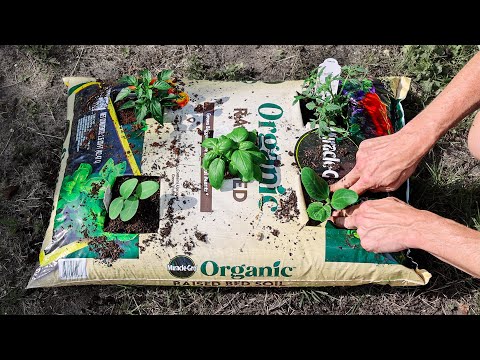
PermaNews Brief
Key Takeaways
Cultivating a diverse vegetable garden is achievable in a single bag of soil, ideal for limited spaces.
- Utilize a single soil bag for compact gardening.
- Ensure proper drainage to prevent waterlogging.
- Strategic plant spacing maximizes yield.
- Consistent watering and ample sunlight are crucial.
- Harvest early crops to free up space.
Why It Matters
This method offers a practical pathway to food production for individuals with limited land, time, or resources, promoting self-sufficiency.
What to Do Next
Watch the video to see the full set-up and plant diversity.
Recommended for: Anyone with limited space or resources seeking an accessible entry point into growing their own food.
A recent gardening experiment explored the feasibility of cultivating an entire garden within the confines of a single bag of soil. The project aimed to demonstrate that successful food production doesn't necessitate extensive land or specialized equipment, offering a practical solution for individuals with limited space or resources.
The experiment began with a standard 1.5 cubic foot bag of organic potting mix. The bag was laid flat, and several drainage holes were carefully cut into its underside to prevent waterlogging, a crucial step for plant health. The top of the bag was then cut open to create a planting surface, and the soil was gently fluffed to aerate it.
A diverse selection of vegetable seeds was chosen for planting, reflecting a common home garden assortment. These included tomatoes, peppers, basil, lettuce, and radishes. The seeds were strategically spaced within the bag, considering their mature size and light requirements. For instance, taller plants like tomatoes were positioned towards one end, while smaller, faster-growing crops like radishes were placed in areas where they could be harvested earlier without disturbing other plants.
Initial care involved consistent watering, ensuring the soil remained moist but not saturated. The bag was placed in a location that received ample sunlight throughout the day, a vital factor for photosynthesis and plant growth. As the seedlings emerged, careful observation was maintained to identify any signs of nutrient deficiency or pest infestation.
Within a few weeks, the radishes were ready for harvest, providing the first yield from the single-bag garden. This early success demonstrated the rapid turnaround possible with certain crops, even in a confined space. As the radishes were harvested, their space was either left open or, in some cases, replanted with other quick-growing greens, maximizing the bag's productive capacity.
The lettuce and basil also thrived, offering a continuous supply of fresh greens. The tomato and pepper plants, being longer-season crops, required more time and attention. As they grew larger, they were provided with stakes for support to prevent them from toppling over due to the weight of their fruit. This improvisation highlighted the need for adaptable solutions when gardening in unconventional settings.
Throughout the experiment, the gardener monitored the soil moisture levels diligently. Due to the limited volume of soil, it tended to dry out more quickly than a traditional garden bed, necessitating more frequent watering. Organic liquid fertilizer was occasionally applied to replenish nutrients, as the initial soil mix would eventually become depleted. This demonstrated the importance of nutrient management in small-scale, intensive gardening systems.
The experiment ultimately yielded a surprising amount of produce, showcasing the potential for significant food production even with minimal resources. The success of the single-bag garden underscored several key permaculture principles: maximizing space utilization, resource efficiency, and adaptability. It suggested that with careful planning, appropriate plant selection, and consistent care, individuals can cultivate a productive garden in seemingly restrictive environments. The project served as an inspiring example for urban dwellers, apartment residents, or anyone looking to start gardening without a large plot of land.
Source: youtube.com
Related Analysis
- Food Forest Courses Shift From Theory to Build-Ready Skills — Several food forest courses now open with site assessment and guild-building rather than design theory, suggesting a dev…
- Practitioners Build Silvopasture Playbook Before Researchers Catch Up — A small but consistent set of signals from the Northeast U.S. shows farmers actively piloting silvopasture while formal …
Related on PermaNews
- Federal Policy Shift: Native Regenerative Ag for Soil & Carbon (Article)
- Nagaland's Jhum-Alder Agroforestry: Climate-Smart Farming (Article)
- Aboriginal Cool Burns: Permaculture's Ancient Fire Wisdom (Case Study)
- Crop Rotation Boosts Soil Biodiversity: Global Meta-analysis (Article)
- Revolutionizing Agriculture: People, Nature, & a Fertile Earth (Article)
- Building Resilient Soils: Planning & Resources for Extreme Weather Events (Event)
Explore more in Food Systems & Growing — the full hub for this knowledge area.