3-Day Cow Training: First-Time Milking Success Step-by-Step
By Justin Rhodes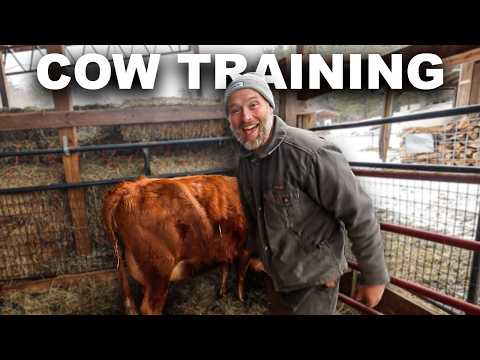
TL;DR: A gentle, trust-based approach trains a first-time milk cow in three days, focusing on acclimatization, positive reinforcement, and gradual desensitization to handling and equipment.
- Time arrival of cow before calving.
- Acclimate cow to new surroundings.
- Use treats and calm interactions.
- Gradually introduce milking stanchion.
- Desensitize to touch and machine sounds.
- Patience is paramount throughout the process.
Why it matters: Gentle training builds trust, reduces stress for the animal, and creates a safer, more efficient milking routine for both cow and handler, fostering a sustainable dairy practice.
Do this next: Watch the full video to see how patience and positive reinforcement are applied in training a first-time milk cow.
Recommended for: New dairy farmers and homesteaders seeking humane and effective cow training techniques.
This article details a three-day process for training a first-time milk cow, emphasizing a gentle and patient approach to build trust and establish a routine. The author recounts their personal experience with a Jersey cow named Daisy, highlighting the importance of understanding the animal's natural instincts and using positive reinforcement.
The training began with the cow's arrival, which was intentionally timed to be a few days before her calving date. This allowed the cow to acclimate to her new environment and the presence of her new caretakers without the immediate pressure of milking. The author's primary goal during this initial period was to establish a positive association with the milking area and the people involved. This involved simply spending time near the cow, offering treats, and speaking in a calm, reassuring tone. The author notes that cows, especially those new to being handled for milking, can be apprehensive, so patience is paramount.
On the first day of active training, the focus was on introducing the cow to the milking stanchion. The author describes leading Daisy into the stanchion using a halter and a lead rope, offering feed as an incentive. The stanchion was made comfortable with hay, and the cow was allowed to eat her feed while secured. The author then began a series of gentle interactions, including stroking her back and sides, and gradually moving towards touching her udder. This was done slowly, observing the cow's reactions and backing off if she showed signs of distress. The goal was not to milk her yet, but to desensitize her to touch in the areas that would be handled during milking. The author also introduced the sound and feel of the milking machine, allowing it to run briefly near the cow without attaching it, to familiarize her with the noise and vibration.
The second day built upon the previous day's efforts. Daisy was again led into the stanchion and offered feed. The author continued the gentle desensitization, spending more time touching her udder and legs. The key was to make these interactions positive, associating them with the reward of food. The author also began to simulate the milking process by gently manipulating the teats, again without actually milking. This helped the cow get used to the sensation. The author emphasizes the importance of consistency and repetition, performing these actions multiple times throughout the day in short, positive sessions. The author also introduced the calf to the milking area, allowing it to nurse briefly before separating them. This helped the cow understand that her calf would still have access to milk, reducing anxiety about the milking process.
By the third day, the cow was more accustomed to the stanchion and human interaction. The author describes the first successful milking session. After securing Daisy in the stanchion and offering feed, the author proceeded with the actual milking. This involved a combination of hand milking and using a milking machine. The author notes that the initial milk flow might be slow, and patience is crucial. The calf was allowed to finish nursing after the milking, reinforcing the idea that it would still get milk. The author highlights that even after the initial three days, ongoing positive reinforcement and a consistent routine are essential for maintaining a calm and cooperative milk cow. The process is presented as a continuous journey of building trust and understanding between the cow and her caretakers.