How To Find and Work With Physicians For Your Clinical Research
By Dan Sfera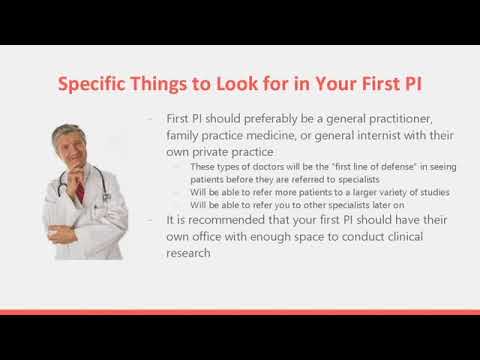
PermaNews Brief
Key Takeaways
Identifying and collaborating with physicians enhances clinical research effectiveness.
- Prioritize general practice physicians for research collaboration.
- Evaluate site requirements before pursuing studies.
- Use CMS data to find potential physician partners.
- Physician partnerships enhance research capability.
- Operational readiness is crucial for effective collaboration.
Why It Matters
Understanding how to select and work with physicians facilitates smoother clinical trials and enhances research quality, ultimately benefiting patient outcomes.
What to Do Next
Review the video for insights on physician collaboration.
Permaculture Context
For those building regenerative homesteads or intentional communities far from conventional medical infrastructure, understanding how clinical research sites are structured and funded offers a surprisingly practical lens. Rural and peri-urban communities pursuing health sovereignty often lack access to cutting-edge treatments simply because no nearby physician has the physical space, staffing, or administrative capacity to participate in trials — not because the science isn't relevant to their needs. Recognizing this gap means community organizers and health-focused permaculture networks can begin advocating strategically: supporting local independent family medicine practitioners in building the operational infrastructure that qualifies them as research sites. A general practitioner who already serves your bioregion becomes exponentially more valuable when they can also access investigational treatments and contribute to studies on integrative or preventive approaches. This is community resilience thinking applied to healthcare — identifying leverage points within existing systems rather than waiting for those systems to reach you. The same resourcefulness that builds food forests can be turned toward cultivating the local medical relationships that keep a community genuinely autonomous.
Recommended for: Clinical researchers seeking to enhance collaboration with physicians.
This video provides practical guidance for clinical research professionals who need to identify, evaluate, and work with physicians as principal investigators or site partners. It focuses on concrete site-selection considerations rather than general recruitment advice. A key recommendation is to prioritize physicians in general practice, family medicine, or internal medicine who already operate their own private practices, because they are often the most viable entry point for adding research capability. The discussion also emphasizes the operational requirements a site must meet before taking on studies, including physical infrastructure, staffing, and workflow readiness.
The video gives specific examples of what sponsors and CROs may expect from a site, such as a minimum floor area, several individual office spaces, at least one exam room, a conference room for site selection visits, and a secure storage area for investigational materials. It explains why these details matter: monitors need a private place to review source documents, staff need room to gather during selection visits, and sensitive materials require controlled access. The presentation also notes that some of these needs can be met in a conference room, but having a dedicated monitoring space is preferable for compliance and efficiency.
A particularly actionable section explains how to identify potential physician partners using open payments data from CMS. The speaker notes that users can search by ZIP code or by physician name, which helps locate clinicians in a specific area and understand whether they have received sponsorship-related payments. This can reveal whether a physician has prior research-related or speaking-related relationships, which may indicate openness to clinical research collaboration. The video frames this as a practical business-development tool for both sites seeking physicians and physicians seeking sponsors.
The video also stresses a documentation detail that can matter in sponsor outreach: materials should be in Word format so a site can insert its own name and address before sending them out. According to the speaker, sponsors may be reluctant to consider a physician until the site identity is clearly established and affiliated. Overall, the content is a tactical walkthrough of physician prospecting, site readiness, and early-stage sponsor engagement for clinical research operations.
Source: youtube.com
Related Analysis
- Site Structure, Not Backlinks, May Drive AI Citations — A small cluster of sources indicates AI citation behavior may favor site structure and entity clarity over backlinks—a p…
- University-Backed Zoom Series Tests Farmer-to-Farmer Skill Transfer — Central State University and Agraria Center are piloting a 3-part Zoom skill-share for homesteaders this June — an early…
Explore more in Skills, Preparedness & Self-Reliance — the full hub for this knowledge area.