Abundant Bananas: Permaculture Management for Yield
By Grounded Permaculture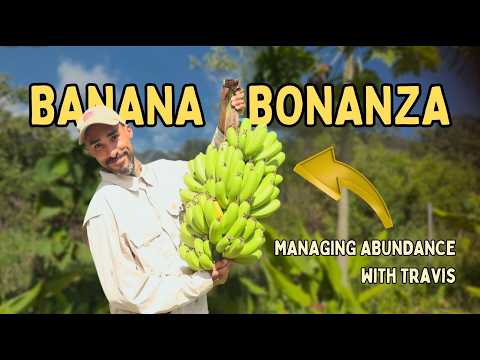
TL;DR: Cultivate bountiful bananas by understanding their unique growth, selecting suitable varieties, and managing suckers for continuous harvest.
- Bananas are giant herbs, not trees, with a unique growth cycle.
- Select varieties based on cold hardiness, fruit quality, and disease resistance.
- Prepare soil with organic matter for drainage and nutrient availability.
- Manage suckers to ensure staggered harvest and prevent overcrowding.
- Optimal spacing prevents disease and promotes even ripening.
Why it matters: Understanding banana plant needs and growth cycles allows for successful cultivation in various climates, maximizing yields and ensuring a continuous supply of fruit.
Do this next: Watch the video to learn specific planting and suckering techniques for your banana patch.
Recommended for: Home gardeners and permaculture enthusiasts interested in cultivating bananas for abundance and continuous harvest.
The article, "Banana Bonanza: Managing for Abundance," from Grounded Permaculture, delves into the practical aspects of cultivating bananas, emphasizing methods to ensure a continuous and bountiful harvest. It highlights that while bananas are often associated with tropical climates, certain varieties can thrive in subtropical and even some temperate regions with appropriate care and microclimate management. The author stresses the importance of understanding the specific needs of banana plants, which are technically giant herbs rather than trees, and how their unique growth cycle influences cultivation strategies.
A key focus of the article is on the establishment of a healthy banana patch. This begins with selecting suitable varieties, considering factors like cold hardiness, fruit quality, and disease resistance. The author advises on proper planting techniques, including preparing the soil with ample organic matter to ensure good drainage and nutrient availability. Bananas are heavy feeders, so enriching the soil with compost and other organic amendments is crucial for vigorous growth and fruit production. The article also touches upon the optimal spacing of plants to allow for adequate air circulation and light penetration, which helps prevent fungal diseases and promotes even ripening.
The management of banana suckers, or pups, is presented as a critical element in maintaining a productive patch. The article explains that banana plants produce fruit only once from a single pseudostem (the trunk-like structure), after which that pseudostem dies back. New pseudostems emerge from the underground corm as suckers. The author recommends a strategy of allowing a limited number of suckers to grow to maturity alongside the main plant, typically one or two, to ensure a staggered harvest. This selective pruning of suckers prevents overcrowding, which can lead to smaller fruit and reduced yields, and directs the plant's energy towards fruit development. Different types of suckers are discussed, with "sword suckers" (those with narrow leaves) generally preferred for propagation due to their stronger connection to the parent plant's corm.
Water and nutrient management are also extensively covered. Bananas require consistent moisture, especially during their fruiting cycle, but are susceptible to root rot in waterlogged conditions. The article suggests mulching heavily around the plants to conserve soil moisture, suppress weeds, and gradually release nutrients as the mulch breaks down. Regular feeding with nutrient-rich organic fertilizers, such as compost tea or aged manure, is recommended to support the plants' rapid growth and high nutrient demands. The author also discusses the importance of potassium for fruit development and flavor.
Pest and disease management are addressed from a permaculture perspective, emphasizing prevention through healthy plant growth and ecological balance. The article advocates for creating a diverse ecosystem within the banana patch to encourage beneficial insects that prey on pests. Good sanitation practices, such as removing dead leaves and pseudostems, are also highlighted as ways to reduce disease pressure. While specific pests and diseases are not detailed, the general principle of fostering resilient plants through optimal growing conditions is underscored.
Finally, the article touches upon the harvesting process and post-harvest care. It explains how to identify when bananas are ready for harvest, typically when the fruit begins to fill out and the edges become less angular. The entire bunch is usually cut from the plant, and the pseudostem that produced it is then removed to make way for new growth. The author provides insights into ripening bananas off the plant and how to store them to extend their shelf life. The overall message is one of continuous observation, adaptation, and working with the natural cycles of the banana plant to achieve a consistent and abundant yield.