Victoria's Yan Yan Gurt: 30 Years of Sheep, Trees & Success
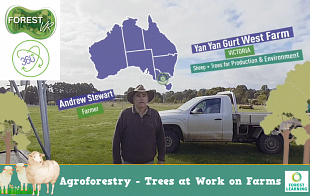
TL;DR: Integrating trees into livestock farming, as shown by an Australian farm, significantly boosts environmental health and farm income without compromising productivity.
- Agroforestry increases tree cover while maintaining livestock output.
- Strategic tree placement optimizes shelter and reduces erosion.
- Direct seeding and climate-resilient species ensure establishment.
- Trees improve drought resilience for livestock and pastures.
- New income streams arise from timber, seeds, and carbon credits.
- Rotational grazing around tree belts enhances soil health.
Why it matters: Agroforestry offers a proven pathway for farmers to enhance ecological resilience and diversify revenue in livestock operations, addressing climate variability and market demands.
Do this next: Identify areas on your farm where shelterbelts or scattered trees could improve microclimates and soil stability.
Recommended for: Livestock farmers seeking to integrate trees for environmental benefits, diversified income, and improved farm resilience.
The Yan Yan Gurt West farm in Victoria, Australia, exemplifies a real-world implementation of agroforestry on a 230-hectare livestock operation focused on prime lamb production and wool. Over 30 years, the farm increased tree cover from 3% to 19% while maintaining or enhancing agricultural outputs. They raise around 1500 lambs annually, producing over 6000kg of wool each year, demonstrating that agroforestry can integrate seamlessly with grazing without sacrificing productivity. Key practical techniques include strategic tree placement using dead trees as markers for optimal positioning in paddocks, which helps in establishing belts that provide shelter, reduce erosion, and improve microclimates. Establishment methods involve direct seeding and planting climate-resilient species selected for drought tolerance, timber value, seed production, and biodiversity support. These trees have enhanced drought resilience by offering shade and wind protection for livestock, leading to healthier animals and sustained lamb/wool yields even in harsh conditions. Erosion reduction is achieved through deep-rooted trees stabilizing soil on slopes and along waterways. New income streams emerged from timber harvesting, native seed collection for sale, and biodiversity credits, diversifying revenue beyond traditional farming. The system also sequesters significant carbon, contributing to emissions reduction goals. Regenerative practices like rotational grazing around tree belts further improve soil health and pasture quality. Field-tested results show balanced integration of trees within paddocks, creating silvopastoral systems where livestock browse understory while trees mature. This approach offers scalable lessons for farmers facing climate variability, with detailed metrics on production maintenance (e.g., consistent lamb weights and wool clips) alongside environmental gains like improved water retention and wildlife habitats. Practitioners can replicate by starting with windbreaks and alley plantings, monitoring growth over years, and leveraging government incentives for tree establishment. The farm's success underscores agroforestry's role in resilient, multifunctional land use, providing concrete data on economic viability and ecological benefits over decades.[6]