Cool & Functional: Transform Hot, Dry Landscapes Now!
By brad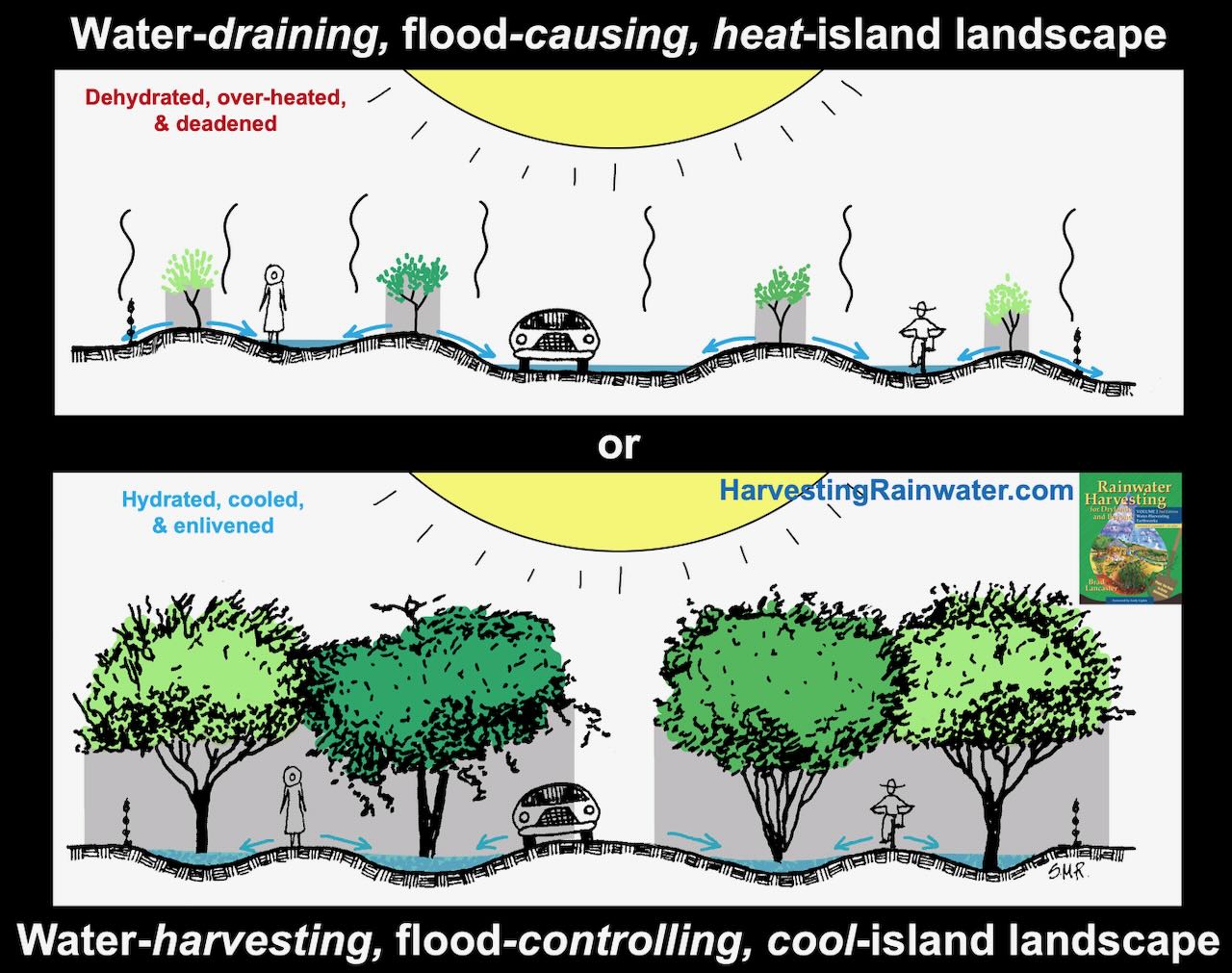
TL;DR: Transform dry, barren land into a water-wise, fertile ecosystem by redesigning its topography to capture and retain rainwater.
- Reshape land to actively hold water, not shed it.
- Implement earthworks like swales for water infiltration.
- Select drought-tolerant plants to improve soil and reduce evaporation.
- Mimic natural ecosystems for resilient landscapes.
- Create microclimates to cool and conserve moisture.
Why it matters: During extreme heat and drought, effectively managing water in landscapes is crucial for ecological resilience and productivity.
Do this next: Start by identifying areas in your landscape where water currently runs off and plan small-scale earthworks to capture it.
Recommended for: Homeowners, land managers, and community gardeners seeking to create resilient, water-efficient landscapes in arid or dryland environments.
The article discusses strategies for transforming arid, poorly designed landscapes into thriving, water-efficient ecosystems, particularly relevant during periods of extreme heat and drought. The core philosophy revolves around shifting from a landscape that actively sheds water to one that actively retains and utilizes it. This transformation is presented as a multi-faceted approach, emphasizing the importance of understanding and working with natural hydrological cycles rather than against them.
A primary focus is on earthworks and passive water harvesting techniques. The author advocates for the creation of features such as swales, berms, and basins that are strategically placed to capture and infiltrate rainwater into the soil. These structures are designed to slow down the flow of water across the landscape, allowing it more time to soak in rather than running off and causing erosion or being lost to evaporation. The article highlights that even small changes in topography can have a significant impact on water retention, turning areas that were once dry and barren into more fertile zones. The concept of "ponding" water, even temporarily, is crucial for recharging groundwater and providing moisture for vegetation.
Beyond earthworks, the article stresses the importance of integrating living systems into the design. This includes the strategic planting of appropriate vegetation, particularly drought-tolerant and native species. These plants play a vital role in the water cycle by improving soil structure, increasing organic matter, and reducing evaporation through shading. The author suggests creating multi-layered plant communities, mimicking natural ecosystems, to maximize water use efficiency and create a more resilient landscape. The selection of plants should also consider their ability to provide shade, which in turn helps to cool the immediate environment and further reduce water loss.
The article also delves into the concept of "microclimates" and how they can be intentionally designed to enhance water retention and plant growth. By strategically placing elements like walls, fences, or even large rocks, it's possible to create areas that are cooler, shadier, or have higher humidity, thereby reducing the water demands of plants in those specific zones. This detailed approach to microclimate design allows for a more nuanced and effective use of available water resources.
Furthermore, the author emphasizes the importance of soil health. Healthy soil, rich in organic matter, acts like a sponge, capable of holding significantly more water than compacted or degraded soil. Strategies for improving soil health include composting, mulching, and minimizing soil disturbance. Mulching, in particular, is highlighted as a simple yet highly effective technique for reducing evaporation, suppressing weeds, and gradually building soil organic matter over time. The article suggests that a living soil, teeming with microbial life, is fundamental to a water-wise landscape.
The overall message is one of proactive design and management. Instead of passively accepting arid conditions, the article encourages a hands-on approach to reshape the landscape into a more functional and resilient system. This involves observing natural patterns, understanding the movement of water, and implementing design solutions that work in harmony with these natural processes. The transformation is presented not just as a way to conserve water, but also as a means to create cooler, more biodiverse, and ultimately more enjoyable outdoor spaces, even in challenging climatic conditions. The author's personal experience in a hot, drought-stricken environment underscores the urgency and practicality of these permaculture-inspired design principles.