Nebraska Strip-Grazing: Utica's Cow-Calf Crop-Livestock Case Study
TL;DR: Nebraska study shows integrating diverse annual forages and strip-grazing cattle into corn/soy rotations boosts profit and soil health.
- Integrate diverse annual forages into cash crop rotations.
- Use strip-grazing for nutrient cycling and weed suppression.
- Select forage species to mitigate risks like frost and bloat.
- Calculate stocking density based on forage biomass.
- Utilize portable fencing/water for flexible grazing management.
Why it matters: Integrating livestock into row cropping systems provides a viable path to increase farm profitability and regenerate soil health, even with limited pastureland.
Do this next: Explore diverse annual forage mixes suitable for your region and current cropping system.
Recommended for: Row-crop farmers in temperate regions aiming to integrate livestock for profit and soil health with minimal permanent infrastructure.
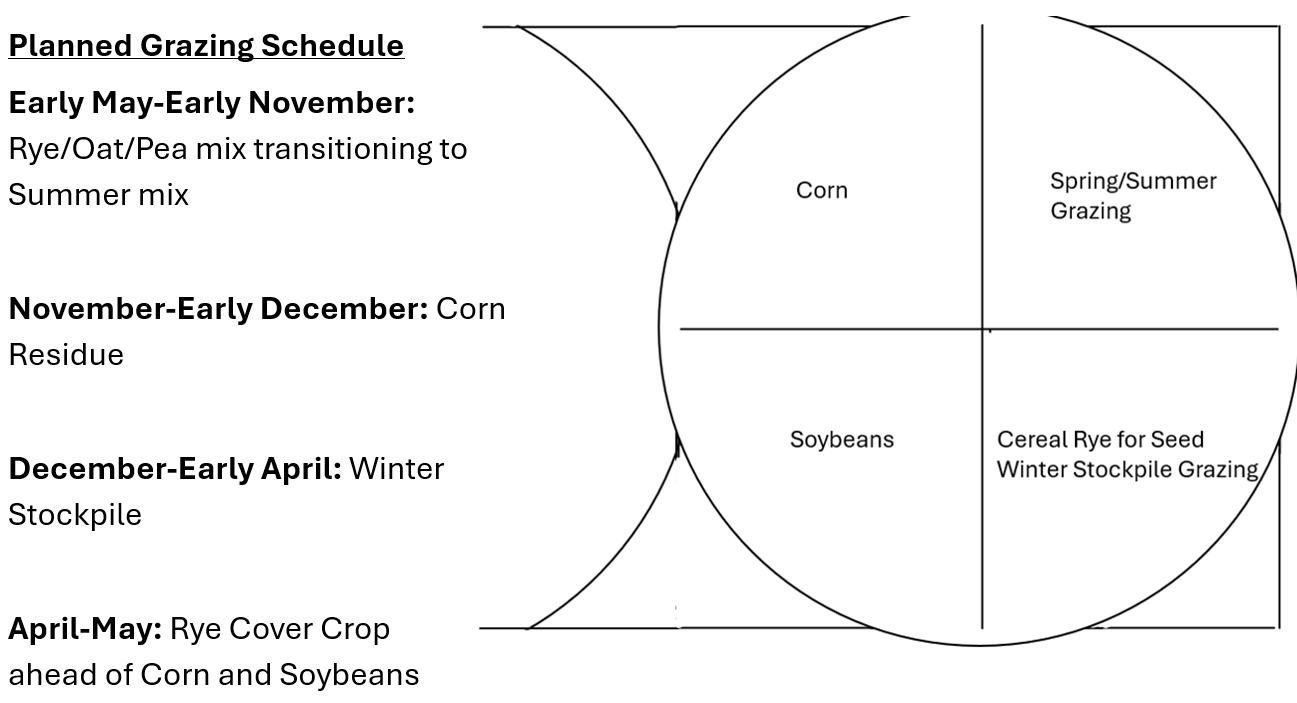
This case study details a Nebraska grower's innovative crop-livestock integration in the Utica area, where limited pasture prompted creative use of annual forages and crop residues for a cow-calf herd amid corn/soy/seed corn dominance. In 2024, one quarter-section was strip-grazed with annual forages including rye, vetch, oats/peas, and summer millets (heavier on millets to avoid prussic acid risks from sorghum during frosts). Economics showed $683/acre profit for annual grazing with cow-calf pairs, factoring $300/acre rent. Practical sequence: graze volunteer rye/vetch pre-corn planting in 2025; move cows to oats/peas as forages senesced; follow cows with summer annual mix planting. Strip-grazing used electric fencing for daily moves, recycling nutrients via manure/urine, improving soil structure, and suppressing weeds without tillage. Transition to corn post-grazing leveraged trampled residues as mulch. Key methods: plant diverse mixes (e.g., rye, triticale, peas, radish, turnips, millets) at 20-25 lbs/acre; allocate 2-3 acres per cow-calf pair daily; supplement minerals based on forage tests. Benefits: boosted soil biology, reduced fertilizer needs by 30-50 lbs N/acre from dung cycling, extended grazing season into winter on cover crops, and diversified income ($150-200/cow market value). Challenges addressed: frost risk via millet selection, bloat via species diversity, and logistics with portable waterers/fencing. Scalability shown by rotating systems annually—grazed quarters planted to cash crops next year with enhanced tilth. Practitioner takeaways: calculate stocking density (1 pair/2 acres in peak biomass); track weight gains (1.5-2 lbs/day); use baleage from excess for winter feed; integrate with no-till for carbon build-up. This delivers concrete ROI data and step-by-step protocols for row-crop farmers adding livestock without infrastructure overhauls.