John Kaisner: Drought-Proofing Trees, Prickly Pear Secrets
By The Natural Farmer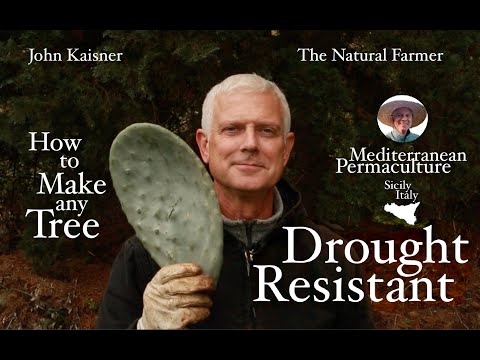
PermaNews Brief
Key Takeaways
Boost tree drought resistance by optimizing root systems and soil health, mimicking natural adaptations of resilient plants like prickly pear.
- Deep, robust roots are crucial for drought resilience.
- Proper planting prevents root girdling and promotes growth.
- Organic matter improves soil structure and water retention.
- No-till practices maintain soil health and beneficial fungi.
- Mulch regulates temperature, reduces evaporation, and enriches soil.
Why It Matters
Enhancing tree drought resistance is vital for long-term survival in changing climates, reducing water consumption and supporting healthy ecosystems.
What to Do Next
Assess your tree planting depth to ensure root flares are at or above ground level.
Recommended for: Home gardeners, arborists, and land managers seeking sustainable tree care strategies.
John Kaisner, in an article for The Natural Farmer, discusses strategies for enhancing the drought resilience of various tree species, drawing parallels to the inherent drought tolerance of plants like prickly pear cacti. The core idea revolves around understanding and mimicking the natural adaptations that allow certain plants to thrive in arid conditions.
One fundamental aspect highlighted is the importance of a robust and deep root system. Trees with extensive root networks can access water reserves deeper in the soil, making them less reliant on surface moisture. Kaisner suggests several techniques to encourage this development. Proper planting methods are crucial, ensuring that the tree's root flare is at or slightly above ground level to prevent girdling roots and promote outward and downward growth. Amending the soil with organic matter, such as compost, is also emphasized. Organic matter improves soil structure, increasing its water-holding capacity and fostering a healthy microbial environment that supports root growth and nutrient uptake. This creates a more hospitable environment for roots to penetrate deeper and spread wider.
Beyond initial planting, ongoing soil management plays a significant role. Kaisner advocates for practices that minimize soil disturbance, such as no-till or minimal-till approaches. Tilling can disrupt soil structure, destroy beneficial fungal networks, and lead to increased water evaporation. Instead, maintaining a consistent layer of mulch around the tree is presented as a highly effective strategy. Mulch, made from materials like wood chips or straw, helps to regulate soil temperature, reduce water evaporation, suppress weed growth (which competes for water), and gradually break down to enrich the soil with organic matter. The type and depth of mulch are important considerations, with a balance needed to avoid creating a habitat for pests or suffocating the tree's base.
Watering techniques are also critical for drought resistance. While the goal is to reduce reliance on supplemental irrigation, initial establishment and strategic watering during prolonged dry spells are necessary. Kaisner suggests deep and infrequent watering rather than shallow and frequent applications. Deep watering encourages roots to grow downwards in search of moisture, while shallow watering promotes surface roots that are more vulnerable to drying out. The timing of watering, ideally in the early morning or late evening, is also mentioned to minimize evaporation.
Furthermore, Kaisner touches upon the concept of "hardening off" trees, a process that gradually acclimates them to harsher conditions. This can involve reducing water frequency over time once the tree is established, encouraging it to develop its own drought-coping mechanisms. He also implicitly suggests that selecting tree species naturally adapted to the local climate and soil conditions is a foundational step in creating a drought-resistant landscape. While the article focuses on making *any* tree more drought-resistant, the underlying principle is to work with nature, not against it.
The article draws inspiration from the resilience of plants like prickly pear cacti, which have evolved sophisticated mechanisms to survive in arid environments, such as specialized water storage tissues and reduced leaf surface area. While trees cannot replicate all these adaptations, the principles of deep rooting, efficient water use, and soil health are universal. By applying these permaculture-inspired techniques, gardeners and farmers can significantly enhance the ability of their trees to withstand periods of drought, contributing to more sustainable and resilient ecosystems. The overall message is one of proactive management and understanding ecological principles to foster robust and self-sufficient plant life.
Source: youtube.com
Related Analysis
- California Homesteaders Retrofit Greywater Before Drought Season — Several sources suggest CA homesteaders are retrofitting greywater systems ahead of drought season, prioritizing water r…
- Earthworks Retrofits Outperform Tech in Farm Drought-Proofing — Several regenerative farm case studies show earthworks and cascading storage systems achieving 2–3x water retention gain…
Related on PermaNews
Explore more in Water, Climate & Adaptation — the full hub for this knowledge area.