FEMP Rainwater Harvesting: Tech Review for Federal Agencies
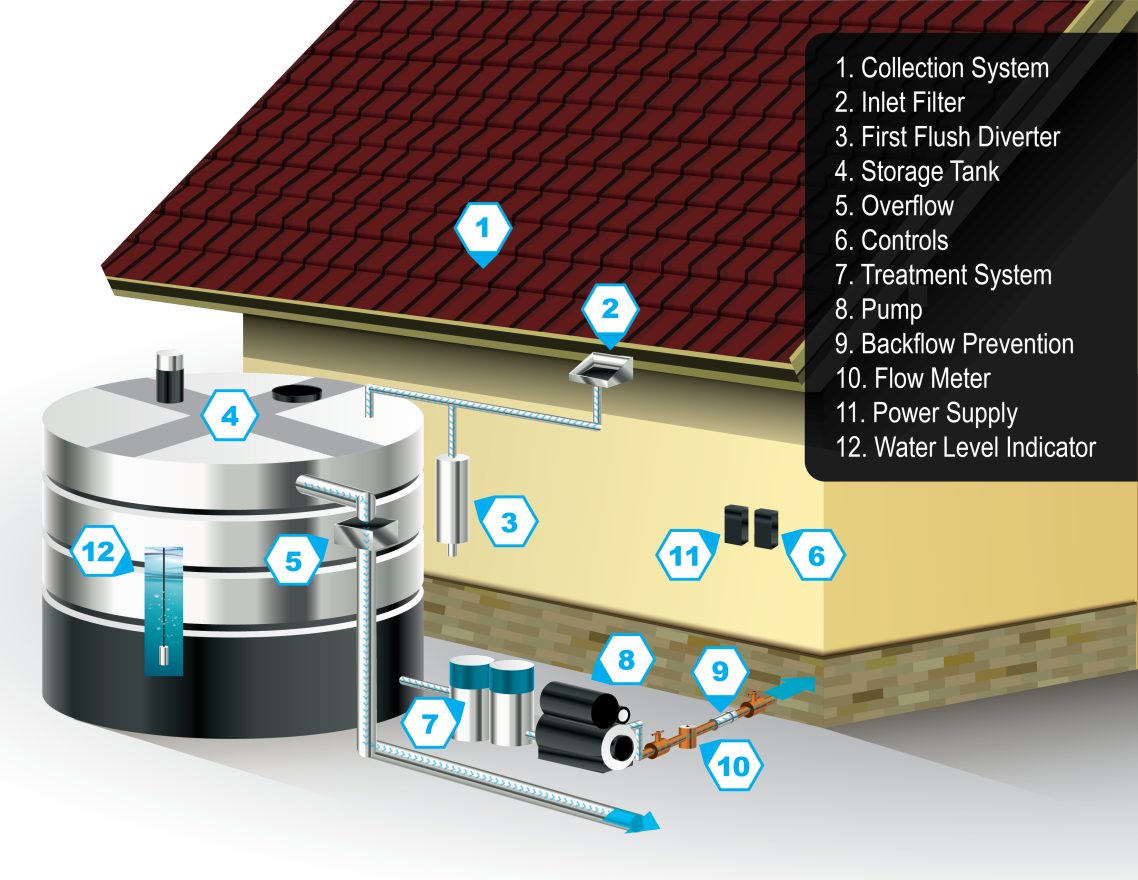
TL;DR: Rainwater harvesting systems offer federal agencies a sustainable way to reduce freshwater consumption through detailed technical guidance on setup, operation, and maintenance.
- Capture rooftop rainwater for irrigation, toilet flushing, and other non-potable uses.
- Implement systems with components vetted for commercial and government applications.
- Size systems by balancing catchment area, rainfall, and water demand.
- Maintain regularly to ensure performance of all system components.
- Consider rainwater alongside other alternative sources like reclaimed wastewater.
Why it matters: Implementing rainwater harvesting reduces reliance on municipal water supplies, cutting costs and enhancing water resilience for facilities, especially in drought-prone regions.
Do this next: Assess your site's rainfall patterns and roof area to estimate potential water capture.
Recommended for: Federal agencies and large commercial entities seeking to implement robust, technically sound rainwater harvesting systems to reduce freshwater demand and enhance water security.
This Federal Energy Management Program (FEMP) technology review provides federal agencies with detailed technical information on rainwater harvesting systems, including components, operations, maintenance, and sizing for offsetting freshwater use at facilities. It describes systems that capture, divert, and store rooftop rainwater for uses like landscape irrigation, washing, ornamental ponds, cooling tower makeup, toilet/urinal flushing, and—with added filtration/disinfection—potable supplementation. Key considerations include alternative water sources like harvested rainwater alongside condensate and reclaimed wastewater to reduce demand on surface/groundwater. The review emphasizes commercially available solutions relevant to federal sites, covering technology description, deployment strategies, and practical sizing based on catchment area, rainfall, and demand. Operations involve regular maintenance of catchment surfaces, conveyance (gutters/downspouts), storage (tanks/cisterns), treatment (screens/filters/UV), and distribution pumps. It offers actionable steps for agencies: assess site rainfall and roof area, calculate storage needs via mass balance (supply vs. demand), select materials resistant to weathering, and integrate monitoring for performance. Benefits include cost savings, regulatory compliance, and resilience. Practitioners learn specific engineering details, such as pump sizing, filtration sequences, and maintenance schedules, enabling precise system design and long-term viability for large-scale implementations in government and commercial settings.