Scythe vs. String Trimmer: Faster Weed Clearing?
By paul wheaton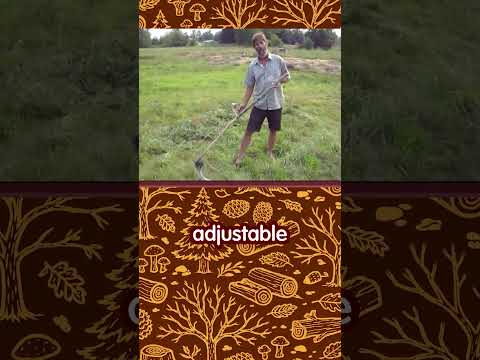
PermaNews Brief
Key Takeaways
A scythe, when properly maintained and wielded, can clear vegetation faster and more effectively than a string trimmer.
- Scythes offer a wider cutting path per stroke than trimmers.
- Sharp blades are crucial; peening extends sharpness.
- Proper technique maximizes efficiency and minimizes effort.
- Hip pivot and downward angle optimize cutting dynamics.
Why It Matters
Embracing traditional tools like the scythe can offer a more sustainable and efficient alternative for vegetation management, reducing reliance on fossil fuels and noisy machinery.
What to Do Next
Learn about peening and proper scythe sharpening techniques to enhance blade efficiency.
Recommended for: Those interested in efficient, sustainable land management and mastering traditional tools.
This article explores the efficiency of using a scythe for clearing vegetation, particularly in comparison to a string trimmer, and provides practical guidance on its proper use. The author, a proponent of permaculture and self-sufficiency, argues that a well-maintained and correctly operated scythe can be significantly faster and more effective than a string trimmer, especially for larger areas or specific types of vegetation.
The core of the argument rests on several key factors. Firstly, the scythe's design allows for a wider cutting swath with each stroke, covering more ground in less time. Unlike a string trimmer, which often requires multiple passes over the same area to achieve a clean cut, a sharp scythe can sever vegetation cleanly and efficiently in a single pass. This broad cutting action contributes significantly to its speed advantage.
Secondly, the article emphasizes the importance of a sharp blade. A dull scythe is inefficient and requires more effort, leading to fatigue and slower progress. The author details the process of "peening" – cold hammering the edge of the blade to thin it – and then sharpening it with a whetstone. Peening creates a very fine, durable edge that holds its sharpness longer than a factory-ground edge, making subsequent sharpening with a stone quicker and more effective. This meticulous blade maintenance is presented as crucial for maximizing the scythe's performance.
Thirdly, proper technique is highlighted as paramount. The article describes a rhythmic, sweeping motion that utilizes the body's natural mechanics, rather than relying solely on arm strength. This technique involves a pivot from the hips, allowing the blade to glide through the vegetation with minimal effort. The scythe is held with both hands, with the lower hand providing leverage and the upper hand guiding the blade. The cutting angle is also critical; the blade should be angled slightly downwards to slice through the stems rather than hacking at them. This ergonomic approach not only increases efficiency but also reduces strain and fatigue on the user.
The type of vegetation being cut also influences the scythe's effectiveness. While a string trimmer might struggle with thicker, woody stems or become entangled in dense, fibrous plants, a sharp scythe can handle a wider range of plant material. The article suggests that for clearing tall grasses, weeds, and even small brush, the scythe excels. It also notes that the scythe leaves the cut material neatly in windrows, which can be easily collected for composting, mulching, or animal feed, unlike a string trimmer that scatters debris indiscriminately.
Furthermore, the article touches upon the environmental and practical benefits of using a scythe. It operates silently, without the noise pollution associated with gas-powered string trimmers. It produces no emissions, making it a more environmentally friendly option. There's no need for fuel, oil, or replacement strings, reducing ongoing costs and maintenance. This self-sufficiency aspect aligns well with permaculture principles.
In summary, the article presents a compelling case for the scythe as a superior tool for vegetation management, particularly when compared to a string trimmer. Its efficiency stems from a combination of a wide cutting swath, meticulous blade maintenance through peening and sharpening, and the application of proper, ergonomic technique. These factors, coupled with its environmental and practical advantages, position the scythe as a highly effective and sustainable tool for land management.
Source: youtube.com
Related Analysis
- A Homesteading Shift: Drop Output, Build Failure-Ready Skills — Early signals from homesteading content and training events suggest practitioners are deprioritizing efficiency in favor…
- Long-Term Off-Grid Homesteads Challenge "Dropout" Lifestyle Narrative — Early signals from documented off-grid homesteads show durable, resource-light infrastructure outlasting the novelty pha…
Related on PermaNews
- Ernst Götsch's Cacao Syntropy: Master Agroforestry Now (How-To Guide)
- Finnish Off-Grid: Rocket Mass Heater Performance in Greenhouse (Case Study)
- Berlins schwimmende Gärten: Permakultur auf dem Wasser (Case Study)
- Rodale Report 2025: Thermal Mass Boost in Solar Greenhouses (Case Study)
- AUTarcaMatricultura La Palma: Permakultur & Energieautarkie (How-To Guide)
- Earthaven Ecovillage: 30 Years Off-Grid with Hydro & Solar (Video)
Explore more in Skills, Preparedness & Self-Reliance — the full hub for this knowledge area.