Corporate Climate Resilience: 2025 Foresight Series Insights
PermaNews Brief
Key Takeaways
Businesses can secure their future against climate change by integrating resilience into short, medium, and long-term strategies.
- Assess broad climate risks beyond direct operations.
- Embed climate data into all capital projects.
- Develop flexible systems for adaptive capacity.
- Map supply chain vulnerabilities and foster collaboration.
- Protect workforce with heat and mental health support.
- Explore innovative risk transfer mechanisms.
- Redesign business models for chronic climate shifts.
- Invest in natural infrastructure solutions.
Why It Matters
Climate change poses systemic risks to businesses, impacting operations, supply chains, and workforces. Proactive resilience building protects assets, ensures continuity, and unlocks new market opportunities.
What to Do Next
Conduct a systemic climate risk assessment that includes supply chains and community impacts, focusing on heat and water stress.
Recommended for: Business leaders, strategists, and risk managers in corporations of all sizes who need a comprehensive framework for building systemic climate resilience and identifying new market opportunities.
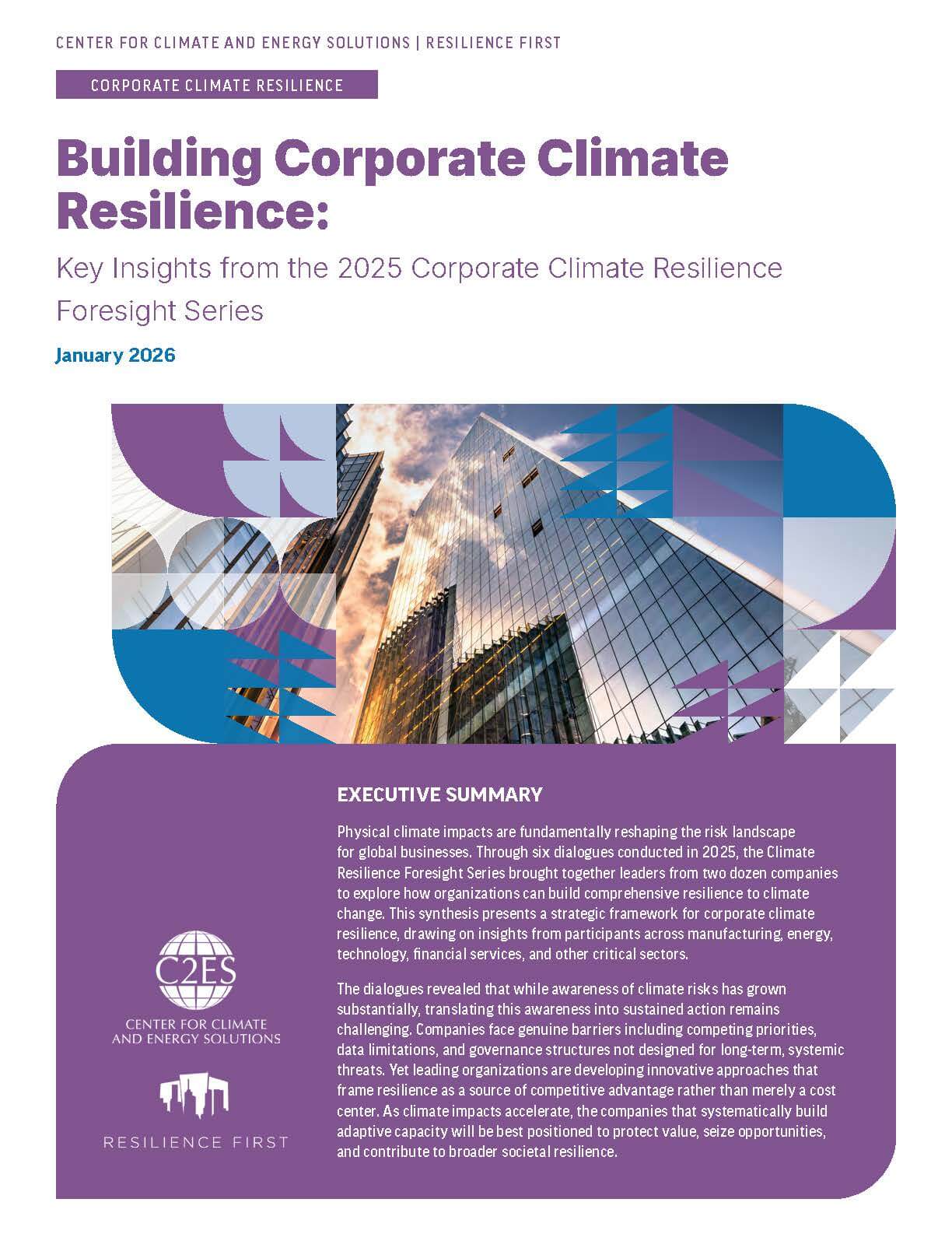
The 2025 Climate Resilience Foresight Series, conducted through six dialogues with leaders from two dozen companies, provides a comprehensive framework for organizations to build climate resilience across near-term, medium-term, and long-term horizons. In the near-term (0-2 years), key actions include conducting systemic risk assessments that extend beyond facility-level analysis to cascading risks in supply chains, infrastructure dependencies, and community impacts, with a focus on heat and water stress as foundational elements. Companies are urged to embed climate risk into engineering protocols and capital expenditures, updating design specifications, operational procedures, and maintenance to reflect future climate projections rather than historical data, making such considerations mandatory for all capital projects. Medium-term priorities (2-5 years) emphasize building internal adaptive capacity through flexible systems adjustable to changing conditions, avoiding single-scenario designs. Supply chain resilience involves mapping critical dependencies, assessing vulnerabilities, and fostering collaborative relationships. Workforce adaptation requires comprehensive heat management protocols, mental health support, and investments in community resilience to safeguard employee wellbeing. Innovative risk transfer mechanisms like parametric insurance and catastrophe bonds are recommended, alongside preparations for insurance market disruptions affecting insurability. Engaging external stakeholders through industry initiatives, community support, policy advocacy, and coalitions addresses systemic risks. Long-term transformation (5+ years) calls for redesigning business models, adapting products, services, and markets to chronic climate changes, and identifying opportunities in adaptation and resilience markets. Investments in natural infrastructure promote nature-based solutions offering multiple benefits, including GHG emissions reductions, improved land and water use, and community wellbeing, shifting from harm minimization to rebuilding natural and social capital while aligning business success with ecosystem health. This practitioner-oriented guide delivers actionable, phased strategies grounded in real-world corporate dialogues, enabling executives to prioritize resilience investments with measurable steps for implementation across organizational functions.
Source: c2es.org
Related Analysis
- Designers Push Urban Standard From Sustainable to Regenerative — Early signals point to a push for urban design that actively restores ecosystems, not merely reduces harm — with field-t…
- Scrapped EV Batteries Convert to Solar Storage in Off-Grid Markets — Several sources suggest retired EV batteries are finding a second role in rural off-grid solar systems, potentially lowe…
Related on PermaNews
- Designing Regenerative Resilience: Participatory Living Labs (How-To Guide)
- Amazonas: Chakra Waldgärten – Dynamische Agroforst-Wunder (Case Study)
- Nagaland's Jhum-Alder Agroforestry: Climate-Smart Farming (Article)
- CIT-ED Pioneers Tribal Food Forest for Climate & Food Security (Case Study)
- weADAPT: 100+ Climate Case Studies & Indigenous Practices (Case Study)
- Water Cycle Restoration Research: Indigenous Wisdom Meets Permaculture (Article)
Explore more in Water, Climate & Adaptation — the full hub for this knowledge area.