Dunbar/Spring: Tucson's 1600-Tree Native Food Forest Success
TL;DR: Arid urban areas can transform streets into productive, water-harvesting food forests using simple curb-cut technology and community effort.
- Curb cuts and basins capture over 1M gallons of stormwater annually.
- Native food forests thrive without supplemental irrigation once established.
- Shade from trees reduces urban temperatures by over 10°F (5.5°C).
- Mitigates downstream flooding by infiltrating stormwater runoff.
- Community collaboration is vital for successful implementation and maintenance.
Why it matters: This case study demonstrates how passive water harvesting not only conserves significant amounts of water but also creates multi-functional ecological benefits, enhancing urban resilience and community well-being in the face of climate change.
Do this next: Research local regulations for curb cuts and passive water harvesting in your municipality and identify potential public right-of-way areas for similar projects.
Recommended for: Urban planners, community organizers, and permaculture enthusiasts in dry, hot climates looking for practical, scalable water management and greening strategies.
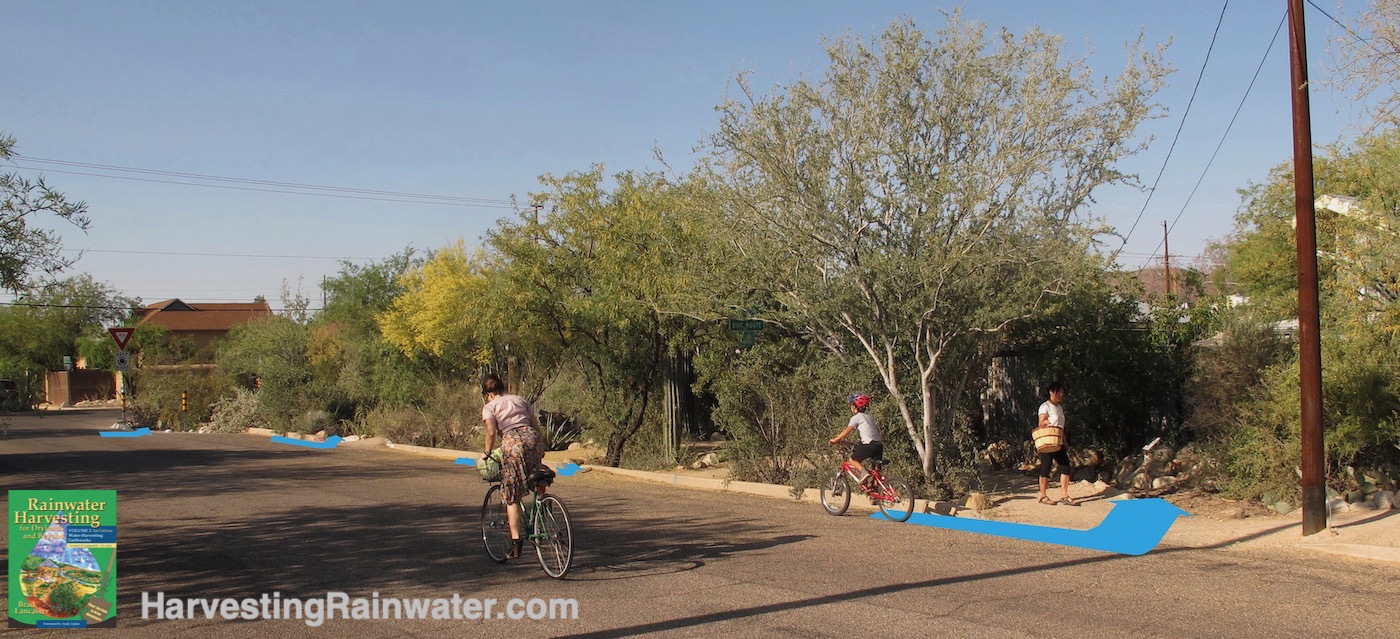
This case study details a highly successful passive water harvesting initiative in the Dunbar/Spring neighborhood of Tucson, Arizona, one of the fastest-warming cities in the U.S. The project has planted over 1,600 native food-bearing trees and hundreds of multi-use native understory plants, primarily in public rights-of-way. Key techniques include curb cuts and curb cores that direct street runoff into street-side and in-street planting basins, allowing stormwater to passively irrigate the vegetation. These methods harvest over 1 million gallons of stormwater annually that previously drained wastefully from the neighborhood. Once established, the vegetation requires no supplemental water, leading to massive water savings. Additional benefits include energy conservation by eliminating the need to pump water and reducing mechanical heating/cooling demands through the shade and shelter provided by the mature plants, which lower urban temperatures by over 10°F (5.5°C) in shaded areas. The project also mitigates downstream flooding by slowing and infiltrating runoff. Implementation involves community collaboration with neighbors to transform urban streets into beautified, sheltered corridors. Visual evidence such as before-and-after photos is available via DunbarSpringNeighborhoodForesters.org, demonstrating the transformation from bare streets to lush, productive green infrastructure. This approach exemplifies regenerative permaculture principles in an arid urban environment, proving scalable passive water management that enhances biodiversity, food production, climate resilience, and community livability without ongoing inputs. Practical details highlight the simplicity: minimal infrastructure changes like curb modifications redirect existing flows effectively, making it replicable for other dryland cities facing water scarcity and heat intensification.