Joanna Macy's Great Turning: Jess Serrante on Systemic Shift
By Alex Leff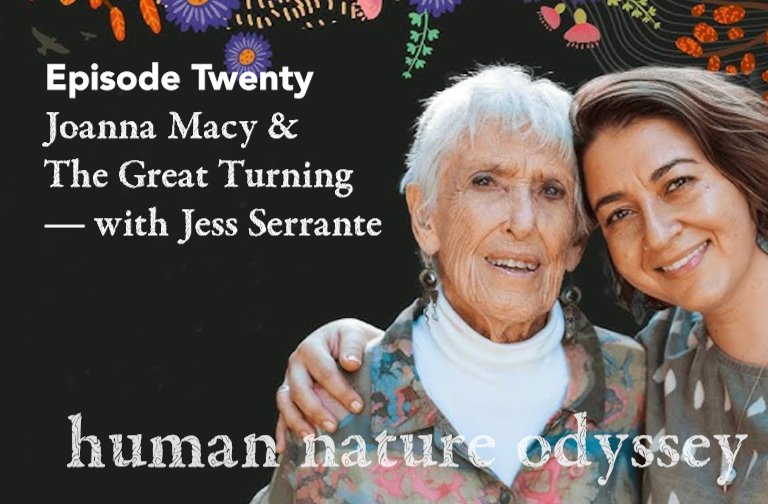
TL;DR: Humanity faces a critical juncture, balancing systemic breakdown with the potential for transformative emergence towards a life-sustaining civilization.
- The "Great Turning" involves societal collapse and regenerative emergence.
- It requires a shift from industrial growth to life-sustaining values.
- Holding actions slow destruction and mitigate immediate impacts.
- Structural changes build sustainable and just new systems.
- Conscious participation and collective effort are essential for this transition.
Why it matters: Understanding the Great Turning provides a framework for navigating global crises and actively participating in creating a more equitable and sustainable future.
Do this next: Consider how your actions contribute to either slowing destruction or building new, sustainable systems.
Recommended for: Anyone interested in systemic change and how permaculture principles contribute to a regenerative future.
The concept of the "Great Turning," as articulated by Joanna Macy, describes a pivotal period in human history characterized by a dual process of systemic collapse and transformative emergence. Macy, a prominent eco-philosopher and activist, posits that humanity is currently experiencing a "Great Unraveling," where established ecological, political, economic, and social structures are demonstrating significant signs of breakdown and instability. This unraveling manifests in various global crises, including climate change, biodiversity loss, social inequality, and political polarization, all of which contribute to a sense of widespread uncertainty and potential catastrophe.
However, Macy's framework is not solely focused on decline. She simultaneously emphasizes the potential for a "Great Turning," which represents a fundamental shift towards a more life-sustaining and equitable civilization. This turning is not a predetermined outcome but rather an active process requiring conscious participation and collective effort. It involves a paradigm shift away from an industrial growth society, which prioritizes endless expansion and resource exploitation, towards a life-sustaining society that values ecological integrity, social justice, and community well-being.
The Great Turning is envisioned as a multifaceted transition, encompassing three key dimensions. The first dimension is "holding actions," which involve efforts to slow down the destruction of the planet and mitigate the most severe impacts of the unraveling. This includes environmental activism, conservation efforts, and advocacy for policy changes that protect ecosystems and vulnerable communities. These actions are crucial for buying time and creating space for deeper systemic change.
The second dimension is "structural changes," which refer to the development of new systems and institutions that are inherently more sustainable and just. This involves reimagining economic models, political governance, and social structures to align with ecological principles and promote equity. Examples include the growth of renewable energy, permaculture, regenerative agriculture, local economies, and cooperative movements. These initiatives aim to build resilient alternatives to the dominant industrial paradigm.
The third dimension, and perhaps the most profound, is "a shift in consciousness." Macy argues that a fundamental change in our collective worldview and values is essential for the Great Turning to succeed. This involves moving away from an anthropocentric view, which places humans at the center of existence and sees nature as a resource to be exploited, towards an ecocentric perspective that recognizes the interconnectedness of all life and humanity's role as an integral part of the Earth's living systems. This shift in consciousness fosters a sense of gratitude, interconnectedness, and responsibility, inspiring individuals to act for the well-being of the whole.
Macy's work encourages individuals to engage with the pain and despair associated with the unraveling, not to be paralyzed by it, but to transform it into motivation for action. She suggests that acknowledging the severity of the crises can lead to a deeper appreciation for life and a stronger commitment to its preservation. The Great Turning is therefore not merely a theoretical concept but a call to active participation in shaping a more desirable future. It emphasizes the power of collective agency and the potential for human creativity and compassion to navigate this critical juncture in history. By embracing both the challenges of the unraveling and the opportunities of the turning, individuals and communities can contribute to the emergence of a truly life-sustaining world.