DIY Off-Grid Solar: Install Your Own System (Ozark Guide)
PermaNews Brief
Key Takeaways
DIY off-grid solar installation offers energy independence through scalable systems, following steps from planning and preparation to panel setup, battery storage, and system testing.
- Calculate energy needs to size your off-grid solar system.
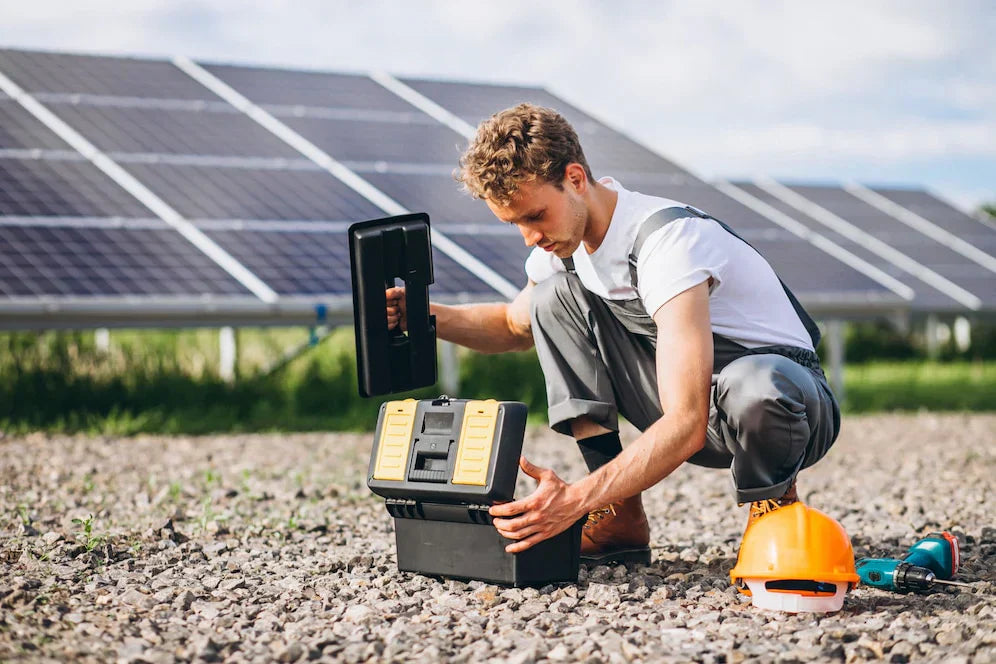
- Gather essential tools and prioritize safety during installation.
- Mount panels optimally; consider roof or ground placement.
- Wire batteries for capacity and connect to charge controller.
- Test components thoroughly and monitor system performance.
Why It Matters
Installing your own off-grid solar system reduces reliance on traditional energy grids, offering long-term savings and resilience against power outages.
What to Do Next
Assess your current daily energy consumption by listing all appliances and their usage.
Recommended for: Homeowners seeking practical guidance to install their own off-grid solar power systems and achieve energy self-sufficiency.
This practical guide from Ozark Mountain Offgrid provides a detailed step-by-step process for DIY installation of off-grid solar systems, enabling homeowners to achieve energy independence. It emphasizes starting small with scalable DIY off-grid solar kits that include solar panels, lithium batteries for nighttime and emergency storage, inverters, and charge controllers. Key steps begin with Step 1: Planning Your System, where users assess daily energy needs by listing appliances, their wattage, and usage hours to calculate total watt-hours required. Select an appropriate kit based on this, considering factors like location's sunlight hours and future expansion. Step 2: Preparing for Installation requires gathering tools such as wrenches, screwdrivers, wire cutters, multimeter, and safety gear like gloves and goggles. Safety precautions include disconnecting power sources, working in dry conditions, and following local electrical codes. Step 3: Installing the Panels involves choosing roof or ground mounting—roof for space efficiency, ground for easier access. Secure racking systems first, mount panels at optimal tilt (latitude angle), connect in series/parallel for desired voltage, and route wiring safely to avoid shading. Step 4: Setting Up the Battery Storage connects batteries in parallel or series for capacity/voltage needs, wiring to the charge controller and inverter. Use fuses and breakers for protection, ensure proper ventilation for lithium batteries to prevent overheating, and configure energy management for efficient DC-to-AC conversion. Step 5: Testing and Monitoring tests each component individually—check panel output with multimeter, verify charge controller function, test inverter under load, and monitor via apps or displays for performance. Troubleshoot issues like low output (dirty panels, loose connections) or battery problems (over-discharge). The guide highlights lithium batteries' advantages: longer life (10+ years), deeper discharge (80-90%), and lighter weight over lead-acid. Practical tips include oversizing systems by 20-30% for cloudy days, integrating monitoring software for remote checks, and gradual scaling from basic lighting to full home power. This hands-on approach empowers regenerative homesteaders with self-sufficient, low-maintenance setups tailored to permaculture lifestyles, reducing reliance on grids while minimizing costs through DIY labor.
Source: omosolar.com
Related Analysis
- What Climate-Adapted Natural Building Actually Costs in Germany — Climate-adapted natural building in Germany — spanning straw bale, rammed earth, hempcrete, and Passive House-certified …
- Natural Builders Swap Whole-Structure Cob for Hybrid Wall Systems — Several sources suggest natural builders are dividing straw bale and cob by solar orientation within single homes—a func…
Related on PermaNews
- Finnish Off-Grid: Rocket Mass Heater Performance in Greenhouse (Case Study)
- Rodale Report 2025: Thermal Mass Boost in Solar Greenhouses (Case Study)
- Earthaven Ecovillage: 30 Years Off-Grid with Hydro & Solar (Video)
- 2025: Rocket Mass Heaters in PHI-Certified Earthship Tiny Homes (Case Study)
- Off-Grid Water: Cistern Design & Sizing for Security (How-To Guide)
- Net-Zero Greenhouse Design: Year-Round Food Production via ATTRA (How-To Guide)
Explore more in Shelter, Energy & Infrastructure — the full hub for this knowledge area.