Cassava Explained: Permaculture's Tropical Root Staple (Part 1)
By Discover Permaculture with Geoff Lawton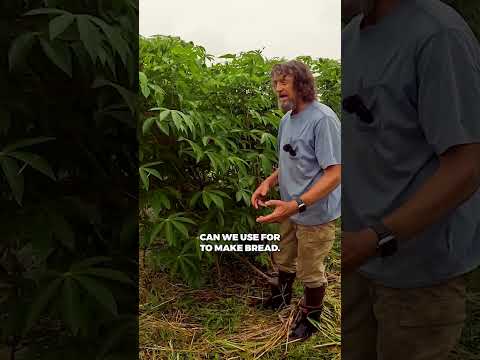
TL;DR: Cassava is a resilient, high-yield tropical root crop suitable for permaculture, but requires proper processing due to toxicity.
- Cassava is a staple crop for millions globally.
- It thrives in poor soils and drought conditions.
- High caloric yield makes it efficient for food production.
- Tuberous roots contain toxins requiring processing.
- Traditional methods effectively remove toxic compounds.
Why it matters: Cassava offers a practical solution for food security and efficient carbohydrate production in challenging environments.
Do this next: Research traditional cassava processing methods for safe consumption.
Recommended for: Permaculture designers and growers in tropical climates focused on resilient food systems and self-sufficiency.
Cassava, a staple crop for millions globally, is a fascinating plant with significant potential within permaculture systems, particularly for those aiming for self-sufficiency and food security. Originating in South America, this woody shrub is now widely cultivated in tropical and subtropical regions around the world, prized for its starchy tuberous roots. These roots are a primary source of carbohydrates, making cassava a vital food source, especially in areas where other crops might struggle.
One of the most remarkable characteristics of cassava is its resilience. It thrives in challenging conditions, including poor soils and periods of drought, which makes it an invaluable asset in permaculture designs focused on creating robust and adaptable food systems. Unlike many other staple crops that demand fertile land and consistent moisture, cassava can produce a substantial yield even in marginal environments. This hardiness is a key reason for its widespread adoption in developing countries, where food security is a constant concern.
Beyond its resilience, cassava offers a high caloric yield per unit of land, making it an efficient crop for maximizing food production in a given area. This efficiency is particularly appealing in permaculture, where the goal is often to produce as much food as possible with minimal external inputs and land use. The plant's ability to grow in diverse conditions also means it can be integrated into various layers of a food forest or garden, contributing to the overall biodiversity and productivity of the system.
However, it's crucial to understand that cassava roots contain cyanogenic glycosides, which are toxic if consumed raw or improperly processed. This is not an insurmountable challenge, but rather a critical aspect of working with cassava that requires knowledge and careful handling. Traditional processing methods, such as peeling, grating, soaking, fermenting, and cooking, are highly effective at breaking down these compounds, rendering the roots safe for consumption. These methods have been developed over centuries by indigenous communities and are an integral part of cassava cultivation and utilization. There are also "sweet" varieties of cassava that contain lower levels of these compounds, making them easier to process, though some level of preparation is still generally recommended. "Bitter" varieties, with higher toxin levels, are often preferred for their higher yields and pest resistance, but require more thorough processing.
From a permaculture perspective, cassava offers multiple benefits beyond just its edible roots. The leaves of the cassava plant are also edible and nutritious, providing a source of protein, vitamins, and minerals. When cooked properly, they can be a valuable addition to the diet. Furthermore, the plant's robust growth habit can contribute to soil health. Its extensive root system can help prevent erosion, and its biomass can be used as mulch or incorporated into compost, enriching the soil over time.
Integrating cassava into a permaculture system involves considering its placement within a food forest or garden design. As a relatively tall shrub, it can occupy a mid-level or understory position, depending on the specific design and other plants present. Its shade tolerance, while not absolute, allows for some flexibility in placement. The plant's long growing season also means it can provide a continuous harvest over an extended period, contributing to year-round food availability.
In summary, cassava is a highly valuable crop for permaculture and self-sufficiency due to its resilience, high caloric yield, and adaptability to challenging conditions. While its toxicity requires careful processing, traditional methods are effective and well-established. Its edible roots and leaves, along with its contributions to soil health, make it a multifaceted plant with significant potential for creating productive and sustainable food systems. Understanding its characteristics and proper handling techniques is key to harnessing its full benefits within an organic gardening or food forest context.