Capture Free Water: DIY $50 Rainwater Harvesting Guide
By My Simple Homestead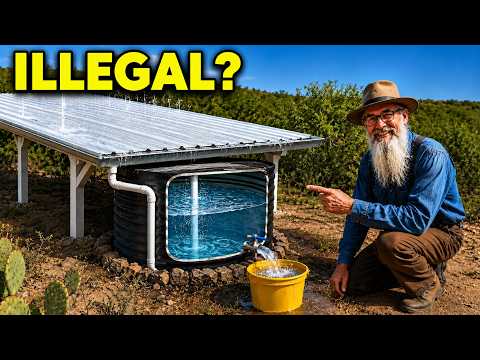
PermaNews Brief
Key Takeaways
Learn how to efficiently set up low-cost rainwater harvesting systems for various uses.
- Calculate catchment area and rainfall for efficiency
- Start with basic components for irrigation
- Consider non-potable versus potable water options
- Understand costs for each component
- Follow local regulations for potable systems
Why It Matters
Implementing rainwater systems can provide sustainable water sources for gardening and non-potable uses, reducing dependence on municipal supplies.
What to Do Next
Calculate your roof catchment area and local rainfall.
Permaculture Context
For anyone serious about closing the water loop on a homestead or urban plot, this kind of granular cost breakdown finally makes the conversation honest. Rainwater harvesting has long suffered from two failure modes in the permaculture world: over-engineered systems that never get built, and under-designed ones that fail the first dry summer. What this approach gets right is the staging logic — beginning with irrigation capture means you generate real observational data about your actual collection rates, storage behavior, and seasonal gaps before committing to more complex infrastructure. That field intelligence is worth more than any design manual. For regenerative practitioners, the first-flush diverter is particularly worth emphasizing: it protects soil biology in your garden beds from the concentrated pollutants that wash off roofing materials in the initial rainfall minutes, a detail often lost in beginner guides. The deeper implication here is sovereignty — even a single 55-gallon barrel meaningfully reduces municipal dependency during shoulder seasons, buys time during supply disruptions, and starts building the observational literacy that eventually supports a whole-property water strategy.
Recommended for: Homeowners and small-scale growers seeking sustainable water solutions.
This video is a practical rainwater-harvesting walkthrough focused on low-cost implementation rather than theory. It explains a staged build path for capturing roof runoff, starting with the basic sizing step: measure catchment area, check local annual rainfall, and multiply roof area by rainfall in inches and by 0.623 to estimate gross gallons per year. That simple calculation helps determine whether a rainwater system makes sense for a given property before any materials are purchased. The video then moves into a realistic first build for non-potable use, recommending gutters, a mesh screen, a first-flush diverter, and a covered storage tank or reclaimed 55-gallon drum. It gives concrete cost guidance for an irrigation-focused setup, including a reclaimed barrel cost range of about $20 to $30, a mesh screen around $5, a PVC first-flush diverter around $30 to $60, and a downspout adapter around $10, for a total of roughly $50 to $150. It also distinguishes between irrigation and more advanced indoor non-potable uses such as toilet flushing and laundry, and notes that potable use requires additional treatment and compliance with local code. The treatment section is unusually specific for a practical video, naming sediment filtration, sand and charcoal media, UV sterilization, and boiling as options, while warning that potable systems must be designed to code. That combination of sizing logic, staged build instructions, cost realism, and explicit separation of potable versus non-potable applications makes it a high-signal resource for resilience-minded households or small-scale growers who need a low-cost water source with clear implementation steps.
Source: youtube.com
Related Analysis
- Regenwasser nutzen: 5 Wege, was sie wirklich kosten – und die Rechtslage, die viele übersehen — Regenwassernutzung ist in Deutschland Mainstream – von der Regentonne bis zur Erd-Zisterne. Wir zeigen fünf Wege vom Gar…
- Water-Harvesting Swales: What They Cost, Where Practitioners Agree — and the One Real Safety Debate — Swales — level, on-contour ditches that slow, spread and sink rainwater into the soil — are a foundational permaculture …
Related on PermaNews
- Finnish Off-Grid: Rocket Mass Heater Performance in Greenhouse (Case Study)
- Berlins schwimmende Gärten: Permakultur auf dem Wasser (Case Study)
- Rodale Report 2025: Thermal Mass Boost in Solar Greenhouses (Case Study)
- Finca Bellavista: Costa Rica's 200-Acre Water System Innovation (Case Study)
- Priya's 2024 India Report: 10-Hectare Water Harvesting Success (Case Study)
- Earthaven Ecovillage: 30 Years Off-Grid with Hydro & Solar (Video)
Explore more in Water, Climate & Adaptation — the full hub for this knowledge area.