Brett Chedzoy: NY Woodland to Silvopasture Grazing (Ep. 216)
By Grazing Grass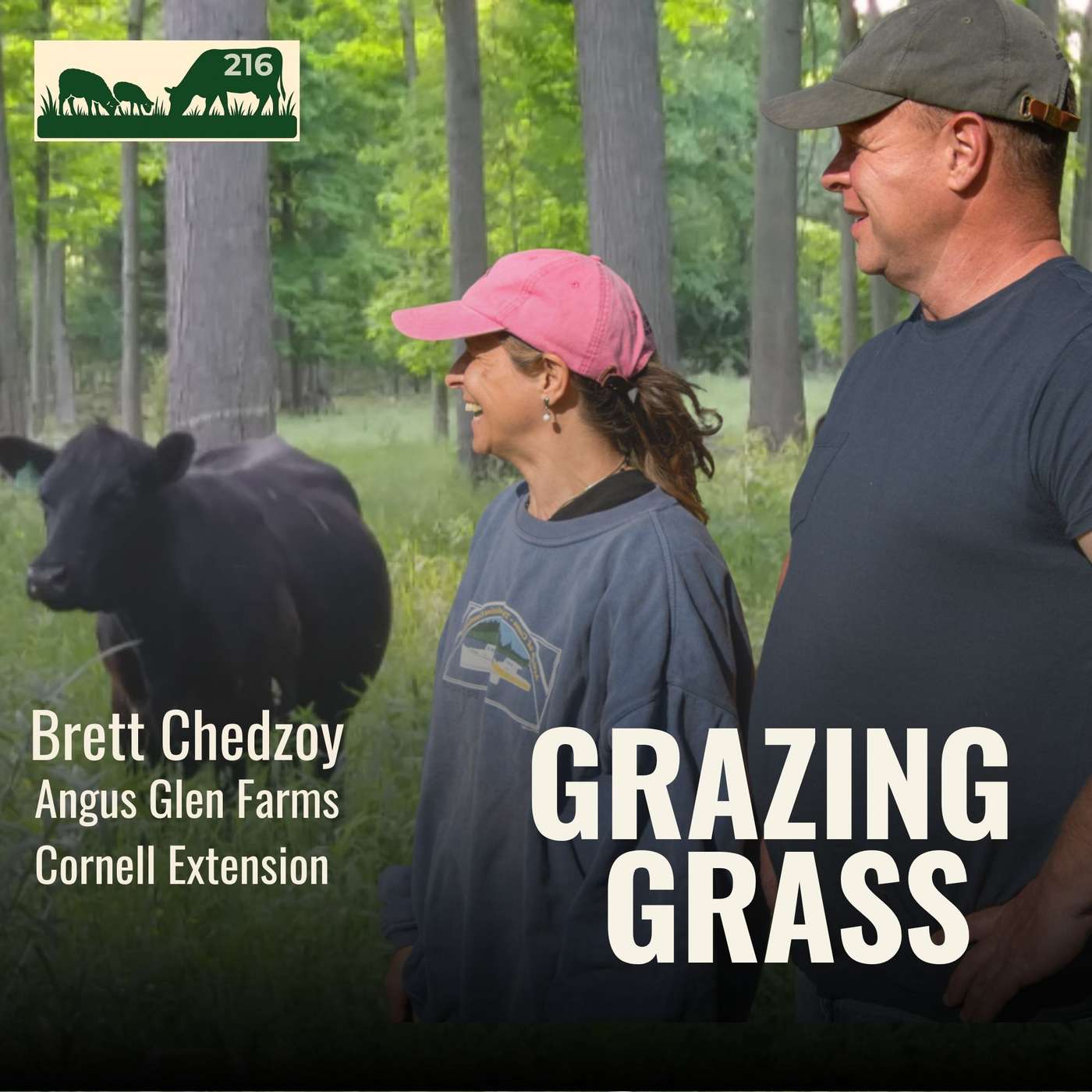
TL;DR: Transforming woodlands into productive grazing areas requires a balanced approach to timber value, forage production, and site-specific considerations.
- Silvopasture integrates timber and forage in woodlands.
- Thinning improves forage without harming timber value.
- Cool-season forages thrive in partial shade.
- Site evaluation is crucial for silvopasture success.
- Start small to gain experience in silvopasture.
Why it matters: Silvopasture offers a sustainable way to increase agricultural productivity from wooded land while maintaining ecological balance and timber resources.
Do this next: Consult your local land-grant extension office for silvopasture guidance.
Recommended for: Anyone seeking to understand and implement silvopasture practices, particularly those in forested regions with existing woodlands and an interest in integrated farming.
Brett Chedzoy, a Cornell Extension Forester and co-operator of Angus Glen Farms in upstate New York, shared insights on transforming existing woodlands into productive grazing areas, a practice known as silvopasture. His experience spans managing over 100 cow-calf pairs across 600 acres, much of which is wooded, and includes a background in ranching in central Argentina since the mid-1990s, where he first developed an interest in cattle after serving as a Peace Corps volunteer.
Chedzoy emphasized that thinning woodlands for silvopasture is not solely about increasing light penetration. It also involves safeguarding the long-term value of timber resources while simultaneously enhancing forage production. He highlighted the distinct characteristics of silvopasture in the forested Northeastern United States compared to the savanna-style systems prevalent in other regions. A key point he made was that cool-season forages, such as orchardgrass, can flourish even in partial shade, thereby extending the grazing season at both its beginning and end.
To assist landowners in evaluating their woodlands for silvopasture potential, Chedzoy developed a 10-question site evaluation tool. This tool helps assess whether a particular wooded area is suitable for this integrated farming approach. He also provided guidance on selecting an appropriate logging crew for silvopasture thinning, noting that this type of operation differs significantly from high-value timber harvesting.
Chedzoy addressed the common discrepancy between the timeframes typically considered by foresters and farmers, advocating for finding a balanced approach that accommodates both perspectives. For those interested in exploring silvopasture, he recommended contacting land grant extension offices, state forestry agencies, and local soil and water conservation districts as initial points of contact.
A practical piece of advice offered was to begin with small-scale projects to gain experience before undertaking larger endeavors, such as a 50-acre conversion. Several resources were mentioned for further information, including Cornell Silvopasture resources (accessible by searching "Cornell silvopasture" or visiting forestconnect.info), Chedzoy's 10-question silvopasture site evaluation tool, the National Agroforestry Center, and the University of Missouri silvopasture resources.
Chedzoy's background includes roots in Kansas wheat farming and a Welsh sheep-herding grandfather, and his time as a Peace Corps volunteer in Argentina exposed him to the wisdom of gauchos regarding the distinction between working diligently and working intelligently. These diverse experiences have shaped his comprehensive understanding of integrated land management.