Off-Grid Solar: Homestead Power (Since 2014)
PermaNews Brief
Key Takeaways
Off-grid solar electricity offers homesteads energy independence, reduced bills, and environmental benefits through careful planning and component selection.
- Careful planning is vital for off-grid solar success.
- Battery storage crucial for reliable power supply.
- Ongoing maintenance ensures system longevity.
- Start small, scale up for affordability and learning.
- Energy conservation maximizes off-grid efficiency.
- Independence gained outweighs initial costs.
Why It Matters
Adopting off-grid solar reduces reliance on fossil fuels, lowers utility bills, and fosters self-sufficiency in homesteads, contributing to a regenerative lifestyle.
What to Do Next
Research local solar installers specializing in off-grid systems and request a site assessment for your property.
Recommended for: Homesteaders and individuals seeking to establish energy independence through renewable solutions.
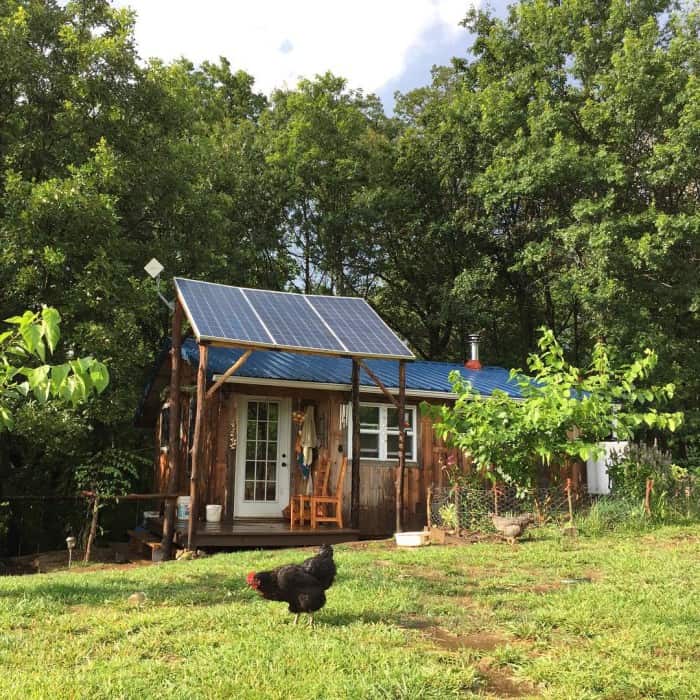
This article provides a detailed practitioner account of installing and living with an off-grid solar electricity system on a homestead, installed in November 2014. The author collaborated with Backwoods Solar, a company specializing in off-grid systems, to design a setup tailored to their budget and needs. Key components include three 290-watt solar panels for energy capture, eight Trojan 6V batteries forming a substantial battery bank for storage, and a high-quality inverter that supports future expansion. The system is fully off-grid, relying on battery storage rather than grid connection, which suits homesteads with moderate electricity demands. Practical insights highlight the decision-making process: assessing intended use like powering household appliances, lighting, and tools without excessive loads. Maintenance is minimal, focusing on periodic battery checks and panel cleaning. The author contrasts this with grid-tied systems, noting off-grid's independence but need for precise sizing to avoid blackouts. Real-world performance shows reliability over years, powering daily life including refrigeration, water pumping, and electronics. Lessons include starting small for affordability—total cost was manageable without loans—and planning for scalability, such as adding panels later. Energy conservation tips emphasize efficient appliances and usage patterns, like batch cooking or LED lighting, to maximize battery life. Challenges addressed: initial investment offset by no utility bills, weather variability managed via battery capacity, and system monitoring via charge controllers. This setup exemplifies regenerative homesteading by integrating renewables into self-sufficient living, reducing fossil fuel dependence. For practitioners, specifics like Trojan batteries' deep-cycle design (suitable for repeated discharges) and 290W panel output (ideal for 1-2kW daily needs in sunny climates) offer concrete benchmarks. The article underscores hybrid potential but focuses on solar's simplicity for most homesteads, providing actionable steps: calculate loads (e.g., 1-3kWh/day baseline), select components, professional design if novice, and monitor via apps. Long-term success proves viability for regenerative setups aiming for resilience.
Source: homestead-honey.com
Related Analysis
- Homeowners Retrofit Properties with Renewable Energy Solutions — Renewable energy retrofitting gains traction as regenerative agriculture principles inform home upgrades. Experts point …
- New Practices Build Climate-Resilient Cob Homes — Cob construction emerges as a key strategy in enhancing resilience against ecological challenges in permaculture systems…
Related on PermaNews
- Finnish Off-Grid: Rocket Mass Heater Performance in Greenhouse (Case Study)
- Rodale Report 2025: Thermal Mass Boost in Solar Greenhouses (Case Study)
- Earthaven Ecovillage: 30 Years Off-Grid with Hydro & Solar (Video)
- Borneo's Rainforest Revival: Dr. Smits' Sugar Palm Village Hub (Case Study)
- Holmgren's 40 Yrs: Abundant Permaculture Design Webinar 3 (Video)
- 2025: Rocket Mass Heaters in PHI-Certified Earthship Tiny Homes (Case Study)
Explore more in Shelter, Energy & Infrastructure — the full hub for this knowledge area.