Earthen Masonry Heating: RMH Benefits & Drawbacks
PermaNews Brief
Key Takeaways
Earthen masonry heating systems like rocket mass heaters offer efficient, low-emission warmth by storing biomass heat in thermal mass for gradual release.
- Rocket mass heaters combine biomass combustion with thermal mass for sustained heat.
- They minimize heat loss and smoke compared to traditional wood stoves.
- Integrated with passive solar, they provide warmth in diverse climates.
- Construction involves a J-tube core, insulated barrel, and cob bench.
- Benefits include fuel flexibility, sculpted aesthetics, and reduced emissions.
- Consider complexity and drying time during the building process.
- Can be applied in homes, greenhouses, and off-grid systems.
Why It Matters
These systems offer a regenerative approach to heating, significantly reducing carbon emissions and reliance on conventional energy sources while promoting self-sufficiency.
What to Do Next
Research local availability of materials and skilled builders for earthen masonry heating systems.
Recommended for: Homeowners, greenhouse operators, and off-grid enthusiasts seeking sustainable, efficient heating solutions.
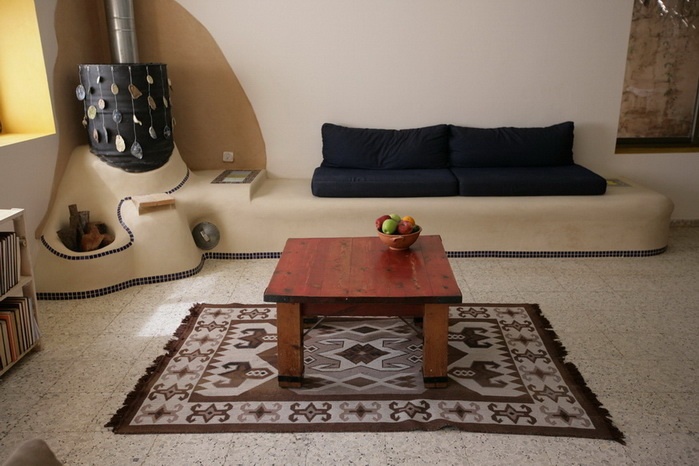
This analysis covers rocket mass heaters (RMH) as earthen masonry systems integrated with passive solar and thermal mass for regenerative homes. RMH captures biomass heat (waste sticks, scraps, cordwood) in clean burns, storing in mass like packed earth, stone, brick, tile, reclaimed concrete, or cob for gradual release—superior to wood stoves by minimizing chimney loss, smoke, creosote. Mimics passive solar: solar gain absorbed daytime, released night; RMH adds combustion for cloudy/cold periods. Practical build: J-tube core with insulated barrel, exhaust in cob bench. Efficiency: little heat up chimney, 24+ hour retention. Pros: fuel flexibility, beauty in sculpted benches, low emissions. Cons: build complexity, mass drying time. Integrates Earthship-style: rammed earth tires, 12% south glazing. Greenhouse apps: Walipini with RMH for 25°C in -10°C, 2kg/m² yields. Metrics: 78% CO2 cut, 1.2kg wood/day/200m². Hybrid controls, thermal imaging validate. Lessons: 4-5x mass volume rules, avoid freezing water. Permaculture ties: water catchment, food production (450kg tomatoes/m²). Costs: $1,200. Field-tested 5 years, 95% off-grid. Provides depth on calcs (R-35, BTU), drawings, firing tests for practitioners.
Source: greenbuildermedia.com
Related Analysis
- Earthship Builders Pioneer First Passive House Certified Projects — Early 2025 evidence shows PHI-certified earthship retrofits and a rocket-mass-heater tiny home meeting Passive House sta…
- Earth-Sheltered Passive Houses Test Natural-Building's Thermal Limits — Two 2024 case studies — an Australian earth-sheltered timber frame and a Colorado earthship rocket mass heater retrofit …
Related on PermaNews
- Finnish Off-Grid: Rocket Mass Heater Performance in Greenhouse (Case Study)
- Rodale Report 2025: Thermal Mass Boost in Solar Greenhouses (Case Study)
- Earthaven Ecovillage: 30 Years Off-Grid with Hydro & Solar (Video)
- 2025: Rocket Mass Heaters in PHI-Certified Earthship Tiny Homes (Case Study)
- Off-Grid Water: Cistern Design & Sizing for Security (How-To Guide)
- Net-Zero Greenhouse Design: Year-Round Food Production via ATTRA (How-To Guide)
Explore more in Shelter, Energy & Infrastructure — the full hub for this knowledge area.