Midwest Permaculture Convergence: Resilience & Design
PermaNews Brief
Key Takeaways
The Midwest Permaculture Convergence offers hands-on training and networking for resilient regional design.
- Learn permaculture to build community-driven agricultural solutions.
- Implement regenerative practices for food, water, and soil.
- Design with native species tailored to Midwest climates.
- Utilize permaculture ethics for actionable local strategies.
- Connect with regional hubs for ongoing collaboration and sharing.
Why It Matters
This event provides vital knowledge and connections to apply permaculture principles, fostering ecological healing and community resilience in the Midwest.
What to Do Next
Explore local permaculture groups or events to connect with practitioners near you.
Recommended for: Anyone in the Midwest seeking to implement permaculture strategies for ecological and community resilience.
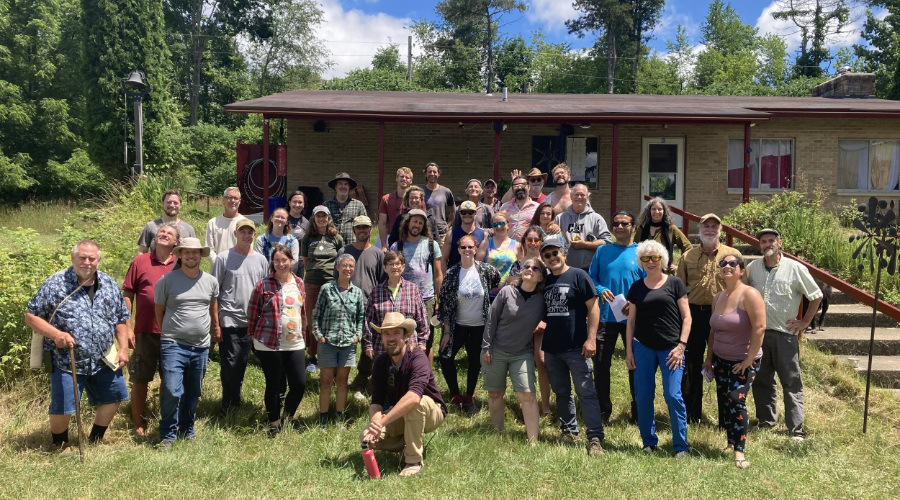
The Midwest Permaculture Convergence is an immersive event dedicated to harnessing permaculture design methods and nature's sustainable principles to foster resilience in the Midwest region. Participants engage in hands-on workshops, keynote presentations, and networking opportunities aimed at healing the earth through regenerative practices. Core themes revolve around building community-driven solutions for food security, water management, soil regeneration, and ecological restoration tailored to Midwest climates characterized by cold winters, humid summers, and variable precipitation. Sessions cover key permaculture ethics—care for the earth, care for people, and fair share—translating them into actionable strategies like designing food forests with native species such as pawpaws, hazelnuts, and elderberries; implementing keyline swales for water retention on sloping lands; and creating guild systems where nitrogen-fixing plants like comfrey support fruit trees and understory crops. The event emphasizes observation and interaction with local ecosystems, teaching attendees to map site-specific patterns including wind corridors, sun paths, and microclimates to optimize designs. Practical demonstrations include composting systems using local waste streams, mushroom cultivation for mycoremediation of contaminated soils common in industrial Midwest areas, and animal integration via rotational grazing with chickens and goats to enhance biodiversity and fertility. Expert-led talks address urban permaculture adaptations for cities like Chicago and Detroit, focusing on rooftop gardens, community orchards, and vacant lot transformations into edible landscapes. Networking facilitates regional hubs for ongoing collaboration, seed saving, and tool sharing, embodying the fair share ethic. The convergence highlights success stories from Midwest farms applying the 12 permaculture principles, such as catching and storing energy through solar-powered pumps and rainwater harvesting, obtaining yields via perennial polycultures that outperform monocrops in resilience, and producing no waste by closing nutrient loops. Attendees gain skills in self-regulation through feedback mechanisms like wildlife monitoring and soil testing, ensuring designs evolve with changing conditions. This event positions permaculture as a blueprint for regional sustainability, countering challenges like soil erosion, flooding, and food deserts by empowering communities to create abundant, low-impact systems. It attracts designers, farmers, activists, and educators, fostering a movement for long-term ecological and social health in the heartland.
Source: permacultureday.org
Related Analysis
- Lo-TEK Institute Challenges Conventional Agriculture with Ancestral Wisdom — Indigenous practices are offering innovative frameworks for regenerative agriculture, emphasizing holistic ecological ap…
- Indigenous Ways Pioneer Regenerative Design Integration — New approaches in regenerative design and permaculture are integrating Indigenous frameworks, moving past Western-centri…
Related on PermaNews
- Ernst Götsch's Cacao Syntropy: Master Agroforestry Now (How-To Guide)
- Finnish Off-Grid: Rocket Mass Heater Performance in Greenhouse (Case Study)
- Designing Regenerative Resilience: Participatory Living Labs (How-To Guide)
- Berlins schwimmende Gärten: Permakultur auf dem Wasser (Case Study)
- Rodale Report 2025: Thermal Mass Boost in Solar Greenhouses (Case Study)
- AUTarcaMatricultura La Palma: Permakultur & Energieautarkie (How-To Guide)
Explore more in Community, Policy & Systems Change — the full hub for this knowledge area.