Seed Starting Myths Debunked!
By Epic Gardening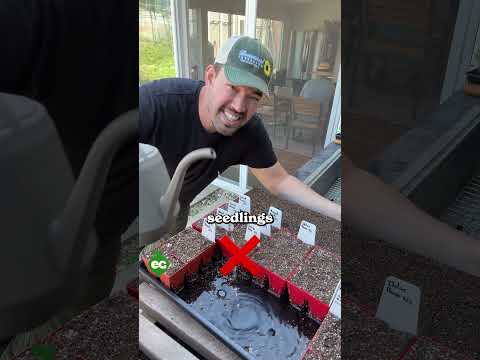
TL;DR: Avoid common pitfalls in seed starting by understanding that specialized mixes, light for germination, and deep planting are often unnecessary.
- Commercial seed mixes are optional; homemade blends work.
- Most seeds germinate without light, some are inhibited by it.
- Seed planting depth should be about twice the seed diameter.
- Surface sowing is fine for very fine seeds.
- Bottom watering is not the only valid method.
Why it matters: Debunking seed starting myths improves success rates for gardeners, preventing wasted effort and resources.
Do this next: Research the specific light and depth requirements for the seeds you plan to plant.
Recommended for: Beginner and intermediate home gardeners looking to improve their seed starting techniques and avoid common pitfalls.
Starting seeds indoors can be a rewarding experience, but it's often surrounded by various misconceptions that can deter new gardeners or lead to suboptimal results. One common belief is that a specialized seed starting mix is absolutely essential. While these mixes are formulated to be lightweight and sterile, providing an ideal environment for delicate seedlings, it's not strictly necessary to purchase them. A well-draining, finely textured compost or a homemade blend of peat moss (or a sustainable alternative like coir), perlite, and vermiculite can work just as effectively. The key is to ensure the medium is free of large debris, drains well to prevent damping-off disease, and is relatively sterile to avoid introducing pathogens to vulnerable young plants.
Another prevalent myth suggests that seeds require light to germinate. In reality, most seeds germinate in darkness. In fact, some seeds are even inhibited by light during their initial germination phase. The need for light typically arises once the seedling has emerged and begins to photosynthesize. Providing light too early can sometimes hinder the germination process for certain species. It's crucial to research the specific light requirements for each type of seed being planted, as some do indeed need light to germinate, but these are generally the exception rather than the rule.
The idea that seeds need to be planted deeply is also a common misunderstanding. A general rule of thumb is to plant seeds at a depth roughly twice their diameter. Planting too deeply can prevent the seedling from reaching the surface, exhausting its energy reserves before it can access sunlight. Conversely, planting too shallowly can expose the seed to drying out or being dislodged. For very fine seeds, simply scattering them on the surface of the growing medium and gently pressing them in can be sufficient.
Many gardeners believe that bottom watering is the only correct way to water seedlings. While bottom watering can be beneficial as it encourages root development and reduces the risk of damping-off by keeping the surface dry, it's not the sole method. Top watering can be done effectively if a gentle stream is used to avoid disturbing the seeds or delicate seedlings. The critical aspect of watering is consistency and moderation. The soil should remain consistently moist but never waterlogged. Overwatering can lead to root rot and fungal issues, while underwatering can cause seedlings to wilt and die.
The notion that all seeds germinate quickly and simultaneously is another myth. Germination times vary significantly between different plant species, and even within the same packet of seeds, there can be a range of germination rates. Some seeds may sprout in a few days, while others can take weeks or even months. Patience is key, and it's important not to discard a seed tray too early if some seeds haven't emerged yet. Environmental factors like temperature and moisture also play a significant role in determining germination speed.
Finally, the belief that seedlings need constant, intense light from the moment they sprout is often exaggerated. While adequate light is crucial for strong, healthy growth, providing excessively strong light too early can sometimes stress young seedlings. A good quality grow light positioned at an appropriate distance is generally sufficient. The intensity and duration of light can be gradually increased as the seedlings mature. The goal is to prevent leggy growth, where seedlings stretch towards a light source that is too dim or too far away, resulting in weak stems.