John Kaisner's Med Food Forest: The Natural Farmer's Vision
By The Natural Farmer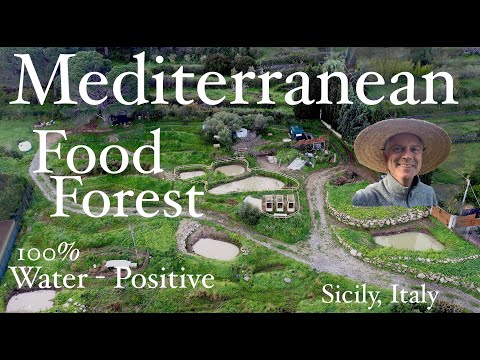
TL;DR: John Kaisner successfully implements permaculture principles in a Mediterranean food forest, demonstrating sustainable food production in arid regions by mimicking natural ecosystems and employing strategic water management.
- Mediterranean permaculture can thrive in dry climates.
- Mimic natural ecosystems for resilient design.
- Select plants for low water and pest resistance.
- Strategically manage water with swales and mulching.
- Integrate diverse layers for maximum biodiversity.
Why it matters: Adapting permaculture to Mediterranean climates offers a viable path to food security amidst increasing water scarcity and desertification, providing a model for sustainable agriculture in similar environments.
Do this next: Watch John Kaisner's video to learn specifics about his plant selection and water harvesting techniques.
Recommended for: Those interested in drought-resistant food production and ecological design in dry climates.
John Kaisner's work in establishing a Mediterranean permaculture food forest offers a compelling case study in adapting permaculture principles to specific climatic and ecological conditions. His approach, detailed in "The Natural Farmer," highlights the potential for creating productive and resilient agricultural systems even in areas characterized by hot, dry summers and mild, wet winters. This endeavor is particularly relevant given the increasing global concern over water scarcity and the need for sustainable food production in arid and semi-arid regions.
Kaisner's design philosophy for his Mediterranean food forest centers on mimicking natural ecosystems found in the region. This involves a careful selection of plant species that are well-suited to the local climate, particularly those with low water requirements and a natural resistance to common pests and diseases. He emphasizes the importance of native and drought-tolerant species, which form the backbone of the food forest, providing both food and ecological services. Beyond these, he integrates a variety of fruit and nut trees, shrubs, and herbaceous plants, creating a multi-layered system that maximizes space utilization and biodiversity. The selection process is not arbitrary; it considers factors such as mature size, light requirements, root systems, and the potential for beneficial interactions between different species.
A crucial aspect of Kaisner's methodology is the strategic management of water. Recognizing the scarcity of rainfall during the growing season, he employs various water-harvesting and conservation techniques. These include the creation of swales and berms to capture and slow down rainwater runoff, allowing it to infiltrate the soil more effectively. Mulching is extensively used to reduce evaporation, suppress weeds, and enrich the soil with organic matter. The integration of drip irrigation, used sparingly and strategically, supplements rainfall during prolonged dry periods, ensuring the establishment and health of young plants without excessive water consumption. This integrated approach to water management is fundamental to the long-term viability of the food forest in a Mediterranean climate.
Soil health is another cornerstone of Kaisner's permaculture design. He understands that healthy soil is the foundation of a productive ecosystem. His practices focus on building organic matter through composting, cover cropping, and the incorporation of nitrogen-fixing plants. These methods improve soil structure, increase water retention capacity, and provide a steady supply of nutrients to the plants, reducing the need for external inputs. The emphasis on biological activity within the soil, fostering a thriving microbial community, is seen as essential for nutrient cycling and plant resilience.
The food forest is designed to be a self-regulating system, minimizing the need for human intervention over time. This is achieved through careful plant selection and placement, creating guilds of plants that support each other. For example, nitrogen-fixing plants are strategically placed near heavy feeders, and plants that attract beneficial insects are integrated to control pests naturally. The multi-layered structure of the food forest provides diverse habitats for wildlife, further enhancing biodiversity and ecological balance. This approach aims to create a resilient ecosystem that can withstand environmental fluctuations and continue to produce food with minimal external inputs.
Kaisner's work also highlights the importance of observation and adaptation. Permaculture is not a static blueprint but an evolving process. He emphasizes the need to continuously observe the system, understand its dynamics, and make adjustments as needed. This iterative process allows for fine-tuning the design based on real-world performance and environmental feedback. The Mediterranean permaculture food forest, therefore, serves as a living laboratory, demonstrating how permaculture principles can be effectively applied to create sustainable and productive agricultural systems in challenging climatic conditions, offering valuable lessons for permaculturists and farmers worldwide.