Wisconsin's Lindsay Larson: Ethical Hog Farming at 28
By Emily Payne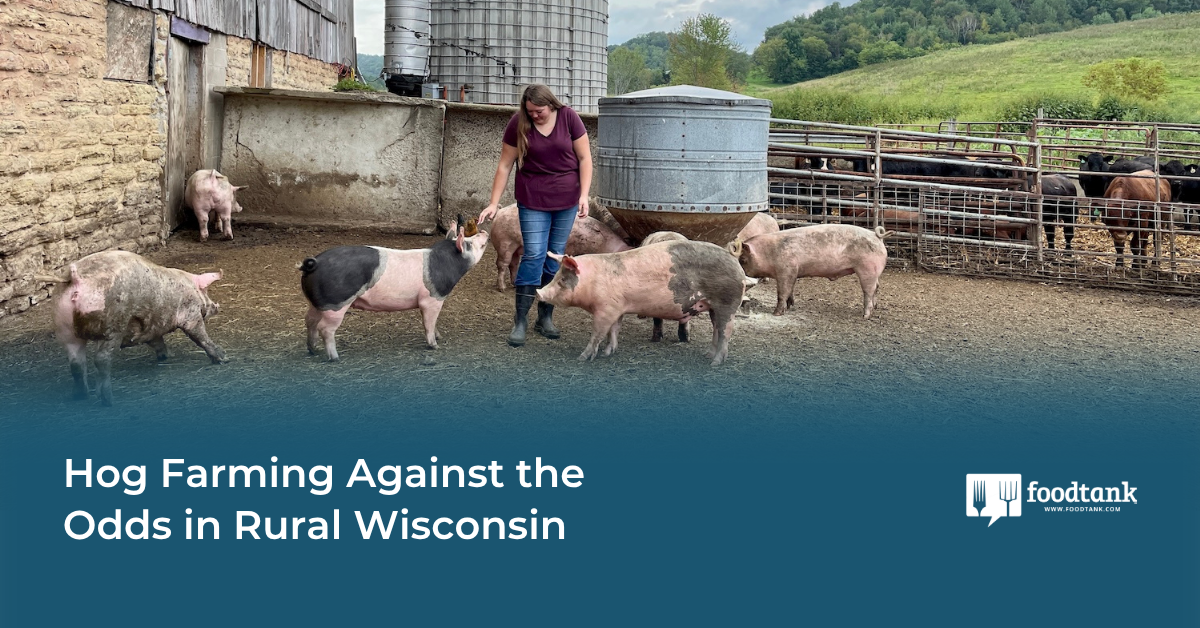
PermaNews Brief
Key Takeaways
A Wisconsin farmer demonstrates profitable, ethical hog farming by integrating pastured livestock into a regenerative agricultural system, challenging industrial norms.
- Pasture-raised hogs improve soil health and farm ecosystems.
- Rotational grazing prevents overgrazing and builds soil fertility.
- Prioritizing animal welfare enhances environmental benefits.
- Regenerative hog farming offers a viable alternative to CAFOs.
Why It Matters
This approach offers a blueprint for sustainable livestock management, enhancing soil health, animal welfare, and local food systems.
What to Do Next
Research local regulations for raising pastured livestock in your area to understand feasibility and requirements.
Recommended for: Farmers and land stewards interested in sustainable livestock practices and regenerative agriculture.
In rural Wisconsin, a young farmer named Lindsay Larson is challenging conventional agricultural practices by adopting an alternative approach to hog farming. As a third-generation farmer, Larson, at 28 years old, is introducing innovative methods that diverge from the industrial models prevalent in much of the agricultural sector. Her efforts represent a commitment to sustainable and ethical farming, aiming to demonstrate that it is possible to raise livestock in a manner that benefits the animals, the land, and the local community.
Larson's farm focuses on raising hogs in a system that prioritizes animal welfare and ecological health. Unlike large-scale operations that often confine animals indoors, her approach involves allowing the hogs access to outdoor pastures. This method provides the animals with space to roam, forage, and express natural behaviors, which is a significant departure from the cramped conditions often found in concentrated animal feeding operations (CAFOs). The pigs are not merely confined but are an integral part of the farm's ecosystem, contributing to soil health through their natural rooting behaviors and manure distribution.
This pasture-based system has multiple environmental benefits. By rotating the hogs through different paddocks, Larson helps prevent overgrazing and allows the land to recover. The pigs' activity helps aerate the soil and incorporate organic matter, reducing the need for synthetic fertilizers and improving soil structure. This contributes to a more resilient and fertile landscape, fostering biodiversity both above and below ground. The integration of livestock into a rotational grazing system is a core principle of regenerative agriculture, which seeks to reverse environmental degradation and build healthy ecosystems.
Beyond environmental considerations, Larson's farming practices also emphasize the quality of life for her animals. The hogs are fed a diet that is carefully managed, often supplemented with forage from the pastures, which can lead to healthier animals and potentially higher-quality products. The reduced stress from living in a more natural environment is also a key factor in animal welfare. This holistic approach to animal husbandry stands in contrast to the efficiency-driven models of industrial farming, where animal welfare can sometimes be secondary to production metrics.
Larson's venture is not without its challenges. Operating a small-scale, pasture-based hog farm in a region often dominated by larger conventional operations requires significant dedication and resourcefulness. Marketing products from such a system often involves direct-to-consumer sales, farmers' markets, or partnerships with local restaurants and retailers who value sustainably raised meat. This requires building strong relationships with consumers and educating them about the benefits of her farming methods. Furthermore, the economic realities of small-scale farming, including labor costs, infrastructure investments, and market fluctuations, can be substantial hurdles.
Despite these difficulties, Larson's work serves as an example of how agriculture can be reimagined. Her farm embodies a vision for a food system that is more ethical, environmentally sound, and community-oriented. By demonstrating the viability of alternative hog farming practices, she is contributing to a broader movement within agriculture that seeks to move away from industrial models towards more sustainable and regenerative approaches. Her efforts highlight the potential for individual farmers to drive significant change in the food landscape, offering consumers choices that align with values of animal welfare, environmental stewardship, and local food systems.
Source: foodtank.com
Related Analysis
- Worm Castings Rebuild Soil Structure While Cutting Water Use — Vermicompost improves soil structure, moisture retention, and microbial life while converting food waste into usable fer…
Related on PermaNews
- Ernst Götsch's Cacao Syntropy: Master Agroforestry Now (How-To Guide)
- Finnish Off-Grid: Rocket Mass Heater Performance in Greenhouse (Case Study)
- Berlins schwimmende Gärten: Permakultur auf dem Wasser (Case Study)
- Rodale Report 2025: Thermal Mass Boost in Solar Greenhouses (Case Study)
- AUTarcaMatricultura La Palma: Permakultur & Energieautarkie (How-To Guide)
- Earthaven Ecovillage: 30 Years Off-Grid with Hydro & Solar (Video)
Explore more in Food Systems & Growing — the full hub for this knowledge area.