Rainwater Harvesting: Crucial Lessons from My Journey
By Great Escape Farms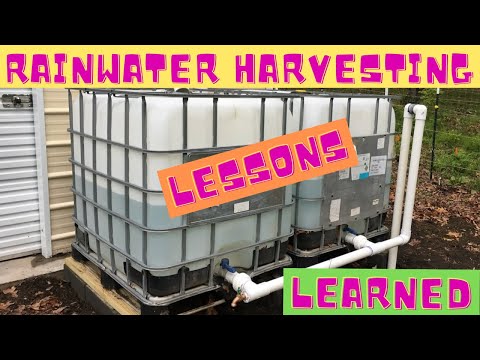
PermaNews Brief
Key Takeaways
Rainwater harvesting, though seemingly simple, requires careful planning and execution to avoid common pitfalls in filtration, foundation, and overflow management.
- Filter debris before water enters storage.
- Ensure sturdy, level foundation for large tanks.
- Plan for overflow to prevent erosion.
- Consider pumps for water distribution.
Why It Matters
Effective rainwater harvesting enhances water independence and reduces utility costs, contributing to sustainable living practices.
What to Do Next
Assess your roof and surrounding area for potential rainwater harvesting setup locations and consider the necessary foundations and overflow solutions.
Recommended for: Homeowners and gardeners interested in practical, small-scale rainwater harvesting systems.
The author shares valuable insights gained from their experience with rainwater harvesting, emphasizing that while the concept appears straightforward, practical application often presents unforeseen challenges. Their journey began with a simple setup: a 55-gallon barrel connected to a downspout. This initial system, though basic, quickly highlighted a crucial point: the importance of proper filtration. Debris from the roof, including leaves, twigs, and even animal droppings, inevitably found its way into the barrel, contaminating the water and clogging the spigot. This led to the first significant lesson: a pre-filter is essential to prevent large particulate matter from entering the storage container.
As their needs grew, so did their rainwater harvesting system. They upgraded to a larger 275-gallon tote, which offered greater storage capacity. However, this expansion brought new considerations. The weight of a full tote, approximately 2,200 pounds, underscored the necessity of a sturdy, level foundation. A slight incline or uneven surface could lead to structural instability or even collapse. This experience taught them the importance of meticulous site preparation and reinforcement for larger water storage units.
Another critical aspect that emerged was the management of overflow. When the storage container is full, excess water needs a designated path to prevent erosion or flooding around the collection area. The author initially allowed overflow to simply spill onto the ground, which, during heavy rains, caused localized erosion. This led to the implementation of an overflow pipe directed away from the foundation and into a designated drainage area, illustrating the need for a well-planned overflow management system.
The author also delved into the practicalities of water distribution. While gravity can be sufficient for some applications, such as watering nearby plants, a pump becomes indispensable for moving water to higher elevations or for more extensive irrigation systems. They experimented with various pump types, learning about their power requirements, flow rates, and maintenance needs. This highlighted that the choice of pump depends heavily on the intended use and the scale of the system.
Furthermore, the article touched upon the importance of water quality for different applications. While unfiltered rainwater might be acceptable for irrigating non-edible plants, stricter filtration and even purification methods are necessary for uses like washing or, especially, drinking. The author explored different filtration stages, from coarse pre-filters to finer sediment filters and even charcoal filters for odor and taste improvement. This emphasized that the level of filtration should be tailored to the end-use of the water.
The author also discussed the challenges of maintaining water quality over time. Stagnant water in storage containers can become a breeding ground for mosquitoes and algae. They learned the importance of keeping containers sealed and opaque to prevent light penetration, which inhibits algal growth. Additionally, they explored methods for preventing mosquito larvae, such as adding a small amount of vegetable oil to the water surface or introducing mosquito dunks.
Finally, the article underscored the economic and environmental benefits of rainwater harvesting. By reducing reliance on municipal water sources, they not only saved money but also contributed to water conservation efforts. The author concluded by reiterating that while rainwater harvesting requires careful planning and ongoing maintenance, the rewards in terms of water independence and sustainability are well worth the effort. The journey from a simple barrel to a more complex system provided a wealth of practical knowledge, demonstrating that continuous learning and adaptation are key to successful rainwater harvesting.
Source: youtube.com
Related Analysis
- Designers Push Urban Standard From Sustainable to Regenerative — Early signals point to a push for urban design that actively restores ecosystems, not merely reduces harm — with field-t…
- Scrapped EV Batteries Convert to Solar Storage in Off-Grid Markets — Several sources suggest retired EV batteries are finding a second role in rural off-grid solar systems, potentially lowe…
Related on PermaNews
- Berlins schwimmende Gärten: Permakultur auf dem Wasser (Case Study)
- Finca Bellavista: Costa Rica's 200-Acre Water System Innovation (Case Study)
- Priya's 2024 India Report: 10-Hectare Water Harvesting Success (Case Study)
- Holmgren's 40 Yrs: Abundant Permaculture Design Webinar 3 (Video)
- Water Cycle Restoration Research: Indigenous Wisdom Meets Permaculture (Article)
- The Importance of Harvesting Rainwater for Conservation (Video)
Explore more in Water, Climate & Adaptation — the full hub for this knowledge area.