Collaborative Homesteading: Building Together Transforms All
By Justin Rhodes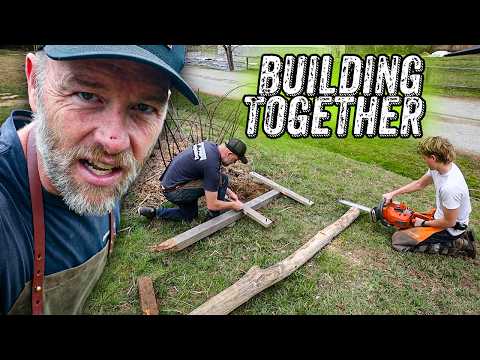
PermaNews Brief
Key Takeaways
Building a homestead collaboratively fosters efficiency, resilience, and community, moving beyond individual effort for greater success.
- Shared labor accelerates projects and reduces individual burnout.
- Diverse skills lead to innovative solutions and fewer errors.
- Collective effort strengthens bonds and creates lasting memories.
- Homestead becomes a living monument to cooperation and shared pride.
Why It Matters
Collaborative homesteading transforms the development process into a more efficient, resilient, and deeply satisfying journey, fostering stronger communities and more successful projects.
What to Do Next
Consider how a collaborative approach could benefit your next major project, big or small.
Recommended for: Anyone interested in permaculture, homesteading, or community building who seeks more effective and fulfilling ways to achieve their goals.
The article discusses the significant advantages and unique satisfaction derived from a collaborative approach to building and developing a homestead, emphasizing that shared effort fundamentally transforms the experience and outcomes. The author highlights that while individual projects can be fulfilling, the process of constructing and establishing a permaculture-inspired living space alongside others, particularly family, fosters a deeper sense of ownership, resilience, and community.
One of the primary benefits articulated is the distribution of labor. Large-scale projects, such as constructing barns, fences, or extensive garden beds, can be physically demanding and time-consuming for an individual. When multiple people contribute, tasks are completed more efficiently, reducing the overall burden and preventing burnout. This shared workload allows for more ambitious undertakings to be realized within a reasonable timeframe, accelerating the development of the homestead. Beyond mere physical effort, the pooling of diverse skills is also a crucial aspect. Different individuals bring unique expertise, whether in carpentry, plumbing, electrical work, gardening, or animal husbandry. This collective knowledge base means that challenges can be approached from multiple angles, leading to more innovative and robust solutions than one person might devise alone. Mistakes are less likely, and when they occur, there are more minds to troubleshoot and rectify them.
The article also delves into the psychological and emotional benefits of collaborative building. The act of working together on a shared vision strengthens bonds and creates lasting memories. Each completed project becomes a testament to collective effort, fostering a profound sense of pride and accomplishment that is shared among all contributors. This shared history imbues the homestead with a deeper meaning, transforming it from a mere collection of structures and land into a living monument to cooperation and dedication. In moments of difficulty or frustration, the presence of others provides encouragement and support, preventing individuals from feeling overwhelmed or isolated. This communal resilience is invaluable in the often challenging journey of establishing a self-sufficient lifestyle.
Furthermore, the collaborative approach cultivates a stronger sense of community, even within a family unit. Children who participate in the building process from a young age develop a greater appreciation for their environment and the effort required to maintain it. They learn practical skills, problem-solving techniques, and the value of teamwork, lessons that extend far beyond the boundaries of the homestead. This hands-on involvement instills a sense of responsibility and stewardship, ensuring that the next generation is invested in the long-term success and sustainability of the project. The homestead becomes not just a place to live, but a shared legacy.
The author also touches upon the practical advantages in terms of resourcefulness. When multiple people are involved, there is a greater likelihood of accessing diverse tools, materials, and connections. One person might have a specific tool, another might know a local supplier, and yet another might have experience with a particular building technique. This collective resourcefulness can lead to cost savings, more efficient procurement, and the ability to tackle a wider range of projects without external reliance.
In essence, the article posits that while the physical structures and productive systems of a homestead are important, the manner in which they are created is equally, if not more, significant. Building together transforms the process from a solitary endeavor into a rich, shared experience that strengthens relationships, enhances skills, fosters resilience, and ultimately creates a more meaningful and sustainable living environment. The collective effort imbues the homestead with a unique character and a profound sense of shared achievement that would be unattainable through individual work alone.
Source: youtube.com
Related Analysis
- Investor Pushes $1.4B to Break Midwest Corn Monoculture — Ivana Gazibara's $1.4B initiative to restructure Midwest agriculture is an early, rare signal of concentrated private ca…
- IUCN Rewilding Guidelines Move Practice Beyond Conceptual Debate — The IUCN's first global rewilding guidelines, backed by emerging policy momentum and hands-on training, signal a bounded…
Related on PermaNews
Explore more in Community, Policy & Systems Change — the full hub for this knowledge area.