VIPs: Ultra-High-Performance Insulation for Tiny Homes
By Exploring Alternatives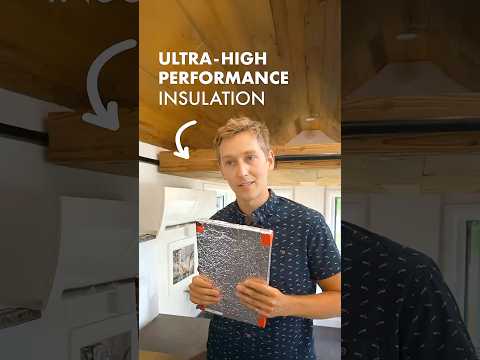
TL;DR: Vacuum Insulation Panels (VIPs) offer superior thermal resistance in minimal space, ideal for compact dwellings.
- VIPs provide ultra-high insulation with minimal thickness.
- Their vacuum core significantly reduces heat transfer.
- Handle panels carefully to maintain vacuum seal.
- Thinner VIPs match or exceed conventional insulation.
- Great for tiny homes, vans, and small structures.
Why it matters: Maximizing insulation in small spaces improves energy efficiency and increases usable interior area, crucial for sustainable living.
Do this next: Research local suppliers for Vacuum Insulation Panels to understand availability and cost.
Recommended for: Anyone designing or building compact, energy-efficient structures seeking high-performance insulation solutions.
The video from Exploring Alternatives introduces vacuum insulation panels (VIPs) as a highly effective insulation solution, particularly beneficial for applications where space is a constraint, such as tiny houses, vans, or small structures. These panels are presented as an "ultra-high-performance" option due to their exceptional insulating properties compared to conventional materials.
The core principle behind VIPs is the creation of a vacuum within a sealed panel. This vacuum significantly reduces heat transfer through conduction and convection, as there is no air or gas present to facilitate these processes. The panels typically consist of a rigid core material, often fumed silica or fiberglass, which is then encased in a gas-tight, multi-layered metallic film. This film is crucial for maintaining the vacuum over the panel's lifespan.
One of the primary advantages highlighted is the superior R-value per inch that VIPs offer. The R-value is a measure of thermal resistance, and VIPs boast R-values that are substantially higher than those of traditional insulation materials like fiberglass, mineral wool, or even rigid foam boards. This means that a much thinner layer of VIP can achieve the same or even better insulating performance than a significantly thicker layer of conventional insulation. This characteristic is especially valuable in tiny homes or other space-limited environments where every inch of wall, floor, or ceiling thickness can impact usable interior space.
The video suggests that while the performance is impressive, there are practical considerations for their use. The installation process for VIPs requires careful handling. The integrity of the vacuum seal is paramount; any puncture or damage to the outer film will compromise the vacuum and drastically reduce the panel's insulating effectiveness. Therefore, precise measurements and careful cutting are necessary, and installers must avoid drilling, nailing, or cutting into the panels once they are in place. This often means that VIPs are custom-ordered to specific dimensions to minimize on-site modifications.
Another aspect discussed is the cost. VIPs are generally more expensive per square foot than traditional insulation materials. This higher upfront cost is a factor that potential users need to weigh against the long-term benefits of superior thermal performance and space saving. However, for projects where maximizing interior space and achieving exceptional energy efficiency are top priorities, the investment in VIPs might be justified.
The lifespan of VIPs is also a relevant point. While the vacuum is designed to last for many years, it can degrade over time as gases slowly permeate the film. Manufacturers typically provide warranties for a certain period, and the performance may gradually decrease after that. Despite this, they are still considered a durable and long-lasting insulation solution.
In summary, vacuum insulation panels offer an advanced solution for thermal insulation, providing significantly higher R-values in a much thinner profile than conventional materials. This makes them ideal for applications where space is at a premium. While they come with a higher cost and require careful installation to maintain their vacuum seal, their exceptional performance in reducing heat transfer makes them a compelling option for those seeking to maximize energy efficiency and interior space in specialized building projects.