Cob, Straw Bale and Hybrid Houses in Cantabria
By The Mud Home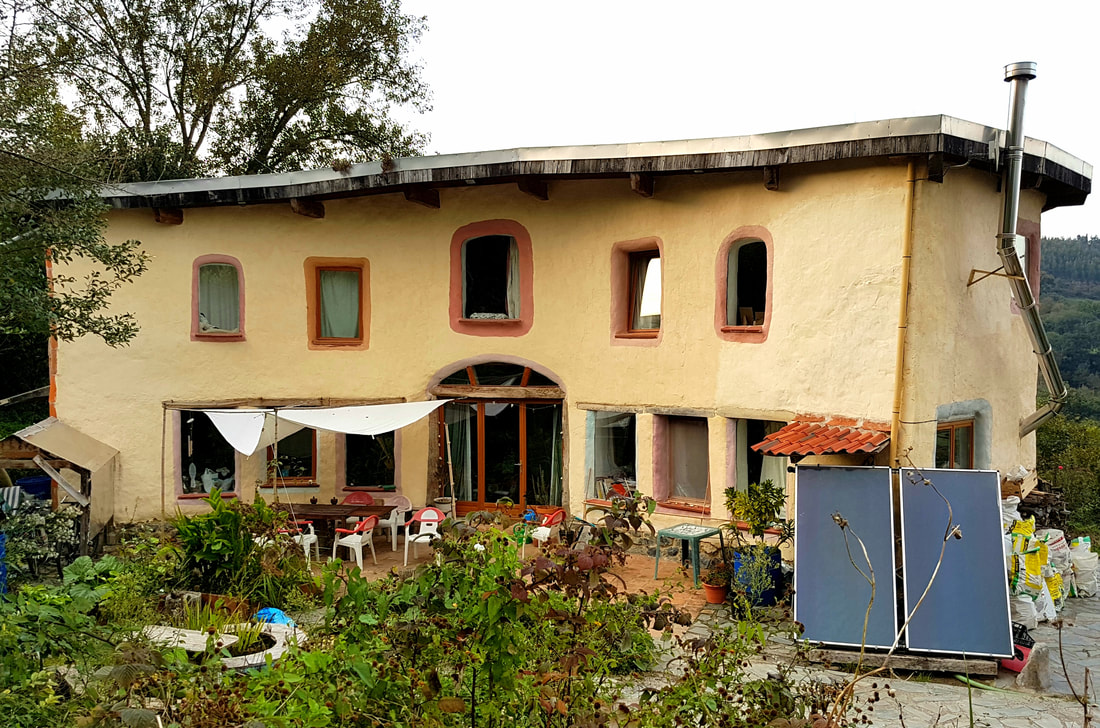
PermaNews Brief
Key Takeaways
A hybrid cob and straw bale house in Cantabria demonstrates practical design strategies and regulatory challenges.
- Cob provides thermal mass in lower floor
- Straw bale offers insulation on upper floor
- Design combines materials for strategic benefits
- Local regulations impact natural building projects
- Real-world example demystifies hybrid homes
Why It Matters
This case illustrates the pragmatic integration of natural materials and highlights regulatory hurdles that practitioners face, making it a valuable reference.
What to Do Next
Research local permitting processes for natural building projects.
Permaculture Context
What the Abrazo House really demonstrates is that natural building in a temperate, high-rainfall climate like Cantabria is not a romantic experiment — it is an engineering decision with consequences. Permaculture designers often talk about stacking functions, and this hybrid wall system is exactly that principle applied to thermal performance: cob at the base where you want the earth to absorb and release heat slowly, straw bale above where you need insulation against a cold sky. That clarity of purpose matters enormously for practitioners who are trying to build lasting homesteads rather than demonstration projects. The regulatory dimension is equally instructive. Spain's permitting path — land acquisition, local engagement, licensed architect, sequential sign-off — is not fundamentally different from what builders face in France, the UK, or parts of the United States, which means the lesson is transferable: budget for bureaucracy as deliberately as you budget for materials. For anyone moving toward greater self-sufficiency, this project signals that hybrid natural building is mature enough to navigate official channels, and that doing so honestly, with professional drawings and community goodwill, is itself a resilience strategy worth adopting.
Recommended for: Anyone interested in natural building and hybrid construction techniques.
This article is a case-oriented look at a real natural-building project in Cantabria, focusing on a cob and straw bale hybrid known as Abrazo House. It is useful because it moves beyond theory and identifies how different wall systems are combined in a single building: the lower floor is made from insulated cob, while the upper floor uses straw bale. That detail matters for practitioners because it suggests a design logic that uses thermal mass and insulation strategically rather than treating natural materials as interchangeable. The article also notes that the house is tucked into the Cantabrian hills, which implies an environmental and siting context relevant to natural construction, even though the snippet does not provide full technical drawings or performance data. In addition to the project description, the article briefly explains regulatory and administrative requirements in Spain, including the need to buy an appropriate piece of land, work with local officials, obtain an architect’s official plan, and secure sign-off from the relevant offices. That administrative detail is practically valuable because permitting is often a major barrier for natural-building projects, especially when hybrid systems combine unconventional materials. While the snippet does not expose detailed construction sequencing, load paths, moisture strategy, or material specifications, it does provide a concrete example of a built project and the bureaucratic context around it. For a reader evaluating whether cob-straw bale hybrids can be realized as actual homes rather than speculative concepts, the article offers a grounded case study showing one such project in the field. It is most useful as an example of implementation context, zoning and permitting realities, and hybrid material strategy rather than as a step-by-step build manual or research report.
Source: themudhome.com
Related Analysis
- Off-Grid Homesteads Merge Thermal and Electrical Renewable Systems — Several 2024–2025 case studies show off-grid permaculture sites pairing rocket mass heaters with solar or micro-hydro el…
- Off-Grid Solar Projects Shed Legacy Batteries for LFP — Several sources suggest LFP batteries are becoming the go-to storage solution as solar adoption grows across off-grid an…
Related on PermaNews
- Explore the Permaculture Design Certificate Course for Sustainable Living (How-To Guide)
- 2025: Rocket Mass Heaters in PHI-Certified Earthship Tiny Homes (Case Study)
- Earthship Retrofits: PHI Standards & Regenerative Guide 2025 (Case Study)
- Häuser bauen mit Stroh und Lehm – Workshop zu Strohballenbau und Lehmputz auf Stroh (Event)
- 2024 Earth-Sheltered Timber Frame: PermaFarm Build Guide (How-To Guide)
- Cob-Straw Infills: Timber Frame Resilience for Your Build (How-To Guide)
Explore more in Shelter, Energy & Infrastructure — the full hub for this knowledge area.