Measuring 40% Humus: Permaculture Soil Science
By Discover Permaculture with Geoff Lawton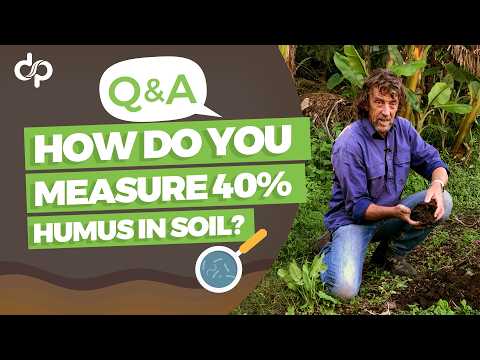
TL;DR: Measuring true soil humus is complex, with common tests often overestimating stable, long-term organic matter.
- Defining "humus" impacts how it's measured and reported.
- Loss-on-ignition test includes all organic matter, not just stable humus.
- Walkley-Black method targets organic carbon but has limitations.
- Achieving 40% stable humus is extremely challenging in agriculture.
- Natural, undisturbed soils often have higher stable humus levels.
Why it matters: Understanding how soil organic matter is measured prevents misinterpreting results and setting unrealistic expectations for humus levels in cultivated soils.
Do this next: Investigate your soil test results to understand what organic matter metrics are being used.
Recommended for: Anyone in permaculture or regenerative agriculture seeking a deeper scientific understanding of soil organic matter and humus measurement.
The article discusses the concept of measuring humus content in soil, particularly in the context of permaculture and regenerative agriculture, where high humus levels are often a goal. It begins by clarifying that the term "humus" itself can be interpreted in various ways, ranging from the stable, recalcitrant organic matter in soil to the broader category of all organic matter. This distinction is crucial because different definitions lead to different measurement approaches and, consequently, different reported percentages.
One common method for assessing soil organic matter, which includes humus, is the loss-on-ignition (LOI) test. This involves drying a soil sample, weighing it, then heating it to a very high temperature to burn off all organic material, and finally re-weighing it. The difference in weight is attributed to the organic matter. However, the article points out a significant limitation of LOI: it doesn't differentiate between stable humus and other forms of organic matter, such as fresh plant residues, microbial biomass, or even charcoal. Therefore, a high LOI percentage doesn't necessarily equate to a high percentage of true, stable humus.
Another laboratory method mentioned is the Walkley-Black method, which chemically oxidizes organic carbon. This method is often preferred for its ability to specifically target organic carbon, which is a key component of humus. However, it also has its own set of assumptions and conversion factors that can influence the final reported percentage. The article implies that even with this method, accurately isolating and quantifying only the most stable forms of humus remains a challenge.
The article then delves into the practical implications of aiming for a specific humus percentage, such as the often-cited 40%. It suggests that achieving such a high percentage of *stable* humus, as opposed to total organic matter, is exceptionally difficult, if not impossible, in most agricultural settings. Natural, undisturbed ecosystems, like old-growth forests or peat bogs, might exhibit very high organic matter content, but even there, the proportion of truly stable humus within that organic matter can vary.
A key insight from the discussion is that focusing solely on a numerical percentage of humus might be less productive than observing the overall health and function of the soil. Indicators like soil structure, water infiltration rates, biological activity (e.g., earthworms), and plant vigor can provide more holistic and practical assessments of soil health, which are ultimately driven by a healthy organic matter cycle. The article implies that while laboratory tests offer quantitative data, they don't always capture the full ecological picture.
Furthermore, the article touches upon the idea that the *quality* of humus is as important as its quantity. Stable humus contributes to long-term soil fertility, water retention, and carbon sequestration. Simply adding large amounts of raw organic material to soil will increase total organic matter, but it takes time and microbial action for a significant portion of that to transform into stable humus.
In conclusion, the article emphasizes the complexity of measuring humus and cautions against an over-reliance on single numerical targets without understanding the underlying methodologies and the broader context of soil health. It suggests that while laboratory tests can provide valuable data, a comprehensive understanding of soil health requires a combination of scientific analysis and practical observation of ecological indicators. The goal should be to foster conditions that naturally lead to healthy, humus-rich soils, rather than chasing an arbitrary percentage.
Source: youtube.com
Related Analysis
- Farms Build Resilience, Pivot to Regenerative Soil — New initiatives and analysis explicitly frame regenerative agriculture as a direct solution for climate resilience, focu…
- Federal Policy Pivots, Builds Indigenous Agriculture Frameworks — Federal policy trends are integrating Indigenous knowledge with soil science in regenerative agriculture, shifting polic…
Related on PermaNews
- Ivana Gazibara - Deploy $1.4 billion in capital to transform the Midwest agricultural system (Video)
- Permaculture: Sustainable Design for Thriving Ecosystems (Article)
- Daniel Vidal - Zero-Waste Fine Dining That Locals Actually Love (Video)
- Benedetta Kyengo - The Green Revolution Stole Her Paradise; Now She's Bringing It Back (Video)
- Pablo Usobiaga - Zero Waste, Ancient Farmland and Mexico City's First Green Michelin Star (Video)
- The Shade-to-Protein Curve: Why Cooler Pastures Grow More Meat (Video)
Explore more in Food Systems & Growing — the full hub for this knowledge area.