208: Glenn McCaig's Livestock Strategy at Perry's Corners Farm
By Grazing Grass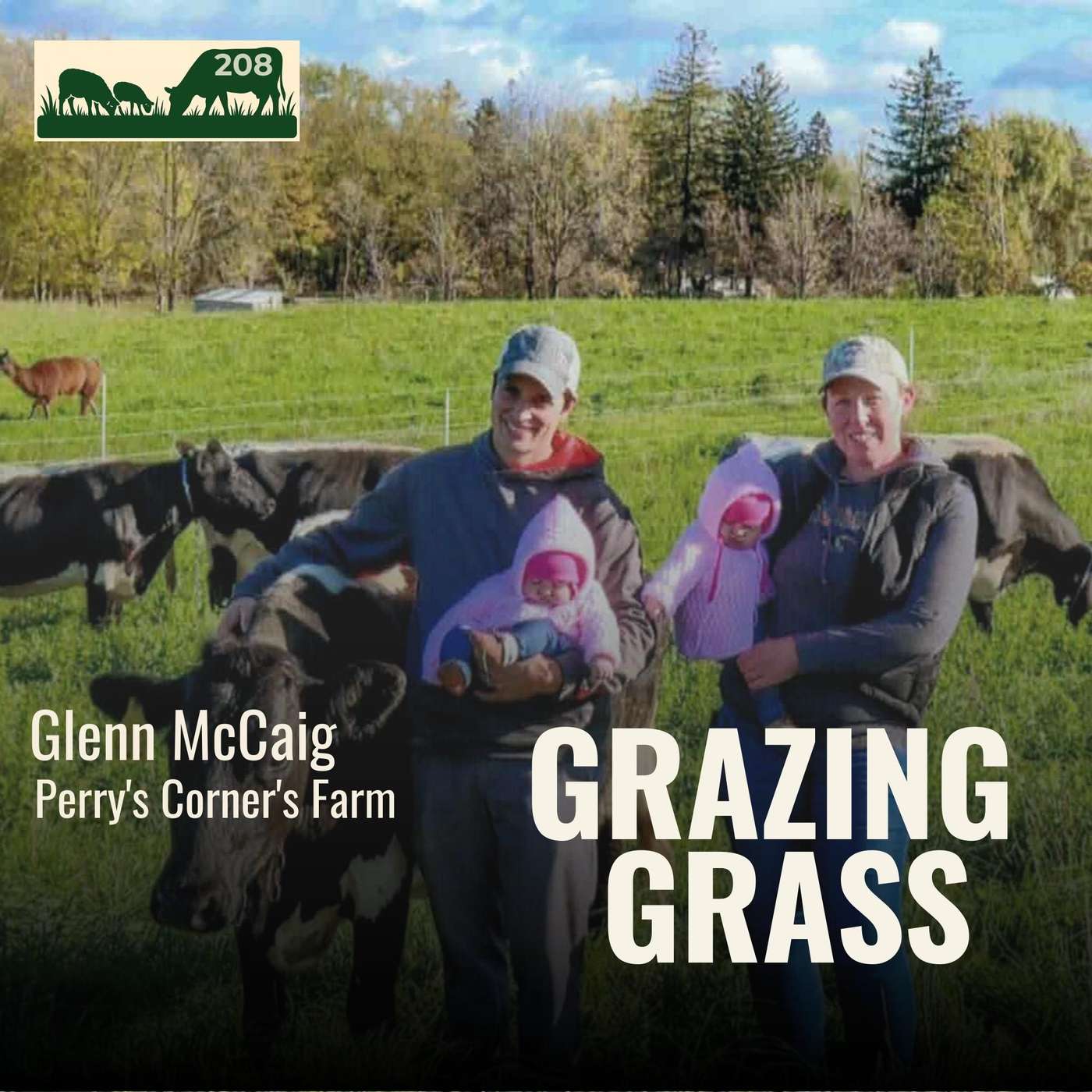
TL;DR: Perry's Corners Farm prioritizes practical livestock management with Lynch Lineback cattle, English Large Black pigs, and Clun Forest sheep, focusing on simplification over perfection on challenging terrain.
- Closed-herd cattle management offers predictability and control.
- Gilt-only farrowing simplifies pig management and tightens farrowing windows.
- Simple ear notching facilitates consistent sheep culling decisions.
- Calf-sharing and milk feeding to pigs create symbiotic farm systems.
- Pasture farrowing can impact labor, predator pressure, and piglet survival.
Why it matters: Adopting practical livestock strategies can lead to more efficient and resilient farm operations, especially on difficult land, without aiming for unattainable perfection.
Do this next: Consider how a closed-herd system or simplified farrowing could benefit your livestock management.
Recommended for: Farmers and homesteaders looking to refine their livestock management with practical, resilient, and integrated approaches on diverse land types.
Glenn McCaig, operating Perry's Corners Farm with his wife Megan and their three children near Kitchener, Ontario, discussed his practical livestock management strategies on the Grazing Grass Podcast. The farm is situated on sandy, rocky terrain, and they raise Lynch Lineback cattle, English Large Black pigs, Clun Forest-type sheep, and pastured poultry. McCaig's approach emphasizes simplification and effective management without striving for unattainable perfection.
Regarding cattle, McCaig utilizes Lynch Lineback cattle and maintains a closed herd, valuing the control and predictability this offers. He integrates calf-sharing with milk cows and feeds excess milk to pigs, creating a symbiotic relationship within the farm's operations.
In pig management, McCaig employs a gilt-only farrowing system. This method streamlines pig management and helps to narrow farrowing windows, making the process more efficient. He selects boars early based on practical traits such as teat count and maternal instincts. The discussion also touched upon the evolution of their farrowing practices, comparing pen farrowing with pasture farrowing, and how these choices impacted labor requirements, predator challenges, and piglet survival rates. McCaig also experimented with soy-free and briefly corn-free diets for his pigs, and explored soy-free options for laying hens, sharing his observations and lessons learned from these dietary changes.
For sheep, McCaig implements a closed-flock management system, focusing on prolific genetics. He shared strategies for managing triplets and quadruplets, which are common with their chosen breeds. To facilitate consistent and rapid culling decisions, he uses a simple ear notching system. The realities of wool marketing were also addressed, with McCaig noting that some wool may not be economically viable to process or save.
The conversation also covered broader grazing strategies. McCaig discussed the impact of migratory grazing on his cattle and the behavioral changes he observed in the herd as a result. He employs a calendar-based approach to manage the "summer slump," ensuring adequate rest periods for pastures and making hay decisions that complement their grazing plan.
The overarching theme of McCaig's discussion was the importance of simplifying livestock enterprises without compromising good management practices. He presented practical systems for pigs, sheep, and cattle that aim to reduce complexity, enhance decision-making, and ensure the farm operates effectively under real-world conditions, including predator pressure, winter feeding, and limited labor resources. The episode highlighted that effective farming doesn't always require intricate fine-tuning but rather a grounded, practical approach to managing livestock.