Urban Permaculture: Backyard Food Forest for Small Spaces
PermaNews Brief
Key Takeaways
Establish a productive backyard food forest by layering diverse plants to create a resilient, low-maintenance ecosystem.
- Layer plants to mimic natural forest ecosystems.
- Select dwarf varieties suited for small urban spaces.
- Improve soil with organic matter and mulching.
- Practice companion planting for natural pest control.
- Integrate chickens for pest control and fertilizer.
Why It Matters
Building a food forest can significantly reduce reliance on external food systems and enhance local biodiversity.
What to Do Next
Assess your yard's microclimates and sun patterns to choose appropriate plant species.
Recommended for: Anyone looking to convert their backyard into a sustainable and productive food-producing ecosystem, particularly in urban settings.
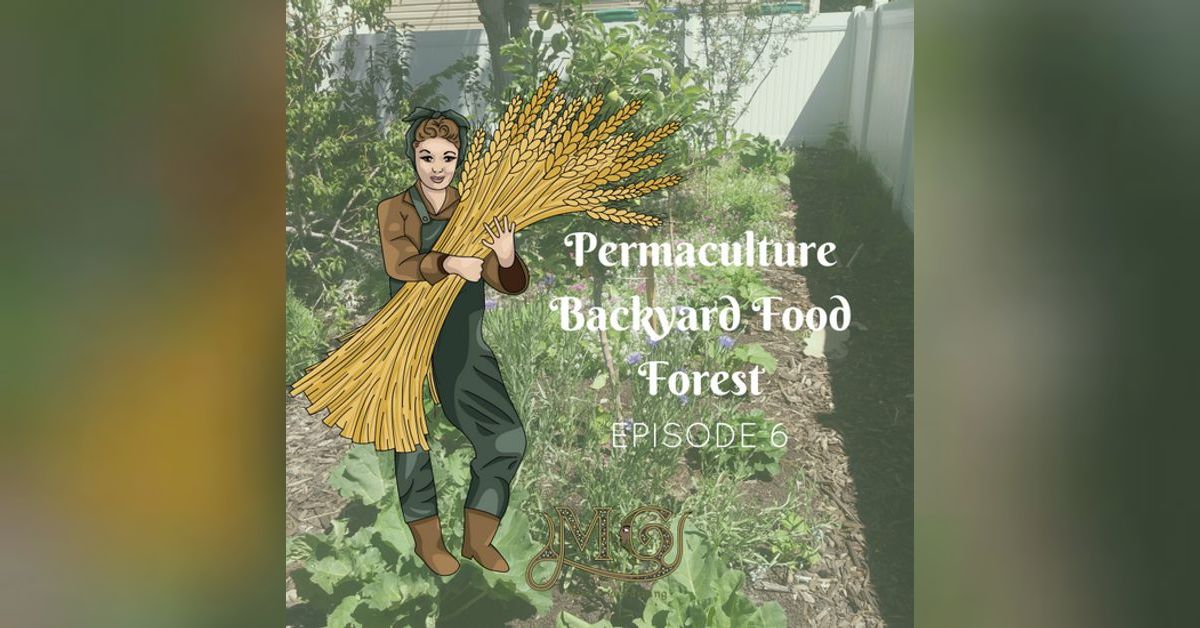
This podcast episode from Misfit Gardening focuses on implementing permaculture principles to establish a backyard food forest, particularly suited for urban environments with limited space. The host shares actionable plant selection tips to maximize food production in small areas, emphasizing varieties that thrive in constrained settings while building resilient ecosystems. Key methods include layering plants in a forest-like structure—starting with canopy trees, understory shrubs, herbaceous layers, ground covers, vines, and root crops—to mimic natural succession and enhance biodiversity. Practical details cover soil preparation by incorporating organic matter and mulch to retain moisture and suppress weeds, alongside companion planting to deter pests naturally. The episode highlights real-world challenges like urban pollution and shade management, offering solutions such as choosing dwarf fruit trees (e.g., apples, pears) and nitrogen-fixing legumes like clover or beans to boost fertility without synthetic inputs. Insights into homesteading integration include raising chickens for pest control and manure, vegetable intercropping for immediate yields, and home brewing from forest products. Listeners gain concrete steps: assess site microclimates, map sun patterns, select climate-hardy perennials, and observe yearly progression for adjustments. This approach promises long-term self-sufficiency, reducing grocery dependence while regenerating soil health and supporting pollinators. The discussion underscores patience in establishment—initial years focus on soil building before peak productivity—making it ideal for beginners seeking high-yield, low-maintenance systems. Overall, it equips practitioners with field-tested strategies for urban regenerative living.
Source: misfitgardening.podbean.com
Related Analysis
- Food Forest Courses Shift From Theory to Build-Ready Skills — Several food forest courses now open with site assessment and guild-building rather than design theory, suggesting a dev…
- Practitioners Build Silvopasture Playbook Before Researchers Catch Up — A small but consistent set of signals from the Northeast U.S. shows farmers actively piloting silvopasture while formal …
Related on PermaNews
- Ernst Götsch's Cacao Syntropy: Master Agroforestry Now (How-To Guide)
- Finnish Off-Grid: Rocket Mass Heater Performance in Greenhouse (Case Study)
- Berlins schwimmende Gärten: Permakultur auf dem Wasser (Case Study)
- Rodale Report 2025: Thermal Mass Boost in Solar Greenhouses (Case Study)
- AUTarcaMatricultura La Palma: Permakultur & Energieautarkie (How-To Guide)
- Earthaven Ecovillage: 30 Years Off-Grid with Hydro & Solar (Video)
Explore more in Food Systems & Growing — the full hub for this knowledge area.