Earth-Built Passive Solar Home: Cob on the South, Straw Bale on the North
By Kirsten Dirksen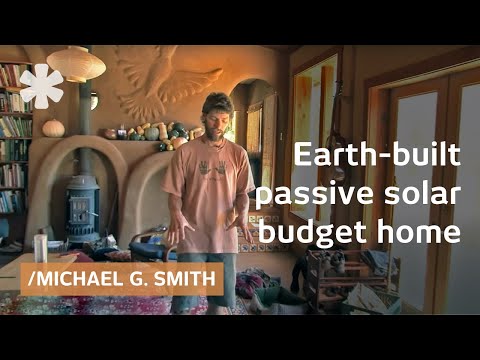
PermaNews Brief
Key Takeaways
Hybrid natural building using straw bale and cob enhances thermal efficiency.
- Straw bale insulates, cob retains heat
- Hybrid design improves comfort
- Thermal mass works with passive solar
- Material placement aligns with climate
- Low-energy heating strategies featured
Why It Matters
This approach merges renewable materials with climate responsiveness, offering sustainable building solutions.
What to Do Next
Watch the video to explore hybrid natural-building techniques.
Permaculture Context
For permaculture designers and regenerative homesteaders, this kind of hybrid natural-building logic represents something more significant than a clever construction technique — it reflects a deeper design principle: match material properties to site conditions rather than defaulting to a single system. Most owner-builders gravitating toward natural construction tend to commit entirely to one material, often based on availability, cost, or enthusiasm, and in doing so they leave thermal performance on the table. Cob and straw bale are not competitors; they are complementary tools, and understanding their distinct roles — thermal mass versus insulation — gives practitioners far more design flexibility across climates and microclimates. For someone building a primary residence, a retreat cabin, or even a workshop on a homestead, this framework means that the north wall of a cold-climate building deserves a fundamentally different material conversation than the south wall. That specificity, grounded in passive solar principles, can dramatically reduce dependence on purchased fuel across decades of occupation. The broader implication for regenerative living is that material intelligence — knowing why a material belongs somewhere, not just how to use it — is itself a form of resilience.
Recommended for: Individuals interested in sustainable building practices and natural materials.
This video presents a practical explanation of a hybrid natural-building strategy that uses straw bale and cob for different thermal functions in the same home. The speaker, natural-building expert Michael G. Smith, explains that straw bale is used on the north side of the building where insulation is most needed, while cob is used on the south side where winter sun can charge thermal mass. The video describes cob as a material that absorbs and later re-radiates heat, making it well suited for passive solar design. It also shows that the hybrid system is not merely theoretical: the building features cob on one side and straw bale on the other, with the interior wall material chosen for thermal mass around a wood stove and sun-exposed areas. The discussion defines cob as a mix of clay, soil, sand, and straw, typically several inches thick, and connects that composition to its structural and thermal behavior. For builders and designers, the main takeaways are the climatic logic of material placement, the role of thermal mass versus insulation, and the way hybrid assemblies can improve comfort without relying on active mechanical systems. The video is especially relevant to regenerative-living contexts because it ties together passive solar orientation, material selection, and low-energy heating strategies in a single built example. While it is not a formal construction manual, it provides concrete design reasoning that can inform planning for straw bale, cob, or combined natural-building projects.
Source: youtube.com
Related Analysis
- Off-Grid Homesteads Merge Thermal and Electrical Renewable Systems — Several 2024–2025 case studies show off-grid permaculture sites pairing rocket mass heaters with solar or micro-hydro el…
- Off-Grid Solar Projects Shed Legacy Batteries for LFP — Several sources suggest LFP batteries are becoming the go-to storage solution as solar adoption grows across off-grid an…
Related on PermaNews
- Explore the Permaculture Design Certificate Course for Sustainable Living (How-To Guide)
- 2025: Rocket Mass Heaters in PHI-Certified Earthship Tiny Homes (Case Study)
- Earthship Retrofits: PHI Standards & Regenerative Guide 2025 (Case Study)
- Häuser bauen mit Stroh und Lehm – Workshop zu Strohballenbau und Lehmputz auf Stroh (Event)
- 2024 Earth-Sheltered Timber Frame: PermaFarm Build Guide (How-To Guide)
- Cob-Straw Infills: Timber Frame Resilience for Your Build (How-To Guide)
Explore more in Shelter, Energy & Infrastructure — the full hub for this knowledge area.