Propagate Like a Pro: Grafting, Cuttings & Rooting Secrets
By Permaculture Institute of North America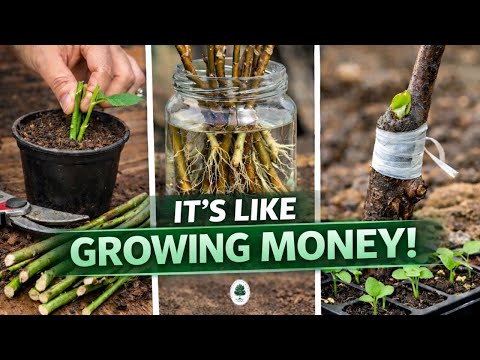
TL;DR: Mastering plant propagation through grafting, cuttings, and rooting empowers gardeners to enhance plant vitality and biodiversity.
- Grafting joins plant parts to combine desirable traits.
- Scion and rootstock cambium alignment is crucial for grafting success.
- Cuttings create genetically identical plants from parent material.
- Softwood cuttings root from new growth, semi-hardwood from mature.
- Proper tools, sanitation, and care are essential for propagation success.
Why it matters: Effective plant propagation techniques offer significant advantages for increasing yields, preserving desired plant characteristics, and adapting to diverse environmental conditions.
Do this next: Explore the detailed methods of grafting, cutting, and rooting to expand your gardening skills.
Recommended for: Gardeners and permaculturists looking to expand their knowledge and practical skills in plant reproduction and adaptation.
The Permaculture Institute of North America highlights several key techniques for plant propagation, emphasizing that understanding these methods can significantly enhance gardening and permaculture efforts. The article delves into the intricacies of grafting, various cutting methods, and successful rooting strategies, providing a comprehensive overview for both novice and experienced growers.
Grafting is presented as a sophisticated technique involving the joining of two plant parts – a scion (the upper part, typically a shoot or bud) and a rootstock (the lower part, including the root system). The primary goal of grafting is to combine desirable characteristics from different plants. For instance, a scion from a high-yielding fruit variety can be grafted onto a rootstock known for its disease resistance or adaptability to specific soil conditions. The success of grafting hinges on the cambium layers of both the scion and rootstock aligning and fusing, forming a continuous vascular system. The article details different grafting methods, such as whip-and-tongue, cleft, and budding, each suited for particular plant types and situations. Proper tools, sanitation, and post-grafting care, including protection from desiccation and pests, are crucial for successful union and subsequent growth. The benefits of grafting extend beyond combining traits; it can also be used to repair damaged trees, change the variety of an existing plant, or even create multi-variety trees.
Cuttings offer another versatile and widely used propagation method, allowing gardeners to create new plants that are genetically identical to the parent plant. The article categorizes cuttings into several types based on the maturity of the plant material used. Softwood cuttings, taken from new, flexible growth, are typically rooted in spring or early summer and often require high humidity and warmth. Semi-hardwood cuttings, taken from more mature but still flexible growth, are usually collected in late summer or early autumn. Hardwood cuttings, taken from dormant, woody stems, are generally rooted in late autumn or winter and are often the easiest to handle for certain species. The success of rooting cuttings is influenced by several factors, including the timing of collection, the health of the parent plant, the length and preparation of the cutting, and the rooting medium. The article emphasizes the importance of making clean cuts, removing lower leaves to prevent rot, and using rooting hormones to stimulate root development. Creating an optimal environment, often involving a humid, warm, and well-drained medium, is paramount for encouraging root formation and preventing fungal diseases.
Rooting success, regardless of whether it's from cuttings or seeds, is a recurring theme. The article underscores the importance of providing the right conditions for root development. This includes selecting an appropriate rooting medium that offers good drainage, aeration, and moisture retention. Common rooting media include perlite, vermiculite, sand, peat moss, or a combination thereof. Maintaining consistent moisture without waterlogging is critical, as is providing adequate warmth, which often accelerates root growth. Light requirements vary depending on the plant species and propagation method; while some cuttings benefit from bright, indirect light, others may prefer more shaded conditions during the initial rooting phase. The article also touches upon the role of environmental factors like humidity, which can be maintained using propagation domes or plastic covers, especially for softwood cuttings that are prone to wilting. Furthermore, the importance of patience and observation is highlighted, as rooting can take several weeks or even months depending on the plant species. Recognizing signs of successful rooting, such as new leaf growth or resistance when gently tugged, indicates that the new plant is ready for transplanting.
In summary, the Permaculture Institute of North America's insights into plant propagation provide a comprehensive guide to enhancing plant diversity and resilience. By mastering techniques like grafting, understanding the nuances of various cutting methods, and creating optimal conditions for rooting, growers can effectively multiply desirable plant varieties, adapt plants to challenging environments, and contribute to a more robust and sustainable permaculture system. The article stresses that successful propagation is a blend of scientific understanding
Source: youtube.com
Related Analysis
- Farms Build Resilience, Pivot to Regenerative Soil — New initiatives and analysis explicitly frame regenerative agriculture as a direct solution for climate resilience, focu…
- Federal Policy Pivots, Builds Indigenous Agriculture Frameworks — Federal policy trends are integrating Indigenous knowledge with soil science in regenerative agriculture, shifting polic…
Related on PermaNews
- Aloe Vera: Free Grapevine Rooting Hormone DIY (Video)
- April Harvest: The Unknown Edible Shrub for Your Food Forest (Video)
- 4 Pflanzen, 620 kg Tomaten: Permakultur-Erfolg! (Video)
- Famine Food: 60-Day Crop Beats Rice - Easy, Nutritious (Video)
- Gärten klimafest machen: Naturschutz durch Resilienz (Article)
- 20-Day Compost: Fast Permaculture Gardening Hack (Video)
Explore more in Food Systems & Growing — the full hub for this knowledge area.