Cow Colostrum: Harvesting and Consuming for Health
By Justin Rhodes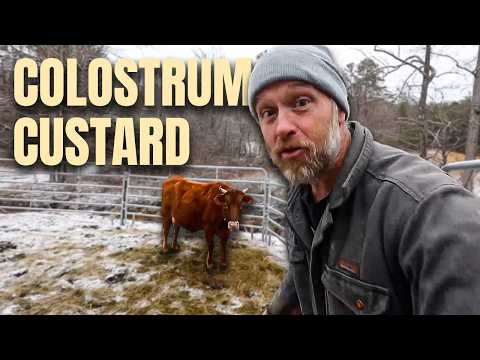
TL;DR: Bovine colostrum, distinct from regular milk, offers immune-boosting and gut-healing properties for humans when harvested sustainably.
- Calf consumes colostrum first for vital antibodies.
- Excess colostrum collected after 12-24 hours.
- Avoid high heat to preserve nutrients.
- Colostrum can be frozen for preservation.
- Rich in immunoglobulins and lactoferrin.
Why it matters: Consuming bovine colostrum can enhance human immunity and gut health by leveraging its rich antibody and growth factor content.
Do this next: Learn more about sustainable colostrum harvesting practices in your local homesteading community.
Recommended for: Homesteaders, permaculturists, and individuals interested in natural health supplements.
The practice of consuming colostrum, the initial milk produced by mammals after birth, is gaining attention within permaculture and homesteading communities, particularly when sourced from cows. This nutrient-dense substance is distinct from regular milk, characterized by its high concentration of antibodies, growth factors, and other bioactive compounds essential for the newborn's immune system development and overall health. For humans, consuming bovine colostrum is often seen as a way to potentially boost immunity, improve gut health, and support tissue repair.
The process of obtaining colostrum from a cow involves careful management to ensure the calf receives its necessary share first. Typically, a calf needs to nurse within the first few hours of birth to absorb the vital antibodies, a process known as passive transfer. Farmers or homesteaders who choose to harvest colostrum for human consumption usually wait until the calf has had its fill, often for the first 12 to 24 hours. After this critical period, any excess colostrum can be collected. The amount of colostrum a cow produces varies, but many dairy breeds produce more than a single calf can consume, especially in the first few milkings.
Once collected, colostrum can be consumed in various forms. It has a thicker consistency and a richer, creamier flavor compared to regular milk. Some people drink it raw, directly after milking, while others prefer to gently heat it. It can be incorporated into smoothies, used as a base for custards, or even made into a type of cheese. The key is to avoid high heat, which can denature the delicate proteins and antibodies, reducing its beneficial properties. Freezing is a common method for preservation, allowing individuals to store and consume it over an extended period.
The nutritional profile of colostrum is impressive. It is rich in immunoglobulins (IgG, IgA, IgM), which are antibodies that provide passive immunity. It also contains lactoferrin, an iron-binding protein with antimicrobial and anti-inflammatory properties, and proline-rich polypeptides (PRPs), which help regulate the immune system. Growth factors like insulin-like growth factor 1 (IGF-1) and transforming growth factor (TGF) are present, potentially aiding in cell repair and regeneration. Additionally, colostrum is a source of vitamins, minerals, and amino acids, contributing to its overall health-promoting reputation.
Proponents of colostrum consumption often report benefits such as improved athletic performance, faster recovery from exercise, enhanced gut integrity, and reduced incidence of infections. The immunoglobulins are believed to help fight off pathogens, while the growth factors may support the healing of the gut lining, which is crucial for nutrient absorption and overall immune function. For individuals with compromised immune systems or those seeking to optimize their health, colostrum is sometimes considered a valuable dietary supplement.
From a permaculture perspective, utilizing colostrum aligns with principles of waste reduction and maximizing resources. If a cow produces more colostrum than its calf needs, consuming the excess prevents it from going to waste, thereby closing a loop in the farm ecosystem. It also represents a direct connection to the source of food and an understanding of natural biological processes. The practice encourages a holistic view of animal husbandry, where the health of the animals and the people are interconnected.
Ethical considerations are paramount when sourcing colostrum. Ensuring the calf's health and well-being is the top priority. Responsible homesteaders and farmers will always make certain the calf receives adequate colostrum for its survival and robust start in life before any is harvested for human use. This often means observing the calf's nursing behavior and ensuring it is vigorous and healthy. The timing of collection is also important, as the concentration of antibodies in colostrum decreases significantly after the first 24-48 hours post-calving. Therefore, the most potent colostrum is collected early, after the calf has nursed.
In summary, the consumption of bovine colostrum is a practice rooted in leveraging a