Mastering Succession Planting: Maximize Your Harvest and Minimize Waste
PermaNews Brief
Key Takeaways
Learn how to stagger your plantings for a continuous harvest and reduce waste.
- Stagger plantings for extended harvests
- Crop rotation improves garden health
- Manage pests efficiently with techniques
- Maximize small spaces using vertical growing
- Plan crops based on family consumption
Why It Matters
Succession planting helps create a manageable garden, reduces waste, and aligns production with family needs. These practices make gardening more sustainable and efficient, especially in smaller spaces.
What to Do Next
Listen to the podcast episode for detailed strategies on succession planting.
Permaculture Context
Succession planting is not merely a productivity hack — it is a foundational expression of how regenerative systems actually function in nature. Ecosystems do not fruit all at once; they move through overlapping cycles of growth, maturity, and decay in a continuous, self-regulating rhythm. When permaculture practitioners bring that same logic into their gardens, they stop managing harvests as isolated events and start participating in a living system. The real leverage here goes beyond avoiding a squash surplus: staggered plantings naturally build soil microbiome diversity across the season, reduce monoculture pressure that invites pest outbreaks, and create the kind of low-intervention stability that defines truly resilient food production. For anyone building toward meaningful food sovereignty — whether on a quarter-acre suburban lot or a larger homestead — matching production timing to actual household consumption is the difference between gardening as performance and gardening as genuine infrastructure. This is where regenerative practice becomes concrete and personal: a garden calibrated to your family's real needs wastes less, demands less, and ultimately sustains more.
Recommended for: Home gardeners seeking to optimize their harvests.
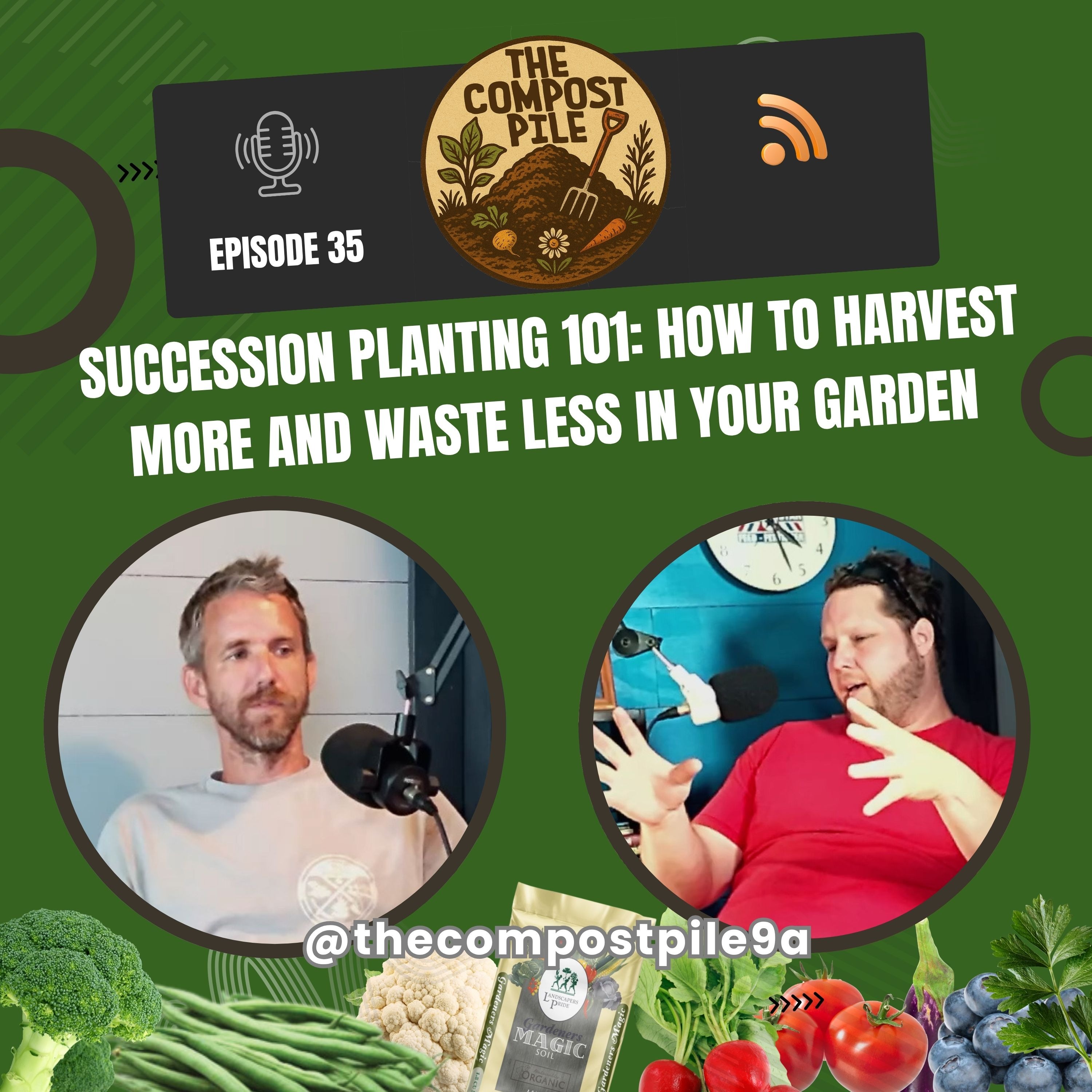
Most gardeners make the same mistake: planting everything at the same time and then becoming overwhelmed when it all matures at once.In this episode of The Compost Pile, David sits down with Brent from Donna's Farm to break down succession planting and why it's one of the best ways to create a more productive, manageable, and sustainable garden.We discuss how staggering your plantings can extend your harvest season, reduce waste, improve pest management, and help you make the most of small gardening spaces. Whether you're growing squash, green beans, carrots, onions, lettuce, or brassicas, these simple strategies can help you harvest consistently instead of all at once.We also dive into crop rotation, squash vine borer management, vertical growing techniques, and how to better match your garden production to your family's actual needs.If you've ever found yourself buried in tomatoes or giving away bags of squash every summer, this episode is for you.Topics covered:What succession planting is and why it mattersHow to succession plant squashCrop rotation basics for home gardenersManaging squash vine borersGrowing more food in smaller spacesPreventing garden wastePlanning your garden around what your family actually eatsVertical growing strategies for increased productionZone 9a gardening considerationsThe Compost Pile is a podcast focused on gardening, homesteading, and helping you become more successful growing in Southeast Texas and beyond.
Source: rss.com
Related Analysis
- Baltimore Researchers Reject Yield as Urban Farm Success Metric — Several sources suggest urban agriculture is being recast from food supplement to food sovereignty tool, with peer-revie…
- Urban Food Forest Tours Signal Shift From Passive Gardens — Several initiatives indicate urban food forests are evolving into hands-on design and education hubs — distinct from con…
Related on PermaNews
- Borneo's Rainforest Revival: Dr. Smits' Sugar Palm Village Hub (Case Study)
- Holmgren's 40 Yrs: Abundant Permaculture Design Webinar 3 (Video)
- Autarke Solarstromversorgung im Haus: Praxisnahes Konzept mit Photovoltaik, Speicher und Inselbetrieb (How-To Guide)
- Hands-on Permaculture - Extended Weekend Training (Event)
- Early Summer Lunch and Learn Series: Farmer-to-Farmer Skill Share (Event)
- Early Summer Lunch and Learn Series: Farmer-to-Farmer Skill Share (Event)
Explore more in Food Systems & Growing — the full hub for this knowledge area.