Exploring Heritage Grains in Modern Farming with Benji Nichols
By Vesterheim Museum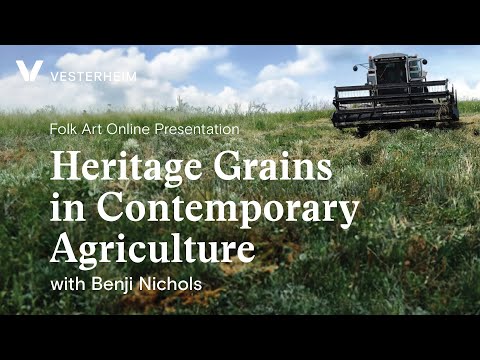
PermaNews Brief
Key Takeaways
Heritage grains enhance agricultural resilience and biodiversity, suitable for regenerative farming.
- Heritage grains are genetically diverse varieties.
- They thrive in poor and diverse soils.
- These crops are resilient to environmental stress.
- Reviving heritage grains supports agricultural biodiversity.
- They connect historical practices with modern agriculture.
Why It Matters
Integrating heritage grains into modern farming enhances food system resilience and sustainability.
What to Do Next
Consider researching heritage grain varieties for local cultivation.
Permaculture Context
For permaculture designers and small-scale growers, heritage grains represent something far more strategic than a romantic nod to agricultural history — they are a practical tool for reducing systemic dependency. Modern hybrid and commodity grain varieties are bred for performance under ideal, high-input conditions, which means they become a liability the moment those inputs disappear or become unaffordable. Heritage and landrace varieties, by contrast, were shaped over centuries by the very pressures that regenerative growers work within: thin soils, variable rainfall, minimal amendments, and localized pest pressure. This matters enormously for anyone designing a food system meant to function without external rescue. Integrating heritage grains into a homestead or farm closes a genuine gap — most self-sufficiency plans address vegetables and protein sources, but grain calories remain an afterthought. Beyond nutrition, growing and saving these varieties actively participates in preserving living genetic libraries that no seed bank can fully replicate. The practitioner who begins trialing even a single heritage wheat or rye variety this season is not just growing food — they are rebuilding a relationship with seed sovereignty that industrial agriculture has spent a century dismantling.
Recommended for: Farmers and gardeners interested in sustainable practices.
In this presentation, Benji Nichols defines heritage grains as genetically diverse varieties of wheat, rye, barley, and oats that were grown before the introduction of intensive scientific plant breeding in the early 1900s. These varieties, also known as ancient grains or landrace crops, are characterized by their adaptation to poor soils, diverse soil types, and difficult growing conditions in specific regions worldwide. The content explains that heritage grains possess a level of genetic diversity that modern, uniform varieties lack, making them inherently more resilient to environmental stressors. Nichols discusses how these crops can be connected to any living region, emphasizing their universal applicability for regenerative and self-sufficient systems. The video likely details the biological characteristics of these grains, such as their ability to thrive without high-input fertilizers and their resistance to local pests and diseases. By framing heritage grains as landrace crops adapted to specific ecological niches, the presentation underscores the importance of preserving and breeding these varieties to maintain agricultural biodiversity. The discussion connects the historical context of these grains with contemporary agricultural challenges, suggesting that their revival is essential for building resilient food systems. Nichols' expertise provides a practical understanding of how heritage grains can be integrated into modern farming and gardening practices, offering a bridge between traditional knowledge and current regenerative needs. This resource is valuable for practitioners looking to understand the specific traits of heritage cereals and how to select and breed them for local adaptability in a changing climate.
Source: youtube.com
Related Analysis
- Worm Composting: 6 Ways to Build a Bin, Real 2026 Costs, and Where the Research Actually Disagrees — Vermicomposting turns kitchen scraps into worm castings using a container, bedding, and red wigglers (Eisenia fetida) — …
- Is It Cheaper to Raise Backyard Chickens for Eggs? The Real Per-Dozen Math — Does raising backyard chickens actually save money on eggs? In the US as of 2026, the honest answer is: usually not in y…
Explore more in Food Systems & Growing — the full hub for this knowledge area.