45 Permaculture Solutions: Webinar Insights
By paul wheaton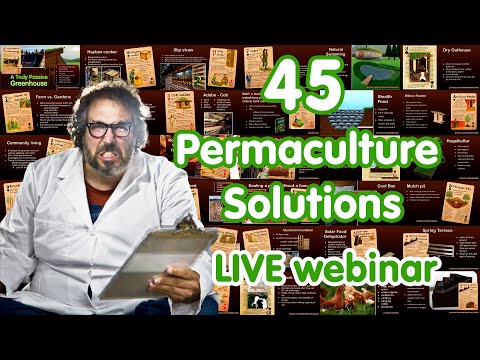
PermaNews Brief
Key Takeaways
A webinar outlined 45 permaculture solutions, focusing on design, water, soil, and plant strategies for sustainable living.
- Observe and design for your specific site conditions.
- Implement rainwater harvesting and greywater recycling.
- Build soil health with composting and cover crops.
- Choose diverse plants for polyculture systems.
Why It Matters
These permaculture solutions offer practical ways to create resilient and productive systems, reducing reliance on external inputs and fostering environmental health.
What to Do Next
Explore the webinar for detailed explanations of each permaculture solution.
Recommended for: Individuals interested in permaculture principles seeking diverse, actionable strategies for sustainable living and land management.
A recent online seminar focused on a wide array of permaculture solutions, presenting 45 distinct approaches to sustainable living and land management. The webinar aimed to provide practical insights and actionable strategies for individuals interested in implementing permaculture principles, regardless of their experience level or the scale of their projects.
The discussion began with foundational concepts, emphasizing the importance of observation and design. Participants learned about analyzing their specific site conditions, including climate, topography, soil type, and existing vegetation, to inform their design choices. This initial phase highlighted the principle of working with nature rather than against it, advocating for designs that integrate seamlessly with the natural environment.
A significant portion of the seminar was dedicated to water management strategies. Various techniques were explored, such as rainwater harvesting, greywater recycling, and the creation of swales and hugelkultur beds to maximize water retention and infiltration. The presenters underscored how efficient water use is critical for resilient permaculture systems, especially in areas prone to drought or with limited water resources. The benefits of these methods extend beyond simple water conservation, contributing to improved soil health and plant growth.
Soil building and fertility were another central theme. The webinar delved into methods like composting, vermicomposting, and the use of cover crops to enhance soil structure, nutrient content, and microbial life. The importance of avoiding synthetic fertilizers and pesticides was stressed, promoting organic approaches that foster long-term soil health and biodiversity. Participants learned how healthy soil forms the bedrock of a productive permaculture system, supporting robust plant growth and reducing the need for external inputs.
Plant selection and polycultures were also extensively covered. The seminar advocated for choosing appropriate plant species that are well-suited to the local climate and soil conditions, with a strong emphasis on native and drought-tolerant varieties. The concept of polycultures, where multiple plant species are grown together in beneficial relationships, was presented as a way to increase biodiversity, improve pest resistance, and enhance overall productivity. Specific examples of companion planting and food forest design were shared, illustrating how diverse plant communities can create resilient and self-sustaining ecosystems.
Beyond the garden, the webinar touched upon broader aspects of sustainable living. Discussions included energy efficiency in homes, such as passive solar design and insulation techniques, as well as renewable energy sources like solar power. Waste reduction strategies, including composting food scraps and recycling, were also highlighted as integral components of a permaculture lifestyle. The presenters emphasized that permaculture extends beyond food production to encompass all aspects of human interaction with the environment.
The seminar also addressed animal integration into permaculture systems. The role of livestock, such as chickens for pest control and soil aeration, or goats for brush clearing, was discussed in the context of creating integrated, closed-loop systems. The importance of ethical animal husbandry and ensuring the well-being of animals within these systems was a key consideration.
Finally, the webinar touched upon community building and economic sustainability within a permaculture framework. The idea of creating local food systems, sharing resources, and fostering community resilience was presented as a vital aspect of permaculture. The presenters encouraged participants to consider how their permaculture efforts could contribute to broader societal well-being and environmental stewardship. The overall message was one of empowerment, providing attendees with a comprehensive toolkit of solutions to begin or enhance their permaculture journeys.
Source: youtube.com
Related Analysis
- Colorado Beekeeper Lost 85% of Hives in 2021 — A Colorado beekeeper lost 85% of his hives in 2021. The sudden collapse raises questions about pesticide exposure in com…
- Bee Colony Losses Rise as Research Funding Declines — US beekeepers mobilize against colony losses and shrinking research budgets. Learn how apiarists are adapting to reduced…
Related on PermaNews
- Ernst Götsch's Cacao Syntropy: Master Agroforestry Now (How-To Guide)
- Finnish Off-Grid: Rocket Mass Heater Performance in Greenhouse (Case Study)
- Berlins schwimmende Gärten: Permakultur auf dem Wasser (Case Study)
- Rodale Report 2025: Thermal Mass Boost in Solar Greenhouses (Case Study)
- AUTarcaMatricultura La Palma: Permakultur & Energieautarkie (How-To Guide)
- Earthaven Ecovillage: 30 Years Off-Grid with Hydro & Solar (Video)
Explore more in Food Systems & Growing — the full hub for this knowledge area.