Remote Island Off-Grid: 21 Years in a Self-Built Homestead Cabin
By Exploring Alternatives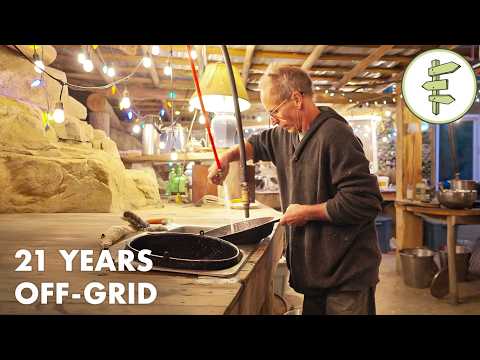
TL;DR: A couple shares their 21-year journey of off-grid living, building a self-sufficient homestead on a remote island.
- Self-built cabin uses local materials and passive solar design.
- Solar panels and wood stove provide renewable energy.
- Rainwater harvesting ensures potable water supply.
- Extensive garden and foraging cover food needs.
- Off-grid living requires ingenuity and resourcefulness.
Why it matters: This experience demonstrates the feasibility and benefits of radical self-sufficiency, offering insights into sustainable living practices and reduced environmental impact.
Do this next: Watch the video to learn more about the specific construction and system designs used in their off-grid homestead.
Recommended for: Anyone interested in radical self-sufficiency, sustainable living, and building resilient off-grid systems.
This article details the experiences of a couple who have spent 21 years living off-grid on a remote island, residing in a self-built cabin and maintaining a homestead. Their journey began with a desire for a simpler life, closer to nature, and a reduced environmental footprint. They acquired a piece of land on a secluded island, accessible primarily by boat, which immediately presented challenges and opportunities for self-sufficiency.
The core of their off-grid lifestyle revolves around their hand-built cabin. Construction was a multi-year endeavor, utilizing local materials where possible and relying on their own labor and ingenuity. The cabin is designed for efficiency and resilience, incorporating features that minimize energy consumption and maximize comfort in a remote setting. This includes passive solar design principles, robust insulation, and a layout that optimizes natural light and ventilation.
Energy for their homestead is primarily sourced from renewable resources. Solar panels are a key component, providing electricity for lighting, basic appliances, and charging essential devices. They also employ a wood-burning stove for heating during colder months, utilizing fallen timber from their property, which also serves as a method of forest management. Water management is another critical aspect of their self-sufficient existence. They collect rainwater from their cabin roof, storing it in cisterns for drinking, cooking, and washing. A system for filtering and purifying this water ensures its potability.
Food production is central to their homesteading efforts. They cultivate a substantial garden, growing a variety of fruits, vegetables, and herbs. This provides a significant portion of their diet and reduces their reliance on external food sources. They also engage in foraging for wild edibles available on the island, further diversifying their food supply. While the article doesn't explicitly detail livestock, the emphasis on a comprehensive homestead often implies some form of animal husbandry for eggs, milk, or meat, or at least a consideration of it for future expansion.
Living on a remote island presents unique logistical challenges. Access to supplies, medical care, and communication with the outside world requires careful planning and resourcefulness. They have developed strategies for stocking up on non-perishable goods, maintaining their boat for transportation, and utilizing satellite communication for emergencies or essential contact. The isolation also fosters a strong sense of community with a few other island residents, creating a network of mutual support and shared resources.
Over two decades, their off-grid life has evolved. They have continuously refined their systems, learned from their experiences, and adapted to the changing environment. This long-term commitment highlights the ongoing process of learning and innovation inherent in a self-sufficient lifestyle. Their story serves as an example of how individuals can successfully transition to and sustain an off-grid existence, emphasizing the importance of planning, practical skills, and a deep connection to their surroundings. The article underscores the rewards of such a life, including a sense of independence, a reduced environmental impact, and a profound appreciation for nature.