Drone Crop Spraying: Boosting Agri-Productivity & Climate Adapt.
PermaNews Brief
Key Takeaways
Agricultural drones offer precise, efficient, and safer crop spraying, reducing costs and environmental impact while improving yields.
- Drones revolutionize crop spraying with precision and efficiency.
- Targeted application minimizes waste and chemical use.
- Faster coverage during critical growth periods.
- Reduces labor, equipment costs, and environmental impact.
- Improved safety for farmers over traditional methods.
Why It Matters
Drones in agriculture promise significant improvements in crop health, yield, and sustainability, addressing global food demands and environmental concerns.
What to Do Next
Research drone spray services or consider the initial investment for your farm.
Recommended for: Farmers seeking to modernize their practices, reduce environmental impact, and improve crop yields through advanced technology.
The agricultural sector is experiencing rapid transformation, driven by the need to enhance productivity in the face of growing global populations and urban expansion. One significant technological advancement contributing to this evolution is the use of drones for crop spraying. This method offers a modern alternative to traditional approaches that relied heavily on manual labor and large, cumbersome machinery.
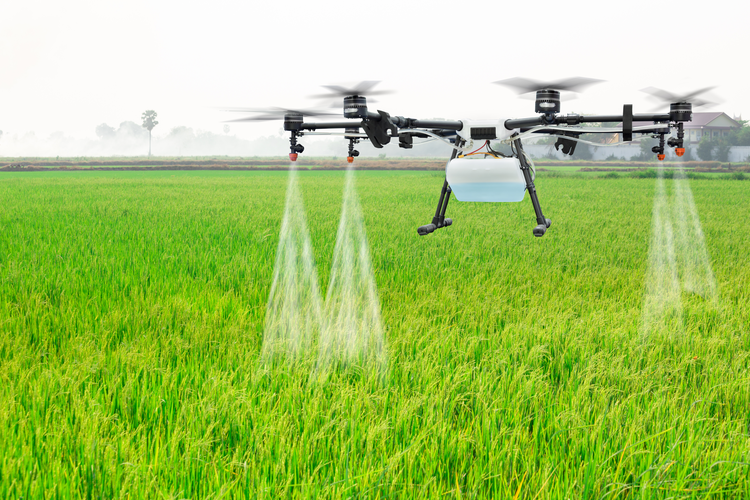
Historically, crop spraying was a labor-intensive task, often requiring significant human effort and the deployment of large-scale equipment, which could be costly to operate and maintain. The advent of drone technology has streamlined this process considerably. Drones specifically designed for agricultural spraying are outfitted with liquid holding tanks, enabling them to carry and dispense various substances, such as pesticides, herbicides, and fertilizers, across fields.
One of the primary advantages of drone spraying is its precision. These unmanned aerial vehicles can be programmed to follow specific flight paths and spray only designated areas, minimizing waste and reducing the overall amount of chemicals used. This targeted application not only leads to cost savings on inputs but also has positive environmental implications by reducing chemical runoff and potential contamination of surrounding ecosystems. The ability to apply treatments exactly where needed also means that crops receive optimal care, leading to healthier plants and potentially higher yields.
Furthermore, drones offer enhanced efficiency. They can cover large areas much more quickly than manual methods or even some ground-based machinery. This speed is particularly beneficial during critical periods in the growing season when timely application of treatments is crucial for crop health and yield. The rapid deployment and coverage capabilities of drones allow farmers to respond promptly to pest infestations or nutrient deficiencies, preventing widespread damage.
Safety is another significant benefit. By utilizing drones, farmers and agricultural workers can avoid direct exposure to potentially harmful chemicals. This reduces health risks associated with handling and applying pesticides and other agricultural inputs. Additionally, drones can access difficult-to-reach areas of fields, such as those with uneven terrain or dense vegetation, where traditional machinery might struggle or pose a safety hazard to operators.
The operational costs associated with drone spraying can also be lower in the long run. While the initial investment in drone technology might seem substantial, the reduced labor requirements, decreased chemical usage, and improved efficiency can lead to significant savings over time. Drones also consume less fuel compared to large tractors or aerial crop dusters, contributing to lower operational expenses and a smaller carbon footprint.
Moreover, drones provide valuable data collection capabilities. Many agricultural drones are equipped with cameras and sensors that can capture high-resolution imagery and gather data on crop health, soil conditions, and other relevant parameters. This information can be used to create detailed maps and analyses, allowing farmers to make more informed decisions about irrigation, fertilization, and pest management strategies. This integration of data analytics with spraying operations represents a move towards more intelligent and sustainable farming practices.
In summary, the integration of drones into agricultural crop spraying represents a significant leap forward for the industry. It offers a suite of benefits including enhanced precision, increased efficiency, improved safety for workers, potential cost reductions, and valuable data collection capabilities. These advantages collectively contribute to more productive, sustainable, and environmentally responsible farming practices, addressing the evolving demands of global food production.
Source: urbanfarmonline.com
Related Analysis
- Regenerative Farmers Flip Cover Crop Logic From Compliance to Profit — Practitioner accounts and a new meta-analysis suggest cover cropping is being reframed from conservation practice to pro…
- Farmers Convert Six Weeks of Rhubarb Into 25-Year Supply — Initial signals suggest a rhubarb preservation technique can extend a brief seasonal harvest into 25 years of storage—a …
Related on PermaNews
- Design Starts with Water (Video)
- Permaculture is Revolution Disguised as Gardening | David Holmgren—Wild & Kind series, Morag Gamble (Video)
- UN Issues AI Warning After New Data Reveals Major Impact on the Planet and Its Resources (Article)
- What is Permaculture? (Video)
- Nearly 300 Studies Link the Common Pesticide Chlorpyrifos to Multi-Organ Damage, DNA Disruption, and Chronic Disease (Article)
- Topsoil is the basis of life on Earth (Video)
Explore more in Food Systems & Growing — the full hub for this knowledge area.