Self-Sufficiency: 3 Tips for Realistic Resilience
By Huw Richards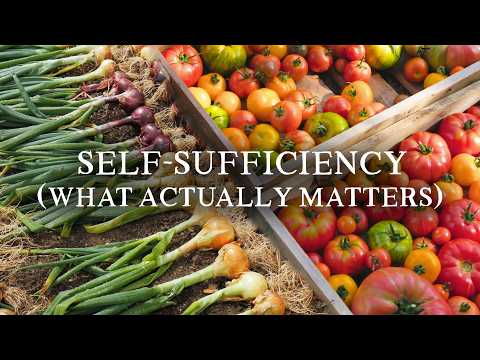
TL;DR: True self-sufficiency prioritizes resilience and reduced external reliance through practical skills and strategic integration with existing infrastructure, not complete independence.
- Focus on skills directly meeting household needs.
- Prioritize high-impact skills for your circumstances.
- Leverage existing infrastructure strategically.
- Adapt practices to suit your local environment.
Why it matters: Embracing a balanced approach to self-reliance builds resilience and reduces dependence on external systems, leading to more sustainable living.
Do this next: Identify one household need and research a practical skill to address it, such as growing a specific food.
Recommended for: Those seeking a practical and achievable path to greater self-reliance and sustainable living, without the pressure of complete independence.
The pursuit of self-sufficiency, often envisioned as a complete detachment from modern systems, is a goal many aspire to but few fully achieve. A more realistic and attainable approach involves embracing a degree of self-reliance while strategically integrating with existing infrastructure. This perspective suggests that true self-sufficiency isn't about absolute independence, but rather about building resilience and reducing reliance on external systems where it makes the most sense.
One key principle for achieving practical self-sufficiency is to focus on developing skills and knowledge that directly contribute to your household's needs. This includes learning how to grow your own food, preserve harvests, perform basic home repairs, and manage resources efficiently. Rather than attempting to master every conceivable skill, prioritize those that offer the greatest return on investment for your specific circumstances. For instance, if you have access to land, gardening and food preservation will be more impactful than, say, learning to forge your own tools from scratch. The emphasis should be on practical, everyday skills that empower you to meet a significant portion of your own needs, thereby reducing your dependence on commercial goods and services. This also involves understanding the local environment and adapting practices to suit it, such as choosing appropriate crops for your climate or utilizing local building materials.
Another crucial aspect is to strategically leverage existing infrastructure and resources. While the ideal of complete off-grid living is appealing to some, it often comes with significant financial and logistical challenges. Instead, consider how you can integrate with, rather than completely abandon, established systems. This might mean utilizing public utilities for water or electricity while simultaneously implementing rainwater harvesting or solar panels to supplement your supply. It could also involve participating in local farmers' markets or community-supported agriculture (CSA) programs to access goods you don't produce yourself, fostering a sense of community resilience. The goal is not to isolate oneself, but to create a robust system that combines personal effort with the benefits of collective resources. This approach acknowledges that a completely isolated existence is often unsustainable and that a balanced integration can lead to greater overall security and well-being.
Finally, it's important to discern what aspects of the self-sufficiency movement are genuinely beneficial and what might be considered distractions or unrealistic expectations. The media often portrays an idealized version of self-sufficiency, featuring individuals living entirely off the grid with minimal external contact. While inspiring, such portrayals can set an impossibly high bar, leading to frustration and burnout. Instead, focus on tangible, achievable steps that incrementally increase your self-reliance. This means ignoring the pressure to conform to an extreme ideal and instead concentrating on what is practical and sustainable for your individual situation. For example, while building your own house from raw materials might be an ultimate goal for some, learning basic carpentry and plumbing for home maintenance is a more immediate and impactful step for most. The emphasis should be on progress, not perfection, and on building a resilient lifestyle that is tailored to your unique resources and capabilities. By adopting this pragmatic mindset, individuals can make meaningful strides towards greater self-sufficiency without becoming overwhelmed by unattainable aspirations.