REFOREST Labs Show Agroforestry's EU-Wide Benefits
By Not specified (CORDIS)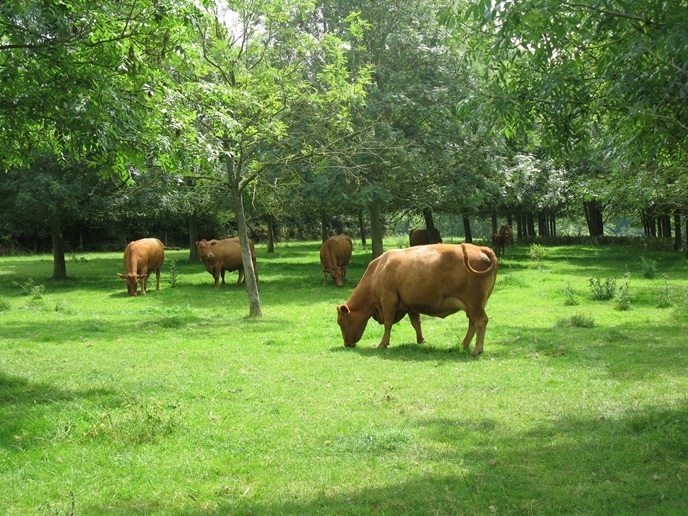
TL;DR: Agroforestry living labs across Europe demonstrate significant environmental and economic benefits, proving its effectiveness as a sustainable land management and climate adaptation strategy.
- Agroforestry boosts soil health and carbon sequestration.
- It enhances biodiversity and supports pest control.
- Farmers can diversify income with new products.
- Living labs provide practical, replicable models.
- Agroforestry is a viable climate adaptation strategy.
Why it matters: Agroforestry offers a powerful solution for farmers seeking to improve ecological resilience, mitigate climate change, and create new revenue streams, moving beyond traditional monoculture systems.
Do this next: Explore local agroforestry initiatives or demonstration farms to see successful models firsthand and understand regional applications.
Recommended for: Farmers, land managers, and policymakers interested in sustainable agriculture, climate adaptation, and ecological restoration.
The EU-funded REFOREST project has established eight living labs across Europe to demonstrate agroforestry benefits, including soil binding, carbon sequestration, biodiversity enhancement, and new revenue streams. Case studies from Bulgaria, Spain, and Germany provide evidence of improved agronomic performance and ecosystem services. In Bulgaria, labs integrate fruit trees with arable crops, boosting soil organic matter and reducing erosion. Spanish sites focus on olive agroforestry, showing increased water retention and pest control through biodiversity. German examples combine timber with livestock, yielding higher forage quality and carbon stocks. Quantitative data reveal up to 30% improvements in soil health metrics and diversified incomes from nuts, fruits, and wood products. The project addresses knowledge gaps by monitoring long-term impacts on productivity, resilience, and farmer adoption. Challenges like initial setup costs and market access are mitigated through farmer networks and policy advocacy. REFOREST promotes agroforestry as a climate adaptation strategy, aligning with EU Green Deal objectives. Labs serve as demonstration hubs for training and scaling, with results informing national strategies. Biodiversity gains include pollinator habitats and reduced pesticide use, while economic analyses confirm viability for small farms. The ongoing project, with recent publications, underscores agroforestry's role in sustainable land management, offering replicable models for temperate and Mediterranean zones. Future phases aim to expand labs and integrate digital tools for precision management, solidifying evidence for policy uptake.