Cassava's Rapid Growth: A Permaculture Staple (Part 3)
By Discover Permaculture with Geoff Lawton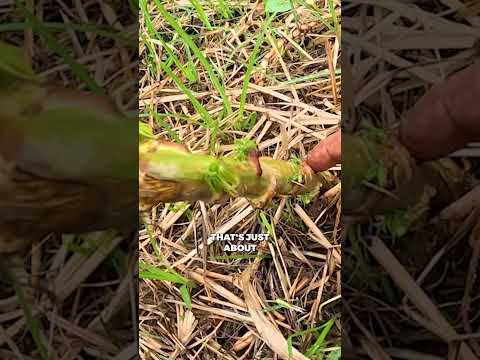
TL;DR: Cassava offers rapid growth and resilience as a staple crop, thriving even in challenging tropical and subtropical environments.
- Cassava grows rapidly from cuttings to substantial plants in three months.
- It adapts to challenging conditions like sandy soils.
- Root system develops extensive edible tubers.
- Partial harvesting allows for continuous production.
- Sustainable practice maximizes yield and minimizes replanting.
Why it matters: Cassava's adaptability and high yield potential make it a promising solution for food security and biomass production in vulnerable regions.
Do this next: Consider starting cassava from cuttings in a warm, humid environment to observe its rapid growth.
Recommended for: Permaculture practitioners, tropical gardeners, and those interested in resilient food systems.
This video segment, part of a larger series, focuses on the rapid growth and resilience of cassava, highlighting its potential as a staple crop in permaculture systems, particularly in tropical and subtropical environments. The presenter showcases a cassava plant that has achieved significant growth in a relatively short period, demonstrating its vigor and productivity.
The video begins by illustrating the plant's development from a small cutting to a substantial size within approximately three months. This rapid growth rate is a key characteristic of cassava, making it an attractive option for food security and biomass production. The presenter emphasizes that this particular plant was grown in a challenging environment, specifically in a sandy soil type that is not typically considered ideal for many crops. This observation underscores cassava's adaptability and ability to thrive in less-than-optimal conditions, a valuable trait for permaculture practitioners working with diverse soil types.
A significant portion of the discussion revolves around the plant's root system, which is the primary source of edible tubers. The presenter explains that while the above-ground growth is impressive, the true measure of cassava's success lies beneath the soil. He describes the process of carefully excavating around the base of the plant to reveal the developing tubers. This hands-on demonstration provides a clear visual of how the plant allocates its energy to root development, leading to a bountiful harvest.
The video also touches upon the plant's ability to recover from harvesting. The presenter demonstrates how to harvest some of the tubers without completely uprooting the plant, allowing it to continue growing and producing. This technique, often referred to as "ratooning" or continuous harvesting, is a sustainable practice that maximizes yield over time and reduces the need for frequent replanting. It aligns well with permaculture principles of minimizing disturbance and maximizing efficiency.
Furthermore, the presenter discusses the various uses of cassava beyond its starchy tubers. He mentions that the leaves are also edible, though they require specific preparation to remove naturally occurring cyanogenic compounds. This highlights cassava's versatility as a multi-purpose crop, providing both carbohydrate-rich roots and nutrient-rich greens. The potential for using cassava as animal fodder is also implicitly suggested by its rapid biomass production.
The video concludes by reiterating the plant's overall hardiness and ease of cultivation. The presenter emphasizes that cassava is a low-maintenance crop that can provide a consistent food source with minimal input, making it an excellent choice for self-sufficiency initiatives and food forest designs. The visual evidence of its fast growth and abundant yield serves as a compelling argument for its inclusion in diverse agricultural systems, particularly in regions where food security is a concern. The focus on practical demonstration and observable results reinforces the educational value of the segment for those interested in permaculture and sustainable food production.