Milkwood's First Year: From Slope to Permaculture Dream
PermaNews Brief
Key Takeaways
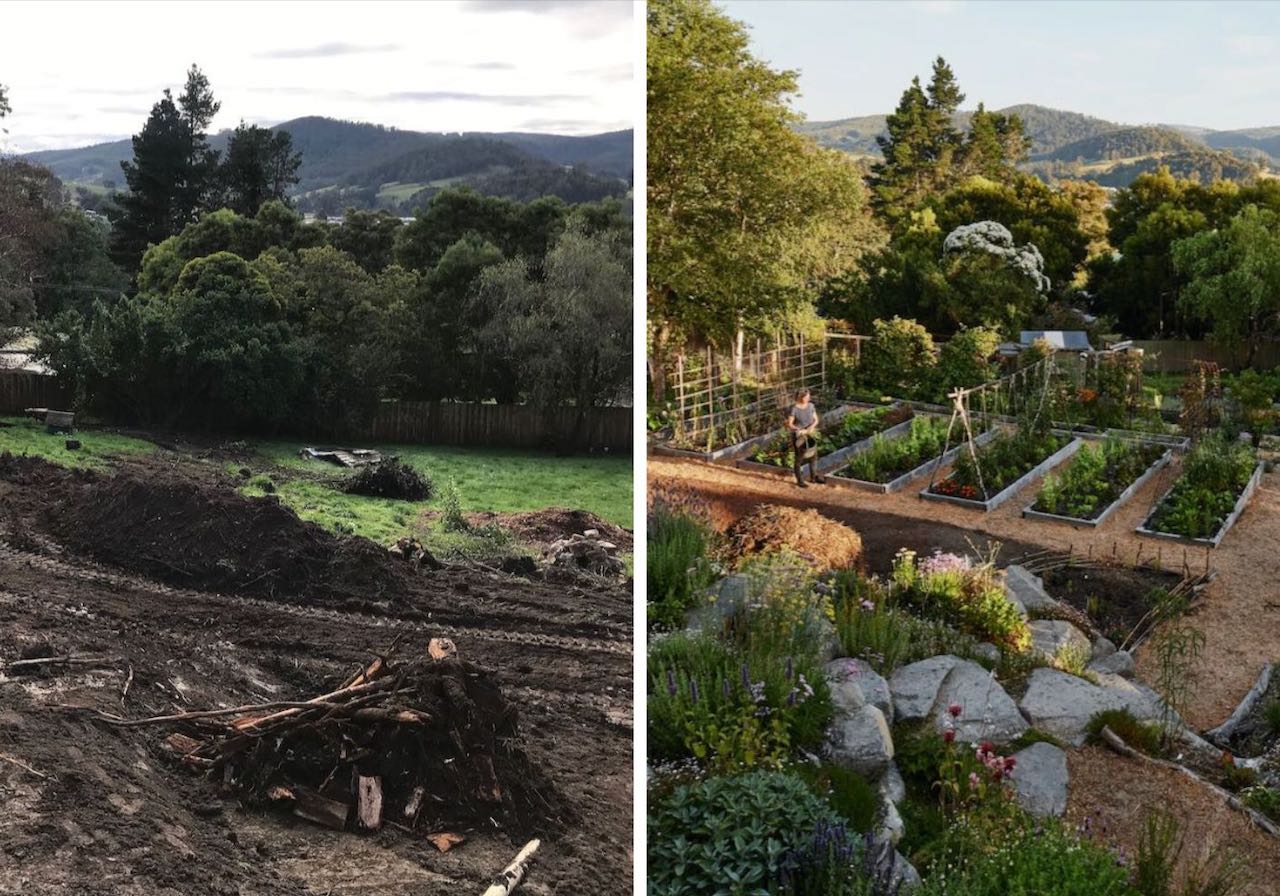
A backyard slope was transformed into a productive permaculture garden in one year focusing on food security and community.
- Terracing with swales captured runoff and built garden beds.
- Fruit trees were planted in guilds for pest control and nutrients.
- No-dig hugelkultur mounds created fertile vegetable beds.
- Chickens were integrated for pest control and fertilization.
- Diverse planting attracted pollinators and beneficial insects.
- Succession planting and cover crops built soil resilience.
Why It Matters
This case study demonstrates how integrated permaculture design can rapidly establish a highly productive and resilient food system in a suburban setting, enhancing food security and fostering community.
What to Do Next
Start observing your site through seasons to understand its microclimates and water flow.
Recommended for: Dedicated gardeners seeking to transform a sloped backyard into a highly productive and community-integrated permaculture system.
This detailed account chronicles the transformation of a grassy backyard slope into a thriving permaculture system at Milkwood, focusing on the first year's intensive construction, planting, and integration for family food security and community reciprocity. Key methods include terracing with contour swales dug by hand and mini-excavator to capture runoff, mulched with woodchips and straw for moisture retention and weed suppression. Fruit trees (apples, pears, plums, cherries) planted in guilds with comfrey, nasturtiums, and daffodils for pest repulsion and nutrient cycling; berries (currants, gooseberries) in shady understories; vegetable beds using no-dig hugelkultur mounds filled with branches, cardboard, compost, and topsoil. Chickens integrated via mobile coops over beds for scratching and manure, followed by rotational grazing. Flowers (marigolds, borage) throughout for pollinators and beneficial insects. Practical steps: site survey with observation over seasons; zoning (Zone 1 herbs daily access, Zone 2 veggies weekly); sheet mulching prep (cardboard base, 10-20cm mulch); propagation from cuttings/seeds; irrigation via drip lines from rainwater tanks. Challenges like establishment year losses addressed by succession planting, cover crops (oats, clover), and thermal mass rocks for microclimates. Yields: abundant greens, roots, fruits by year-end, shared via swaps. Interconnections: seed saving libraries, volunteer days, surplus to community. This offers concrete timelines (e.g., 3 months earthworks, 6 months planting), material lists (local free resources prioritized), and adaptations for temperate climates, proving permaculture's efficacy in urban/suburban self-sufficiency with low inputs post-setup.
Source: milkwood.net
Related Analysis
- Food Forest Courses Shift From Theory to Build-Ready Skills — Several food forest courses now open with site assessment and guild-building rather than design theory, suggesting a dev…
- Practitioners Build Silvopasture Playbook Before Researchers Catch Up — A small but consistent set of signals from the Northeast U.S. shows farmers actively piloting silvopasture while formal …
Related on PermaNews
- Ernst Götsch's Cacao Syntropy: Master Agroforestry Now (How-To Guide)
- Finnish Off-Grid: Rocket Mass Heater Performance in Greenhouse (Case Study)
- Berlins schwimmende Gärten: Permakultur auf dem Wasser (Case Study)
- Rodale Report 2025: Thermal Mass Boost in Solar Greenhouses (Case Study)
- AUTarcaMatricultura La Palma: Permakultur & Energieautarkie (How-To Guide)
- Earthaven Ecovillage: 30 Years Off-Grid with Hydro & Solar (Video)
Explore more in Food Systems & Growing — the full hub for this knowledge area.