Uckermark's Wilhelm Zahn: 700 Hectares of Regen Ag Evolution
PermaNews Brief
Key Takeaways
A German farm transformed 700 hectares through regenerative practices, improving soil health and profitability with strategic diversification and reduced tillage.
- Regenerative practices enhance soil health and farm resilience.
- Cover crops are vital for soil protection and organic matter.
- Reduced tillage minimizes soil disturbance and erosion.
- Diversified crop rotations break pest cycles, build soil structure.
- Partnerships provide data, technical support, and financial incentives.
- Regenerative farming is viable in dry, sandy European regions.
Why It Matters
Adopting regenerative agriculture offers practical solutions for farmers to combat climate change impacts, improve soil vitality, and secure long-term financial viability.
What to Do Next
Assess your current tillage practices and identify opportunities for reduction or no-till implementation on your farm.
Recommended for: Farmers on large arable land seeking a practical roadmap for implementing regenerative agriculture to build resilience and improve profitability.
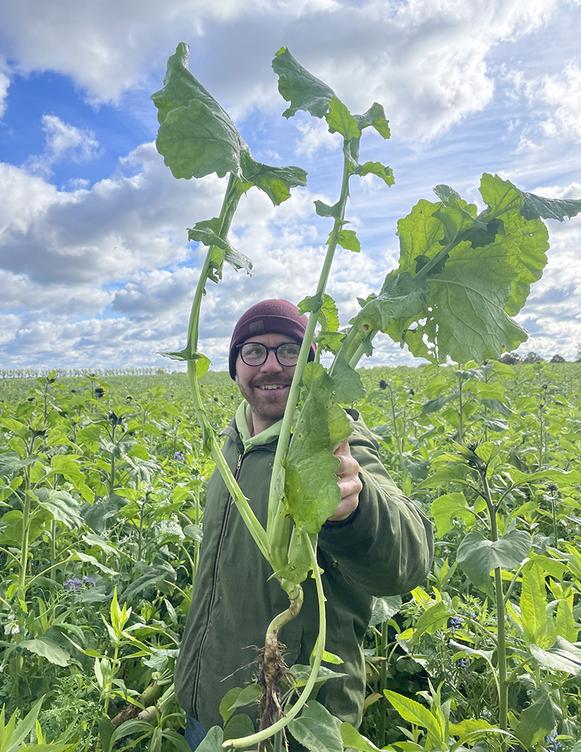
This case study profiles Wilhelm Zahn and his team at LBG GbR Bagemuehl in Woddow, Brandenburg's Uckermark region, managing 700 hectares of arable land. Already practicing soil conservation, they joined ADM's re:generations™ program for enhanced technical support, data tracking, and financial incentives to advance regenerative agriculture. Key practices include cover cropping to protect soil and boost organic matter, reduced tillage to minimize disturbance, and diversified crop rotations incorporating oats, maize, hemp, soybeans alongside traditional wheat, barley, and oilseed rape. These changes improve soil health, biodiversity, water retention, and overall farm resilience, particularly in dry summers where cover crops enhance confidence in planting more hectares. Zahn emphasizes system-wide benefits over short-term lucrative crops, accepting lower yields on some for long-term soil improvement. The program provides per-hectare payments easing adoption risks. Outcomes demonstrate profitability through resilience gains, with measurable improvements in soil function and ecosystem balance. This practical transition offers actionable insights for farmers: start with no-regret conservation like minimal tillage, layer in cover crops for nutrient cycling and erosion control, diversify rotations to break pest cycles and build soil structure, and leverage partnerships for data and incentives. Financially, it supports scaling without excessive risk, proving regenerative methods viable in sandy, dry European contexts for self-sufficiency and climate adaptation.
Source: adm.com
Related Analysis
- High-Salt Fertilizers Block Soil Microbes, Kempf Says — High-salt fertilizers disrupt soil microbes and microbial colonization, trapping farmers in chemical dependency. Biologi…
- Fertilizer Shortage Forces Reckoning on Nitrogen Sources — Fertilizer supply crisis drives farms toward nitrogen-fixing cover crops, compost, and legume rotations as alternatives.
Related on PermaNews
- Ernst Götsch's Cacao Syntropy: Master Agroforestry Now (How-To Guide)
- Designing Regenerative Resilience: Participatory Living Labs (How-To Guide)
- Lo—TEK: Indigenous Tech for Climate Solutions (Article)
- Nakivale's Regenerative Toilets: Refugee Resilience, Circular Sanitation (Case Study)
- Pippin Home Designs: Regenerative Home Design Explained (How-To Guide)
- Federal Policy Shift: Native Regenerative Ag for Soil & Carbon (Article)
Explore more in Food Systems & Growing — the full hub for this knowledge area.