Homestead Tools: $1 vs. $100,000 Debate
By Justin Rhodes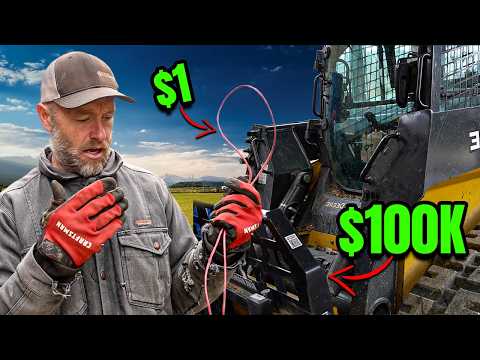
TL;DR: Homesteading tools range from budget-friendly to high-investment, each offering unique advantages depending on user needs and scale.
- Inexpensive tools suffice for many basic homestead tasks.
- High-end tools offer durability, efficiency, and specialized features.
- Broadforks improve soil structure for no-till gardening.
- Drip irrigation conserves water, benefits larger gardens.
- Chainsaws are efficient for large-scale wood processing.
- Consider tool cost versus long-term homesteading benefits.
Why it matters: Choosing the right tools for your homestead can significantly impact efficiency, sustainability, and overall cost without compromising productivity.
Do this next: Watch the full video to see practical demonstrations and further comparisons of homesteading tool options.
Recommended for: Anyone setting up or expanding a homestead, seeking practical advice on tool selection and investment.
The article explores a range of tools commonly used in homesteading, contrasting inexpensive options with their significantly more costly counterparts, and examining the value proposition of each. The discussion highlights that while high-end tools often offer superior durability, efficiency, and specialized features, many essential homesteading tasks can be effectively accomplished with more affordable alternatives.
For basic gardening and soil preparation, a simple hand trowel or spade, costing around a dollar, is presented as a fundamental tool. Its expensive counterpart might be a broadfork or a high-quality, ergonomic digging fork, potentially costing hundreds of dollars. The broadfork, for instance, is lauded for its ability to aerate soil deeply without inverting layers, preserving soil structure and microbial life, which is a significant advantage for no-till gardening practices. However, for smaller plots or occasional use, the hand tools remain perfectly functional.
When it comes to water management, a basic watering can or a garden hose with a simple nozzle represents the low-cost solution. On the higher end, sophisticated drip irrigation systems or even rainwater harvesting setups with pumps and filters can run into thousands. Drip irrigation offers precise water delivery, reducing waste and disease, and is particularly beneficial for larger gardens or areas with water scarcity. Rainwater harvesting provides a sustainable water source, reducing reliance on municipal supplies. Yet, for a small garden, manual watering is often sufficient.
For tasks involving cutting and pruning, a pair of hand pruners is an inexpensive and indispensable tool. A more significant investment might be a high-quality lopper, a pole saw, or even a chainsaw. Chainsaws, while expensive, are invaluable for felling trees, processing firewood, and clearing large areas, offering immense power and speed. However, for routine pruning of shrubs and small branches, hand pruners are perfectly adequate and safer for less experienced users.
In the realm of animal husbandry, a simple bucket and feed scoop are fundamental for feeding livestock. More advanced and costly options include automated feeders, specialized waterers, or even electric fencing systems. Automated feeders ensure consistent feeding schedules and reduce labor, while electric fences provide effective containment for animals over larger areas. For a small number of animals, manual feeding and traditional fencing methods are often preferred due to their simplicity and lower initial cost.
For construction and repair tasks, a basic hammer and a hand saw are essential and affordable. The more expensive alternatives include power drills, circular saws, miter saws, and even specialized woodworking tools. Power tools significantly speed up construction projects and offer greater precision, making them worthwhile investments for those undertaking frequent building or renovation work. However, for occasional repairs or small projects, hand tools are entirely capable.
The article also touches upon food preservation. A basic canning pot and jars are relatively inexpensive. In contrast, a pressure canner, dehydrator, or even a freeze dryer represent substantial investments. Pressure canners are crucial for safely preserving low-acid foods, while dehydrators and freeze dryers offer different methods of long-term food storage, often preserving more nutrients and flavors. For those looking to preserve significant quantities of food, these specialized appliances can be highly beneficial.
Ultimately, the article suggests that the choice between inexpensive and costly tools depends on several factors: the scale of the homesteading operation, the frequency of use, the specific needs of the homesteader, and their budget. While high-end tools can offer significant advantages in terms of efficiency, durability, and specialized capabilities, many homesteading tasks can be successfully managed with more affordable, basic equipment. The key is to select tools that align with one's individual requirements and resources, understanding that both ends of the price spectrum have their place in a well-equipped homestead.