Boost Your Garden: DIY Liquid Feeds for Optimal Growth
By Huw Richards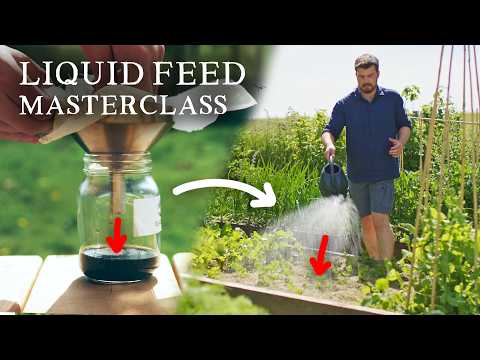
TL;DR: Boost plant growth and soil health by crafting homemade liquid feeds from compost and nutrient-rich plants.
- Learn to make compost tea using readily available materials.
- Discover the benefits of comfrey as a dynamic accumulator.
- Aeration is key for beneficial microbes in compost tea.
- Dilute concentrated feeds before applying to plants.
- Support a vibrant soil ecosystem with liquid nutrients.
Why it matters: Liquid feeds offer a sustainable and cost-effective way to nourish plants and enhance soil vitality, reducing the need for synthetic fertilizers while promoting a healthier garden.
Do this next: Watch the video to learn how to prepare compost and comfrey teas to enrich your garden.
Recommended for: Home gardeners, small-scale farmers, and permaculture enthusiasts interested in organic plant nutrition and soil building.
This guide explores the creation and application of various liquid feeds, offering a sustainable approach to nourishing plants and improving soil health in a garden setting. The core principle behind these feeds is the extraction of nutrients from organic materials through a process of decomposition, resulting in a nutrient-rich liquid that can be easily absorbed by plants. This method not only provides essential elements for plant growth but also contributes to a more vibrant and resilient soil ecosystem.
One of the most fundamental liquid feeds discussed is compost tea. This involves steeping finished compost in water, allowing beneficial microorganisms and soluble nutrients to leach into the liquid. The process typically requires a breathable bag to hold the compost, which is then submerged in a container of water, ideally rainwater or dechlorinated tap water. Aeration, often achieved with an aquarium pump, is crucial during the brewing process to encourage the proliferation of aerobic microbes, preventing the development of anaerobic conditions that can produce undesirable compounds. The brewing time can vary, but generally ranges from 24 to 48 hours, after which the tea is diluted and applied to plants as a foliar spray or soil drench. Compost tea is valued for its ability to introduce a diverse microbial community to the soil, enhancing nutrient cycling and disease suppression.
Another popular and potent liquid feed is comfrey tea. Comfrey is a dynamic accumulator, meaning it draws up a wide range of nutrients from deep within the soil, making its leaves exceptionally rich in potassium, nitrogen, and various trace elements. There are two primary methods for making comfrey tea. The first involves packing comfrey leaves into a container, weighing them down, and allowing them to decompose anaerobically. This process, which can take several weeks, produces a dark, concentrated liquid that is then diluted significantly before use. The second method is similar to making compost tea, where fresh comfrey leaves are steeped in water, often with aeration, for a shorter period. Both methods yield a powerful feed particularly beneficial for fruiting and flowering plants due to its high potassium content.
Nettle tea is another valuable liquid feed, especially beneficial for leafy greens and young plants due to its high nitrogen content. Nettles are also rich in iron and other minerals, making them an excellent tonic for plants showing signs of nutrient deficiency. The preparation is straightforward: nettle leaves are steeped in water for a period ranging from a few days to a couple of weeks, depending on the desired strength. Like other liquid feeds, it is typically diluted before application to avoid over-fertilization.
Beyond these specific plant-based teas, the guide also touches upon the broader concept of "weed teas." Many common garden weeds, often viewed as nuisances, are in fact nutrient accumulators. By harvesting these weeds before they go to seed and steeping them in water, gardeners can create a localized, nutrient-rich feed tailored to the specific deficiencies of their soil. This approach not only recycles organic matter but also turns a potential problem into a valuable resource.
The application of these liquid feeds is flexible. They can be applied as a foliar spray, directly nourishing the leaves and providing a quick nutrient boost, or as a soil drench, enriching the root zone and improving soil structure. Dilution is a critical step for all liquid feeds to prevent burning plants and to ensure even distribution of nutrients. The recommended dilution ratios vary depending on the concentration of the feed and the specific needs of the plants. Regular application, rather than infrequent heavy doses, is generally recommended for sustained plant health.
In summary, the creation of liquid feeds from organic materials like compost, comfrey, nettles, and other weeds offers a powerful and environmentally friendly way to enhance plant growth and soil fertility. These methods leverage natural decomposition processes to extract vital nutrients, providing a readily available and easily absorbable food source for plants. By understanding the specific nutrient profiles of different organic materials and employing appropriate brewing and application techniques, gardeners can significantly improve the health and productivity of their food-growing systems.