Advanced Broadfork Cultivation: Better Soil, Bigger Yields
By RED Gardens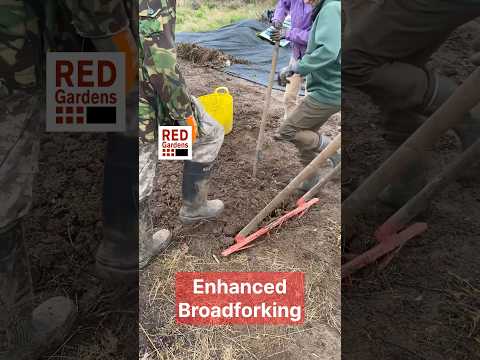
TL;DR: Broadforking improves soil aeration and drainage, boosting root growth and microbial activity while preserving soil structure.
- Assess soil moisture and type before broadforking.
- Broadfork when soil is moist but not saturated.
- Use gentle rocking motions to avoid soil disturbance.
- Integrate broadforking with other regenerative practices.
Why it matters: Proper broadforking can significantly enhance soil health and plant vitality by creating an optimal environment for roots and beneficial microbes.
Do this next: Carefully evaluate your soil’s condition and moisture level before broadforking to ensure effective aeration.
Recommended for: Gardeners and farmers seeking to improve soil health and plant growth through mindful, low-impact cultivation techniques.
The article from Red Gardens discusses an advanced method of broadforking, a technique used in gardening and agriculture to aerate and loosen soil without inverting its layers, thereby preserving soil structure and microbial life. This enhanced approach goes beyond the basic application of a broadfork, integrating several considerations to maximize its benefits for soil health and plant growth.
Traditional broadforking involves inserting the tool's tines into the ground and rocking it back and forth to create air channels and break up compaction. The enhanced method emphasizes a more strategic and nuanced application. One key aspect is understanding the specific soil type and its current condition. Different soils, such as heavy clay, sandy loam, or silty soils, respond differently to broadforking. For instance, very wet clay soil might be more prone to smearing or creating hardpans if broadforked improperly, while excessively dry soil might be too difficult to penetrate effectively. Therefore, assessing soil moisture and texture before beginning is crucial. The article suggests that the ideal time for broadforking is when the soil is moist but not saturated, allowing for easy penetration and crumbling of soil aggregates.
Another important element of enhanced broadforking is the consideration of soil biology. The broadfork is a tool designed to be minimally disruptive to the complex web of microorganisms, fungi, and invertebrates that inhabit healthy soil. Unlike rototillers or plows, which can destroy fungal networks and disturb earthworm populations, broadforking aims to create space for these organisms to thrive. The enhanced technique focuses on gentle, deliberate movements to avoid excessive disturbance. This includes not twisting the broadfork aggressively or attempting to lift large clods of soil, but rather using a rocking motion to create fissures and channels.
The article also highlights the importance of integrating broadforking with other regenerative practices. It's not presented as a standalone solution but as one component of a holistic soil management strategy. This could involve incorporating organic matter, such as compost or cover crops, before or after broadforking. Adding compost after broadforking allows the organic material to filter into the newly created air channels, further improving soil structure, water retention, and nutrient availability. Similarly, broadforking can be used to prepare a seedbed for cover crops, which then contribute to soil health through their root systems and biomass.
Furthermore, the enhanced broadforking method considers the depth and frequency of application. While broadforks typically penetrate to a depth of 10-12 inches, the article suggests that varying the depth or focusing on specific compacted layers can be beneficial. For instance, if a hardpan exists at a particular depth, targeted broadforking can help break it up. The frequency of broadforking also depends on the specific needs of the garden bed and the intensity of cultivation. In some cases, annual broadforking might suffice, while in others, more frequent applications could be beneficial, especially in high-traffic areas or beds with heavy feeders.
The article also touches upon the physical technique of using the broadfork. It emphasizes proper body mechanics to prevent strain and ensure effective soil aeration. This includes using one's body weight to drive the tines into the ground and leveraging the handles efficiently. The goal is to work systematically across the bed, ensuring even aeration without overworking any single area.
In essence, the Red Gardens article advocates for a thoughtful and integrated approach to broadforking. It moves beyond simply using the tool to a comprehensive understanding of soil dynamics, biological interactions, and the synergistic effects of combining broadforking with other regenerative agricultural practices. This enhanced method aims to build long-term soil health, leading to more resilient and productive growing systems.