Desert Cliff Earthship: 3-Story Home, Cathedral Garden
By Kirsten Dirksen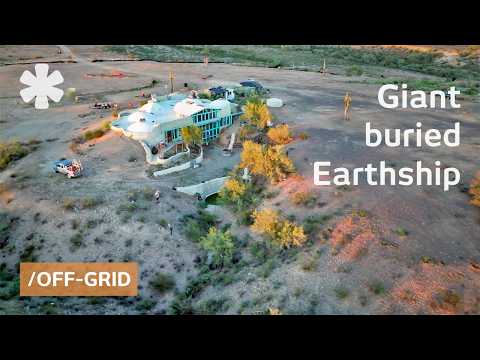
TL;DR: An Earthship in the desert showcases multi-story sustainable living with an integrated greenhouse for food and climate control.
- Earthships use passive solar and earth berming for temperature regulation.
- Indoor gardens provide food, humidity control, and air purification.
- Sophisticated water harvesting systems reduce external reliance.
- Designed for self-sufficiency in various climates.
- Integrates natural building principles with modern amenities.
Why it matters: This example demonstrates how integrated design can create comfortable, self-sufficient dwellings in challenging environments, significantly reducing resource consumption and ecological impact.
Do this next: Explore Earthship Biotecture principles for passive solar and water harvesting in your own context.
Recommended for: Those interested in radical sustainable architecture, off-grid living, and integrated ecological design.
This article describes a unique, large-scale Earthship dwelling situated on a desert cliffside, notable for its three-story structure and an expansive, cathedral-like indoor garden. The residence, designed by Michael Reynolds, the founder of Earthship Biotecture, exemplifies a self-sufficient living model, integrating various sustainable technologies and natural building principles.
The structure is strategically oriented to maximize passive solar gain, a fundamental aspect of Earthship design. Its south-facing facade is primarily composed of glass, allowing sunlight to penetrate deep into the interior, warming the thermal mass elements within. This design significantly reduces the need for conventional heating systems, even in cooler desert nights. The building's north, east, and west sides are largely bermed into the earth, providing natural insulation and further stabilizing internal temperatures. This earth-sheltering technique helps to keep the interior cool during hot desert days and warm during cold nights, creating a comfortable living environment year-round with minimal external energy input.
A central feature of this Earthship is its vast indoor garden, spanning multiple levels and resembling the scale of a cathedral. This garden serves multiple functions beyond aesthetics. It acts as a significant component of the building's climate control system, contributing to humidity regulation and air purification. The plants within the garden transpire moisture, which helps to cool the interior through evaporative cooling, and they also filter airborne toxins, improving indoor air quality. Furthermore, this extensive garden is designed for food production, allowing residents to cultivate a substantial portion of their own produce, thereby reducing reliance on external food sources and minimizing their carbon footprint associated with food transportation.
The Earthship incorporates a sophisticated water management system. Rainwater and snowmelt are collected from the roof and channeled into a series of cisterns, where it is stored for various uses. This collected water undergoes a multi-stage filtration process, making it potable for drinking and cooking. After initial use, the water is then directed to the indoor garden, where it irrigates the plants. This "greywater" system not only conserves water but also provides nutrients to the garden. Finally, the water that has passed through the garden, now considered "blackwater" after being used in toilets, is treated in an outdoor contained biological system, further demonstrating the closed-loop nature of the Earthship's resource management.
Electricity for the entire dwelling is generated through an off-grid solar panel array, supplemented by wind turbines. This combination of renewable energy sources ensures a consistent and reliable power supply, making the Earthship entirely independent of the conventional electrical grid. Energy consumption is carefully managed through efficient appliances and lighting, further optimizing the use of generated power.
The construction materials predominantly include recycled and natural elements. Tires packed with earth form the primary structural walls, providing immense thermal mass and structural integrity. Glass bottles and aluminum cans are often integrated into non-load-bearing walls for insulation and aesthetic purposes, showcasing a creative approach to waste repurposing. These materials contribute to the building's unique aesthetic and its environmental credentials.
Living in such a structure offers a profound connection to natural cycles and a reduced environmental impact. The design promotes a lifestyle of self-sufficiency, encouraging residents to be more aware of their resource consumption and waste generation. The integration of living systems, such as the indoor garden and water treatment, creates a dynamic and evolving environment that constantly interacts with its inhabitants. This particular Earthship, with its grand scale and innovative features, stands as a testament to the potential of sustainable architecture to create comfortable, resilient, and environmentally responsible homes, even in challenging desert environments.